
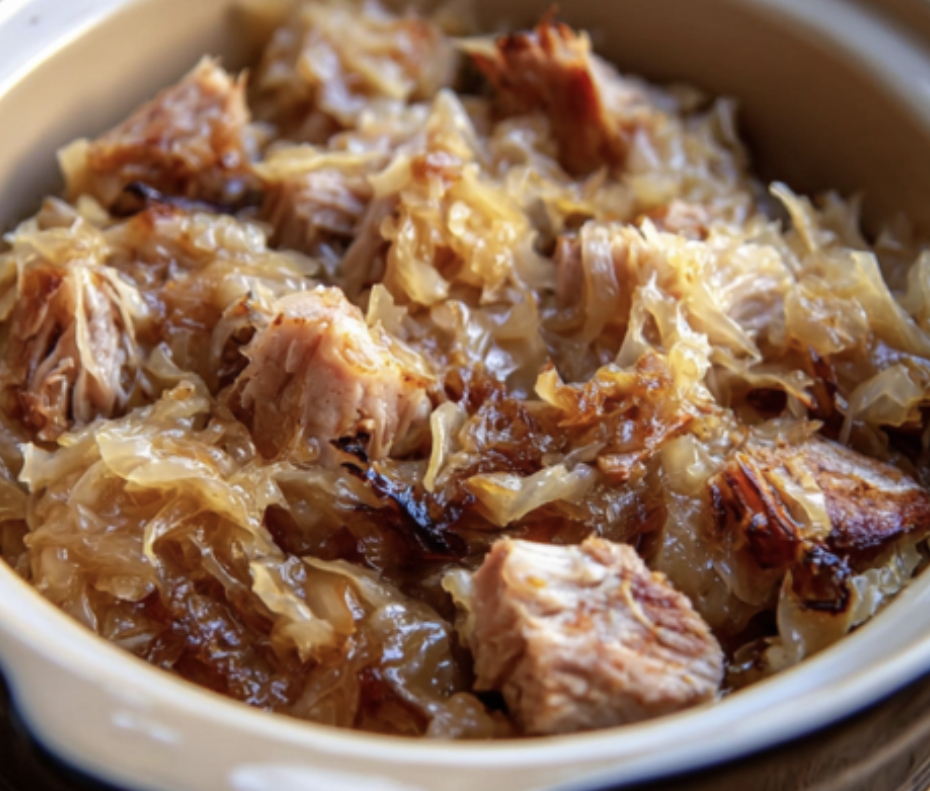
Some meals aren’t just dinner—they’re tradition. Pork and sauerkraut has long been a comforting, old-fashioned dish often served for good luck and prosperity in the New Year, a custom brought to America by German immigrants. It’s the kind of recipe you might imagine simmering in a cozy kitchen somewhere in Germany, where hearty, simple ingredients come together to create something deeply satisfying.
The first time I made this in the slow cooker, I was surprised by how effortless it was. Just three ingredients, layered together in the morning, and by evening the pork was fall-apart tender, infused with the tangy flavor of sauerkraut. The juices blend together as they cook, creating a savory, slightly tart sauce that pairs perfectly with mashed potatoes or crusty bread.
It’s rustic, comforting, and proof that simple ingredients can create big flavor.
The Tradition of Pork and Sauerkraut
Pork and sauerkraut has deep roots in German culinary tradition, where it’s known as Schweinebraten mit Sauerkraut. German immigrants brought this comforting dish to America, particularly to the Midwest and Pennsylvania Dutch country, where it became a New Year’s Day tradition symbolizing good luck and prosperity. The pork represents progress (pigs root forward), while the sauerkraut’s strands symbolize long life and wealth.
Beyond the symbolism, this combination is simply delicious. The rich, fatty pork slowly braises in the tangy sauerkraut, which tenderizes the meat while infusing it with its distinctive sour flavor. The apple juice adds a touch of sweetness that balances the sauerkraut’s acidity, creating a perfectly harmonious dish.
Why This Recipe Works
This recipe succeeds because each of the three ingredients plays an essential role:
Pork roast (shoulder or loin) provides the rich, meaty foundation. Pork shoulder is ideal for long cooking—its marbling breaks down into succulent, tender meat. Pork loin works beautifully too, remaining moist and flavorful.
Sauerkraut delivers that signature tangy, fermented flavor. Using it undrained ensures plenty of liquid for braising and creates a flavorful “broth” that infuses the pork as it cooks.
Apple juice (or sliced apples) adds a touch of sweetness that balances the sauerkraut’s acidity. The natural pectin in apples also helps tenderize the meat.
The Complete Recipe: 3-Ingredient Slow Cooker Pork and Sauerkraut
Prep Time: 5 minutes | Cook Time: 8-9 hours on LOW or 4-5 hours on HIGH | Total Time: 8-9 hours | Servings: 6-8
Ingredients
-
2–3 pound pork roast (shoulder or loin)
-
1 (24 ounce) jar or bag sauerkraut, undrained
-
1 cup apple juice (or sliced apples)
Step-by-Step Instructions
1. Layer the Ingredients
Place the pork roast in the bottom of your slow cooker. It’s fine if it’s a snug fit.
2. Add the Sauerkraut
Pour the entire contents of the sauerkraut—including all the juices—over and around the pork.
3. Add the Apple Juice
Pour the apple juice around the sides of the pork, not directly over the top, to keep the seasoning distributed.
4. Cook
Cover and cook on:
-
LOW for 8 to 9 hours, or
-
HIGH for 4 to 5 hours
Cook until the pork is fork-tender and easily shreds.
5. Serve
Slice or shred the pork and serve with the sauerkraut spooned generously over the top.
Pro Tips for the Best Pork and Sauerkraut
-
Pork Choice: Pork shoulder (also called pork butt) is the most forgiving cut for long cooking and yields the most tender, flavorful results. Pork loin works beautifully too but may be slightly less rich.
-
Rinse or Not?: Some people prefer to rinse sauerkraut to reduce its tanginess. For this recipe, using it undrained provides the most flavor and necessary liquid, but if you prefer a milder result, you can drain and rinse half the sauerkraut.
-
Add Flavor: While this recipe is perfect as written, you can add a sliced onion, a few juniper berries, or a bay leaf for extra depth without complicating the ingredient list.
-
Thicken the Liquid: If you’d like a thicker sauce, remove the pork and sauerkraut when done, then simmer the remaining liquid in a saucepan for 10 to 15 minutes to reduce.
-
Make It a Meal: Serve with mashed potatoes, buttered egg noodles, or crusty rye bread to soak up every bit of the delicious juices.
Delicious Variations
-
Apple Addition: Replace the apple juice with 2 sliced apples (Granny Smith or Honeycrisp work well) layered with the sauerkraut.
-
Beer-Braised: Substitute half the apple juice with a dark German beer for extra depth.
-
Caraway Seeds: Sprinkle 1 teaspoon of caraway seeds over the sauerkraut for authentic German flavor.
-
Smoked Pork: Use a smoked pork shoulder for an extra layer of smoky richness.
-
With Potatoes: Add halved small potatoes around the pork during the last 3 hours of cooking for a complete one-pot meal.
Serving Suggestions
-
Serve over mashed potatoes or buttered egg noodles to soak up the savory juices
-
Pair with crusty rye bread and spicy brown mustard
-
Add a side of braised red cabbage for a traditional German feast
-
Serve with apple sauce on the side for extra sweetness
-
Garnish with fresh parsley and a sprinkle of caraway seeds
Storage and Reheating
-
Refrigerator: Store leftovers in an airtight container for up to 4 days. The flavors deepen and improve overnight.
-
Reheating: Reheat gently on the stovetop over medium-low heat, or in the microwave. Add a splash of broth or apple juice if needed.
-
Freezer: This dish freezes beautifully for up to 3 months. Cool completely, then transfer to freezer-safe containers. Thaw overnight in the refrigerator before reheating.
Conclusion: A Dish Steeped in Tradition and Flavor
Three-Ingredient Slow Cooker Pork and Sauerkraut is proof that you don’t need a long ingredient list or complicated techniques to create something deeply satisfying. This dish honors generations of home cooks who understood that the best meals come from simple, quality ingredients treated with patience and care.
Whether you’re carrying on a New Year’s tradition, exploring your German heritage, or simply craving a comforting, hearty meal, this recipe delivers. The tender pork, tangy sauerkraut, and hint of apple sweetness come together in perfect harmony—a reminder that sometimes the simplest meals are the most memorable.