
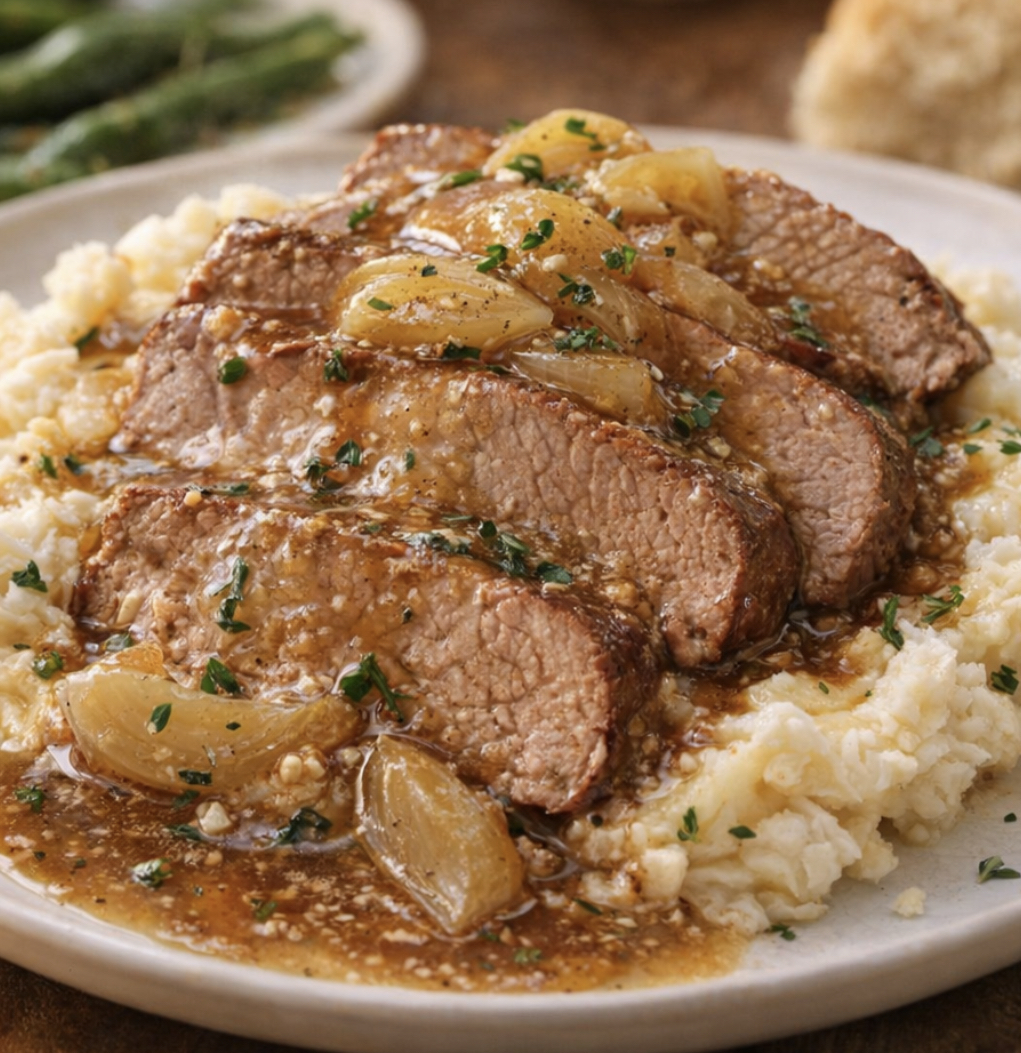
The Sweet, Tangy, Fall-Apart Roast That Tastes Like a French Bistro (Made in Your Slow Cooker)
Some meals feel fancy but are secretly simple.
This is one of them.
Maple syrup and Dijon mustard – two ingredients that have no business being this good together. The sweetness of pure maple. The sharp tang of French mustard. The rich, beefy depth of a slow-cooked roast. All of it melding together for hours until the meat is so tender it falls apart at the mere suggestion of a fork.
This is not your grandmother’s pot roast. There is no tomato paste. No Worcestershire sauce. No mysterious packet of onion soup mix. Just clean, bright, sophisticated flavors that taste like you spent all day at the stove.
But you did not.
Your slow cooker did all the work.
Ten minutes of prep. Eight hours of magic. One unforgettable dinner.
Let me show you why this Maple Dijon Beef Roast will become your new favorite way to cook beef.
Why This Recipe Is a Revelation
You have made beef roasts before. Maybe they turned out dry. Maybe the sauce was bland. Maybe you spent more time checking on it than actually enjoying your day.
This recipe changes everything.
Sweet and tangy perfection – Maple syrup and Dijon mustard create a sauce that is simultaneously sweet, sharp, savory, and complex. The maple caramelizes slightly as it cooks. The mustard mellows from sharp to silky. Together, they transform into something greater than the sum of their parts.
The perfect cut of beef – Top blade roast (also called flat iron roast or top blade chuck roast) is a hidden gem. It comes from the shoulder, so it has excellent marbling. That marbling breaks down during long, slow cooking into buttery, melt-in-your-mouth tenderness. And it is significantly cheaper than premium cuts like ribeye or tenderloin.
A sauce that makes itself – The beef broth, maple, Dijon, vinegar, and thyme combine in the slow cooker with the beef’s natural juices. No reducing on the stove. No carefully timed additions. Just pour and walk away.
That beautiful glossy finish – An optional cornstarch slurry at the end transforms the cooking liquid into a silky, clingy sauce that coats every shred or slice of beef. Restaurant-quality presentation from your slow cooker.
Company-worthy but weeknight-easy – Serve this to guests and they will think you are a culinary genius. Serve it to your family on a random Tuesday and they will ask when you are making it again. It works for both.
Budget-friendly luxury – Top blade roast is often half the price of chuck roast and a third of the price of premium cuts. You get incredible flavor and tenderness without the sticker shock.
Ingredients
A short list of beautiful, flavorful ingredients.
3 to 3½ pounds beef top blade roast (flat iron roast or top blade chuck roast) – This cut is the secret to the recipe. It has fantastic marbling that renders down during slow cooking into juicy, tender meat. If you cannot find top blade, chuck roast works beautifully as a substitute. Avoid round roasts – they are too lean and will dry out.
1 teaspoon kosher salt – Kosher salt dissolves evenly and seasons the meat throughout. Use half as much if you only have table salt.
½ teaspoon black pepper – Freshly ground is best. The pepper adds a warm, gentle heat that balances the sweetness of the maple.
½ cup pure maple syrup – Not pancake syrup. Not “breakfast syrup.” Pure maple syrup. Grade A dark color has the most robust flavor, but any pure maple syrup works. The real stuff has complex caramel notes that fake syrup cannot replicate.
⅓ cup Dijon mustard – Dijon, not yellow mustard. Dijon has a sharp, sophisticated tang without the harsh vinegar bite of yellow mustard. Grey Poupon is the classic choice, but any Dijon works.
1 cup beef broth (low sodium if possible) – Low-sodium broth gives you control over the salt level. Regular broth works fine – just taste before adding extra salt at the end.
2 tablespoons apple cider vinegar – A little brightness cuts through the richness of the beef and maple. The vinegar mellows as it cooks, leaving behind a pleasant tang.
2 teaspoons fresh thyme leaves, chopped (plus extra for garnish) – Fresh thyme adds an earthy, slightly floral note that pairs beautifully with both maple and Dijon. Dried thyme works in a pinch – use 1 teaspoon.
2 cloves garlic, minced – Sweet, pungent, and aromatic. Garlic is the flavor backbone that ties everything together.
1 small onion, thinly sliced – The onion melts into the sauce as it cooks, adding sweetness and body. You will barely recognize it as onion in the final dish – just deep, savory flavor.
1 tablespoon cornstarch (optional, for thickening) – Creates that glossy, clingy sauce. Optional but highly recommended.
1 tablespoon cold water (optional, for thickening) – Mix with the cornstarch to make a slurry that dissolves without lumps.
Directions
Follow these simple steps for a Maple Dijon Beef Roast that will earn a permanent spot in your recipe collection.
Step 1 – Season the beef
Pat the beef top blade roast dry with paper towels. Drying the surface helps the seasoning stick and promotes better browning (even though you are not browning it first – more on that later).
Sprinkle the kosher salt and black pepper all over the roast. Use your hands to press the seasoning gently into the meat. Every surface should be seasoned.
Step 2 – Layer the aromatics
Place the seasoned roast in the bottom of a 5- to 7-quart slow cooker. If it is slightly too large, that is fine – just nestle it in as best you can.
Scatter the thinly sliced onion and minced garlic around and on top of the beef roast. Do not worry about being precise. They will soften and meld into the sauce as they cook.
Step 3 – Make the sauce
In a medium bowl or large measuring cup, whisk together the pure maple syrup, Dijon mustard, beef broth, apple cider vinegar, and chopped fresh thyme.
Whisk until the mixture is smooth, emulsified, and well combined. The Dijon acts as an emulsifier, helping the maple and broth come together into a cohesive sauce.
Step 4 – Pour and coat
Carefully pour the maple Dijon mixture evenly over the raw beef roast in the slow cooker. Make sure the top of the meat is well coated and the onions are mostly submerged.
Do not stir. Just pour and let the sauce settle around the meat.
Step 5 – Cook low and slow
Cover the slow cooker with the lid.
Cook on LOW for 8 to 9 hours or on HIGH for 4 to 5 hours.
The beef is ready when it is very tender and shreds easily with a fork. A fork inserted into the thickest part should meet almost no resistance.
Low and slow is highly recommended here. The longer cooking time allows the collagen in the meat to break down more completely, resulting in impossibly tender beef. High works in a pinch, but low is better.
Step 6 – Rest the roast
When the beef is done, carefully transfer the roast to a cutting board. Tent it loosely with aluminum foil. Let it rest for about 10 minutes.
While the beef rests, skim any excess fat from the surface of the cooking liquid in the slow cooker. A spoon or a fat separator works well. Do not remove all the fat – some adds flavor – just the big puddles on top.
Step 7 – Thicken the sauce (optional but recommended)
If you would like a thicker, glossier sauce, now is the time.
In a small bowl, stir together the cornstarch and cold water until smooth. This is called a slurry.
Turn the slow cooker to HIGH. Whisk the cornstarch slurry into the hot cooking liquid.
Cover and cook for 10 to 15 minutes, stirring once or twice, until the sauce has thickened slightly. It will not be gravy-thick – just silky and clingy.
Step 8 – Slice or shred
Decide how you want to serve the beef.
For sliced roast – Cut across the grain into ½-inch thick slices. This is beautiful for company.
For shredded beef – Use two forks to pull the meat apart into bite-sized pieces. This is great for sandwiches or serving over mashed potatoes.
Return the sliced or shredded beef to the slow cooker. Gently toss it in the warm maple Dijon sauce until every piece is coated.
Step 9 – Taste and serve
Taste the sauce and adjust seasoning if needed. A pinch more salt or pepper can brighten everything up.
Serve the beef hot, spooning extra sauce and those delicious slow-cooked onions over the top.
Garnish with a few extra fresh thyme leaves if you want that restaurant-style finish.
Then watch your family go silent as they take their first bite. That silence is applause.
Tips for Best Results
These small details separate a good roast from an unforgettable one.
Do not skip patting the beef dry – A dry surface allows the salt and pepper to adhere properly. Wet meat repels seasoning. Take the extra 30 seconds.
Use pure maple syrup, not pancake syrup – Pancake syrup is mostly corn syrup with artificial flavoring. It will make your sauce cloyingly sweet and one-dimensional. Pure maple syrup has complexity, depth, and real caramel notes. Spend the extra few dollars.
Low and slow is worth the wait – Eight to nine hours on LOW produces significantly more tender beef than four to five hours on HIGH. The collagen breaks down more completely. The flavors meld more deeply. Start this roast in the morning, and dinner is ready when you are.
Fresh thyme makes a difference – Dried thyme works in a pinch, but fresh thyme has a brighter, more aromatic quality that lifts the whole dish. If using fresh, strip the leaves from the stems by running your fingers backward down the stem. Discard the woody stems.
Do not skip the resting step – Ten minutes under foil allows the juices to redistribute. Slice or shred immediately and those juices run out onto the cutting board instead of staying in your meat.
Skim the fat before thickening – Too much fat in the sauce makes it greasy and prevents the cornstarch from thickening properly. Skim off the obvious pools, but leave a little for flavor.
Taste before adding salt – Beef broth and Dijon mustard both contain sodium. Taste your sauce before adding more salt. You can always add more. You cannot take it away.
Creative Variations
One incredible recipe. Endless delicious twists.
Spicy Maple Dijon Roast
Add 1 teaspoon of crushed red pepper flakes or 1 diced jalapeño (seeds and all) to the sauce. The heat cuts through the sweetness beautifully. Serve with extra hot sauce on the side.
Bourbon Maple Dijon Roast
Replace ¼ cup of the beef broth with bourbon. The bourbon adds smoky, vanilla notes that pair perfectly with the maple. The alcohol cooks off, leaving only flavor.
Herb Garden Roast
Add 2 tablespoons of fresh rosemary and 2 tablespoons of fresh sage along with the thyme. The trio of hearty herbs creates a deeply savory, almost Thanksgiving-like flavor profile.
Apple Cider Maple Roast
Replace the apple cider vinegar with ½ cup of apple cider. Add 1 cup of peeled, chopped apples to the slow cooker. The apple flavor doubles down on the sweet-tart balance.
Creamy Maple Dijon Roast
After thickening the sauce, stir in ½ cup of heavy cream or sour cream. The cream mellows the tang of the mustard and creates a rich, velvety gravy. Serve over mashed potatoes for maximum comfort.
Maple Dijon Pulled Beef Sandwiches
Shred the beef and pile it onto toasted brioche buns. Top with a scoop of coleslaw and a drizzle of extra sauce. The crunchy, tangy slaw against the sweet-tangy beef is perfection.
Roasted Vegetable Addition
Add 2 cups of chopped carrots, parsnips, or Brussels sprouts to the slow cooker during the last 2 hours of cooking. The vegetables absorb the maple Dijon sauce and become caramelized and tender.
Serving Suggestions
This roast is spectacular on its own. Here is how to build a meal around it.
Over creamy mashed potatoes – The classic choice. Pile the shredded or sliced beef over a mountain of buttery mashed potatoes. Spoon that maple Dijon sauce over everything. Pure comfort.
Over buttered egg noodles – Wide egg noodles catch every bit of that silky sauce. A sprinkle of fresh thyme and a crack of black pepper finish it beautifully.
Over rice pilaf or wild rice – The nuttiness of wild rice or pilaf contrasts with the sweet-tangy sauce. A great option for something a little different.
Alongside roasted root vegetables – Carrots, parsnips, sweet potatoes, and Brussels sprouts roasted until caramelized. The earthy sweetness complements the maple perfectly.
On toasted crusty bread – Pile the shredded beef onto thick slices of toasted baguette or sourdough. Open-faced sandwiches drizzled with sauce. Add a poached egg for breakfast-for-dinner vibes.
Over creamy polenta – The soft, buttery polenta is a beautiful canvas for the shredded beef and sauce. Elegant enough for company.
As a shepherd’s pie base – Shred the beef and mix with the thickened sauce. Top with mashed potatoes and bake until golden. A brilliant use of leftovers.
Storage and Reheating
This roast makes incredible leftovers. The flavor actually deepens overnight.
Refrigerator – Store in an airtight container for up to 4 days. Keep the beef and sauce together – the sauce keeps the meat moist.
Freezer – Freeze for up to 3 months. Use a freezer-safe container or heavy-duty freezer bag. Leave a little room for expansion. Label with the date.
Reheating from fridge – The stovetop method is best. Place beef and sauce in a saucepan over medium-low heat. Cover and warm for 8 to 10 minutes, stirring occasionally. Add a splash of beef broth or water if the sauce has thickened too much. The microwave works in a pinch – use 50% power in 60-second bursts.
Reheating from frozen – Thaw overnight in the refrigerator, then reheat as above. For a faster option, reheat directly from frozen in a covered saucepan over low heat for 15 to 20 minutes, stirring often.
Making ahead for a party – This roast is a dream for entertaining. Make it a day ahead, cool completely, and refrigerate. The next day, skim the solidified fat from the surface, then reheat gently on the stovetop or in a low oven. The flavors will be even better.
What Is Top Blade Roast (Flat Iron)?
You might see this cut labeled a few different ways at the store.
Top blade roast – The most common name. It comes from the shoulder (chuck) area.
Flat iron roast – The same cut, trimmed and shaped into a flat, rectangular roast. Often slightly more expensive but beautifully uniform.
Top blade chuck roast – Another name for the same thing. The “chuck” tells you it comes from the shoulder.
Why is this cut so perfect for slow cooking?
Top blade has excellent marbling – thin veins of fat running through the meat. That fat melts during long, slow cooking, basting the meat from the inside and creating buttery tenderness. The cut also has good connective tissue (collagen), which breaks down into gelatin, giving the sauce body and richness.
If you cannot find top blade, here are good substitutes:
-
Chuck roast – The classic pot roast cut. Slightly more fat, equally delicious. Cook time is the same.
-
Brisket – Very flavorful but can be drier. Cook until fork-tender, which may take 9 to 10 hours on LOW.
-
Short ribs (boneless) – Rich, beefy, and incredibly tender. A more expensive but spectacular option.
Avoid round roasts (bottom round, top round, eye of round). They are too lean and will become dry and tough no matter how long you cook them.
The Magic of Maple and Dijon
You might wonder why maple syrup and Dijon mustard work so well together.
The answer is balance.
Maple syrup brings sweetness, but it is not a simple sweetness. Pure maple has notes of caramel, vanilla, and even a hint of woodsy smokiness. It is complex and deep.
Dijon mustard brings sharpness, but it is not a harsh sharpness. Dijon has a sophisticated tang with notes of white wine and a gentle heat from brown mustard seeds. It is bright and lively.
Together, they create a sauce that hits every part of your palate. Sweetness from the maple. Tang from the mustard. Savory depth from the beef broth. Brightness from the apple cider vinegar. Earthiness from the thyme. Pungency from the garlic.
Each ingredient supports the others. None of them overpowers.
This is why the recipe works with such a short ingredient list. Every component earns its place.
Frequently Asked Questions
Can I use honey instead of maple syrup?
Yes, but the flavor profile changes significantly. Honey has floral notes that maple does not. The result will be delicious but different. Use the same amount of honey as maple.
Can I use yellow mustard instead of Dijon?
You can, but the result will be much sharper and more vinegar-forward. Yellow mustard lacks the sophistication of Dijon. If you only have yellow mustard, reduce the apple cider vinegar slightly to compensate.
Do I need to brown the beef first?
No. That is the beauty of this recipe. The slow cooker does all the flavor development. The maple Dijon sauce is bold enough that you do not miss the browning step. One less pan to wash.
My sauce is too thin. What went wrong?
Nothing. The sauce is meant to be thin before thickening. If you skipped the cornstarch slurry, the sauce will be brothy rather than clingy. Add the slurry at the end for a thicker, glossier sauce.
Can I cook this on HIGH instead of LOW?
Yes. Cook on HIGH for 4 to 5 hours. The beef will still be tender, but LOW produces noticeably more tender results. Use HIGH only when you are short on time.
Can I add potatoes and carrots to the slow cooker?
Absolutely. Add peeled and chopped potatoes and carrots during the last 2 hours of cooking (for LOW) or last hour (for HIGH). Adding them too early turns them to mush.
Is this recipe gluten-free?
Yes, as written. Double-check your beef broth and Dijon mustard labels – most are gluten-free, but some brands add wheat-based thickeners.
Can I make this in an Instant Pot?
Yes. Use the slow cooker function on LOW for 8 hours. Or pressure cook on HIGH for 60 to 75 minutes with a natural release. The texture is slightly different but still delicious.
Final Thoughts
Some recipes are complicated because they need to be.
Some recipes are simple because the cook ran out of time or energy.
This recipe is simple by design.
Every ingredient serves a purpose. Every step earns its place. And the result is something that tastes far more complex than the effort you put in.
That is the magic of slow cooking. You do a little work in the morning. You go about your day. And hours later, you lift the lid to find a pot full of something wonderful.
The maple caramelized into the beef. The Dijon mellowed into silk. The thyme and garlic perfumed every bite. The onions melted into the sauce like they were never there.
This is the kind of meal that makes people slow down. That makes them ask for the recipe. That makes them look at you differently, like you know something they do not.
And maybe you do.
You know that great food does not have to be hard. That a handful of good ingredients and a little patience can create something extraordinary.
Now go find a top blade roast.
Your slow cooker is waiting.