
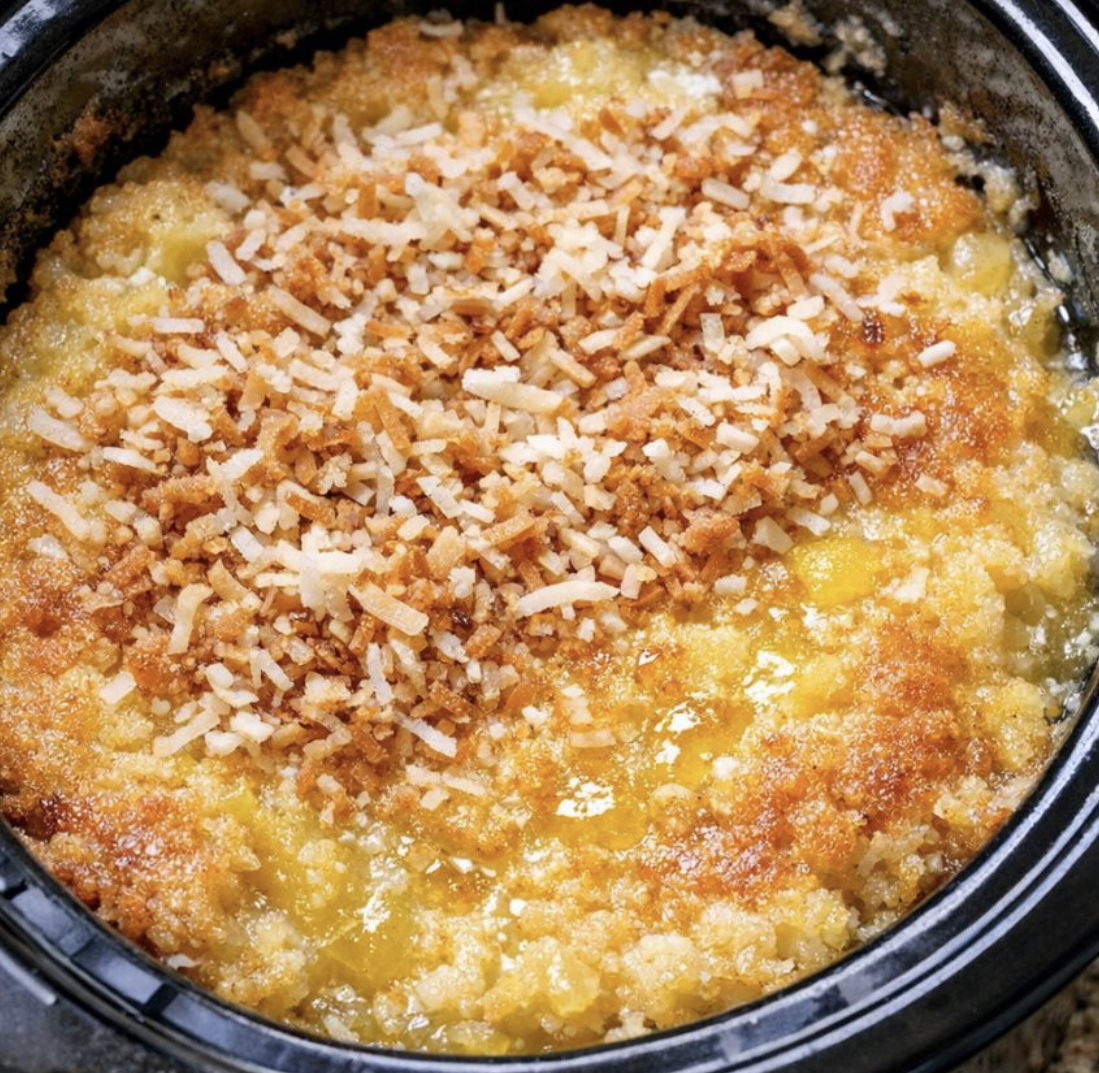
The Retro Dessert That Turns Your Slow Cooker Into a Magic Pudding Machine
Close your eyes and imagine this.
A warm, buttery cake. Soft and tender. Almost fudgy in the center.
Now imagine that cake floating in a pool of sweet, tangy pineapple sauce. Thick and syrupy. Golden and glossy. Each spoonful brings up both cake and pudding, warm and fragrant and utterly irresistible.
Now imagine making that dessert with four ingredients.
No eggs. No oil. No complicated steps. Just cake mix, milk, butter, and canned pineapple.
This is vintage magic. The kind of recipe that traveled from church cookbooks to handwritten recipe cards to the backs of cans. The kind of recipe that grandmothers made because it was cheap and easy and everyone asked for seconds.
And now you can make it in your slow cooker.
Four ingredients. Five minutes of prep. Four hours of anticipation. One unforgettable dessert.
Let me show you why this Slow Cooker Vintage Pineapple Pudding Cake will become your secret weapon for potlucks, holidays, and any night that ends with “what’s for dessert?”
Why This Recipe Is Pure Magic
You have made dump cakes before. You have made slow cooker desserts before. You have never made anything like this.
The self-saucing miracle – The pineapple juice sinks through the cake batter as it cooks, creating a saucy, pudding-like layer underneath while the top transforms into a tender, buttery cake. It is not a dump cake. It is not a cobbler. It is something entirely its own – a self-saucing pudding cake that would have made a 1950s housewife famous at the church social.
Only four ingredients – Yellow cake mix. Whole milk. Melted butter. Crushed pineapple. That is the whole grocery list. No eggs, which means you can make this when your fridge is nearly empty. No special trips to the store.
The slow cooker does everything – No oven needed. No watching a baking cake through a glass door. No worrying about a dry, overbaked dessert. The gentle, moist heat of the slow cooker creates a texture you cannot replicate anywhere else – impossibly tender cake swimming in a pool of syrupy pineapple goodness.
Perfect for every occasion – Potluck? Bring this. Holiday dinner? This works. Tuesday night? Absolutely. It is casual enough for weeknights and special enough for company. The ultimate cross-over dessert.
Budget-friendly vintage wisdom – Cake mix on sale. Canned pineapple. Milk and butter. This entire dessert costs less than a fancy coffee drink and serves eight people generously. Depression-era and mid-century cooks knew what they were doing.
No special equipment – Your slow cooker. A bowl. A whisk. A spatula. That is it. If you have those four things, you can make this dessert.
Ingredients
Four simple ingredients. That is the entire beautiful list.
1 box (15.25 ounces) yellow cake mix – Yellow cake mix is the classic choice here. It has a buttery, vanilla-forward flavor that pairs beautifully with the sweet-tart pineapple. Do not use white cake mix (too bland) or lemon cake mix (too competing). Stick with yellow. Any brand works – Betty Crocker, Duncan Hines, Pillsbury, or store brand.
1 cup whole milk (or 2% milk) – Whole milk creates the richest, most tender cake. The fat content matters here – it keeps the cake moist and soft during the long slow cooking. 2% milk works in a pinch. Avoid skim milk or non-dairy milks – they will produce a drier, less tender cake.
4 tablespoons unsalted butter, melted, plus extra for greasing – Unsalted butter gives you control over the salt level. Melt it gently in the microwave or on the stovetop. Do not substitute margarine – it has too much water and will change the texture.
1 can (20 ounces) crushed pineapple in juice, undrained – This is the magic ingredient. Crushed pineapple, not pineapple chunks. The crushed texture distributes evenly across the cake. And the juice is essential – it creates that glorious pudding sauce as it sinks through the batter. Do not drain. Do not use pineapple in syrup unless absolutely necessary (the syrup is sweeter and less tangy than natural juice).
That is it. No eggs. No oil. No vanilla (though you can add it if you want). No extra sugar. The cake mix has everything it needs.
Directions
Follow these simple steps for a vintage pineapple pudding cake that will transport you back to the best kind of mid-century comfort.
Step 1 – Grease the slow cooker
Lightly grease the inside of a 4- to 6-quart slow cooker crock. Use a little melted butter or nonstick cooking spray. Pay special attention to the bottom and halfway up the sides. This helps the cake release easily when you scoop it out.
Cake sticking to the crock is the only real risk with this recipe. Grease generously.
Step 2 – Make the cake batter
In a medium bowl, combine the dry yellow cake mix, 1 cup of milk, and 4 tablespoons of melted butter.
Whisk or stir just until a smooth, thick batter forms. Do not overmix. A few small lumps are fine. Overmixing develops gluten and makes the cake tough instead of tender.
The batter will be similar to a loose but spreadable cake batter – thicker than pancake batter but thinner than cookie dough. This is exactly right.
Step 3 – Spread the batter in the slow cooker
Pour the cake batter into the bottom of the prepared slow cooker.
Use a spatula to spread it into an even layer that covers the entire base of the crock. Smooth the top as best you can. The batter will be thick, so take your time.
Step 4 – Open the pineapple (do not drain)
Open the can of crushed pineapple. Read that again – do not drain it. The juice is essential. You need every drop.
Step 5 – Pour the pineapple over the batter
Pour the entire can of crushed pineapple with all its juice evenly over the cake batter in the slow cooker.
Here is the most important instruction in the whole recipe – do not stir. Do not mix. Do not swirl. The pineapple and juice should sit as a separate layer on top of the batter.
This is the secret to the self-saucing magic. As the cake cooks, the pineapple juice sinks through the batter, creating that glorious pudding layer underneath while the cake rises and sets above it. Stirring would destroy this process and leave you with pineapple-flavored cake batter soup.
Step 6 – Cook low and slow
Cover the slow cooker with its lid.
Cook on LOW for about 4 hours.
Do not cook on HIGH. Do not shorten the time. The gentle, low heat is essential for the self-saucing magic to work properly.
The cake is done when:
-
The edges are set and slightly pulled away from the sides of the crock
-
The center is just barely set but still very moist
-
You can see a thick, saucy layer of pineapple and syrupy juices bubbling around the cake
-
The top looks glossy and pudding-like rather than dry and cake-like
If you poke the center with a toothpick, it should come out with moist crumbs but not raw batter.
Step 7 – Rest before serving
Once done, turn off the slow cooker.
Let the cake rest, covered, for 10 to 15 minutes.
This rest allows the hot juices to thicken slightly and the cake to firm up while still staying soft and spoonable. If you dig in immediately, the sauce will be very thin and runny. Patience pays off.
Step 8 – Serve warm
Serve the pineapple pudding cake warm, scooping down through both the fluffy cake and the saucy pineapple layer. Each serving should have a bit of both – cake on top, pudding underneath, pineapple throughout.
Use a large spoon or a spatula. It will not slice like a traditional cake. It is meant to be scooped.
Tips for Best Results
These small details separate a good pudding cake from a great one.
Grease the crock generously – This cake loves to stick. Use plenty of butter or cooking spray. Go up the sides. Do not skimp. A stuck cake is heartbreaking to scoop out.
Do not overmix the batter – Stir just until the dry ingredients disappear into the wet. Overmixing develops gluten, and gluten makes cake tough. A few lumps are your friends.
Use whole milk for the richest texture – The fat in whole milk creates a more tender, moist cake. 2% works. Skim milk does not. Your cake deserves the good stuff.
Do not drain the pineapple – The juice is not waste. It is the sauce. Every drop of that liquid gold goes into the slow cooker. Undrained means undrained.
Do not stir after adding the pineapple – This is the number one mistake people make. The pineapple sits on top. That is correct. Stirring ruins everything. Hands off.
Cook on LOW, not HIGH – HIGH will overcook the edges before the center is done. LOW gives the sauce time to develop and the cake time to set properly. Plan for 4 hours.
Let it rest before serving – Ten to fifteen minutes of patience transforms thin pineapple juice into a thick, syrupy pudding. Set a timer. Walk away. Your dessert will thank you.
Serve warm – This cake is meant to be eaten warm, fresh from the slow cooker. The sauce is thinner and more glorious. The cake is softer and more tender. Cold leftovers are good. Warm is transcendent.
Creative Variations
Four ingredients is the beginning. Here is how to make this recipe your own.
Golden Pineapple Pudding Cake
Use a butter recipe or golden cake mix instead of yellow cake mix. The extra butter flavor (from the mix, not actual butter) creates an even richer, more decadent dessert.
Vanilla Bean Dream
Stir 1 teaspoon of vanilla extract or the seeds of one vanilla bean into the cake batter. The vanilla amplifies the buttery cake flavor and pairs beautifully with the pineapple.
Coconut Pineapple Pudding Cake
Add ½ cup of sweetened shredded coconut to the cake batter. Sprinkle another ¼ cup over the top before cooking. The coconut toasts slightly in the steam and adds wonderful texture.
Evaporated Milk Richness
Replace the whole milk with evaporated milk (not sweetened condensed milk). Evaporated milk has a caramelized, slightly nutty flavor that leans into the mid-century pantry style of the original pudding cakes. This is the authentic vintage move.
Brown Sugar Pineapple Cake
Use a yellow cake mix but add ¼ cup of light brown sugar to the batter. The molasses notes deepen the caramel flavor and pair beautifully with the pineapple.
Cherry Pineapple Pudding Cake
Add 1 cup of drained maraschino cherries (halved) on top of the pineapple layer before cooking. The red cherries against the yellow cake look festive and add a tart-sweet pop of flavor.
Spiced Pineapple Cake
Add 1 teaspoon of cinnamon and ¼ teaspoon of nutmeg to the cake batter. The warm spices make this taste like a tropical version of bread pudding. Perfect for fall and winter.
Maple Pineapple Pudding Cake
Replace the milk with ¾ cup of milk and ¼ cup of pure maple syrup (reduce the milk slightly to account for the liquid). The maple adds a woodsy sweetness that complements the pineapple beautifully.
Tropical Trio Cake
Add ½ cup of drained crushed mandarin oranges and ½ cup of shredded coconut along with the pineapple. The combination of citrus, pineapple, and coconut tastes like a tropical vacation in dessert form.
Serving Suggestions
This pudding cake is wonderful on its own. Here is how to make it even more special.
With vanilla ice cream – The classic move. A scoop of cold, creamy vanilla ice cream melting into warm pineapple pudding cake is one of life’s great pleasures. Do not skip this if you have ice cream in the freezer.
With a dollop of whipped cream – Homemade whipped cream (just heavy cream, a little sugar, and vanilla) adds lightness and elegance. Canned whipped cream works in a pinch.
With a sprinkle of toasted coconut – Toasted shredded coconut adds crunch and nutty flavor. Toast it in a dry skillet for 2 to 3 minutes until golden.
With a drizzle of caramel sauce – Salted caramel sauce over pineapple pudding cake sounds excessive. It is. It is also incredible.
With fresh berries on the side – Fresh raspberries, blueberries, or sliced strawberries add brightness and acidity that cut through the sweetness.
In a parfait glass – Layer warm pudding cake, sauce, and whipped cream in a clear glass. Repeat. Gorgeous presentation for dinner parties.
For breakfast – Do not tell anyone. Warm pineapple pudding cake with coffee for breakfast is a secret worth keeping.
Storage and Reheating
This cake keeps beautifully. Here is how to handle leftovers.
Refrigerator – Let the cake cool completely to room temperature. Cover the slow cooker crock with its lid or plastic wrap, or transfer to an airtight container. Refrigerate for up to 3 days.
The sauce thickens when cold – In the refrigerator, the pineapple sauce transforms into a thick, almost jammy consistency. This is not a mistake – it is delicious. Some people prefer it cold straight from the fridge.
Reheating in the slow cooker – Return the leftover cake to the slow cooker. Add a splash of milk or pineapple juice. Cover and heat on LOW for 30 to 45 minutes until warmed through.
Reheating in the microwave – Scoop an individual serving into a microwave-safe bowl. Microwave on 50% power for 45 to 60 seconds. The cake will soften and the sauce will loosen.
Reheating in the oven – Transfer leftovers to an oven-safe dish. Cover with foil. Warm at 300°F for 15 to 20 minutes.
Do not freeze – The texture of both the cake and the sauce degrades significantly in the freezer. This dessert is best fresh or refrigerated, not frozen.
The Vintage Magic of Self-Saucing Pudding Cakes
You might wonder how this recipe works without stirring or mixing.
The answer is beautiful in its simplicity.
Self-saucing pudding cakes (also called pudding cakes or magic cakes) rely on a simple scientific principle. The cake batter is thicker than the liquid poured over it. As the dessert cooks, the liquid (pineapple juice) sinks through the batter. The heat activates the leavening agents in the cake mix, causing the batter to rise and set into a tender cake layer.
Meanwhile, the pineapple juice that sank to the bottom combines with the butter in the batter to create a rich, syrupy sauce. The crushed pineapple stays suspended throughout, adding texture and flavor to both the cake and the sauce.
When you scoop into the finished dessert, you get three things at once – the tender cake on top, the syrupy sauce at the bottom, and the pineapple throughout.
No stirring. No complex techniques. Just patience and the magic of heat and gravity.
This technique was wildly popular in the 1940s, 50s, and 60s. Home cooks loved it because it was impressive (ooh, a self-saucing cake!) but required almost no skill. The recipes fell out of fashion as convenience foods became even more convenient.
But vintage wisdom never really disappears. It just waits to be rediscovered.
Welcome back, self-saucing pudding cake. We missed you.
Frequently Asked Questions
Can I use fresh pineapple instead of canned?
Fresh pineapple lacks the syrup and consistent juice content of canned. It will not create the same saucy pudding layer. Stick with canned crushed pineapple in juice for the best results.
Can I use pineapple chunks instead of crushed?
You can, but the texture will be different. Chunks create larger pockets of pineapple rather than distributing it evenly throughout. The sauce still forms, but the overall experience changes. Crushed is better.
What size slow cooker works best?
A 4- to 6-quart slow cooker is ideal. The cake needs room to rise and the sauce needs space to bubble. A larger slow cooker (7+ quarts) will spread the batter too thin and may overcook the edges.
Can I cook this on HIGH to save time?
Not recommended. HIGH cooks the edges too quickly while the center remains underdone. The sauce also develops differently – thinner and less pudding-like. LOW for 4 hours is the way.
My cake looks wet and underdone in the center. Is that okay?
Yes! This is a pudding cake, not a traditional cake. The center should be very moist and almost fudgy. If it looks completely dry and cake-like, it is overcooked. The glossy, pudding-like top is the goal.
Can I double this recipe?
Not in a standard slow cooker. A 4- to 6-quart crock cannot hold a double batch. Use two separate slow cookers or make it in batches.
Can I make this gluten-free?
Yes. Use a gluten-free yellow cake mix. Check that your other ingredients (especially the pineapple – canned in juice is usually gluten-free) are also gluten-free. The recipe works exactly the same.
Can I use a different cake flavor?
Yellow is classic, but butter recipe, golden, or even white cake mix all work. Avoid chocolate (clashes with pineapple) and lemon (too competing). Spice cake could work for a fall/winter variation.
Why does my cake stick to the crock?
Either you did not grease enough, or you cooked it too long. Grease generously, and start checking for doneness at 3½ hours. Every slow cooker runs slightly differently.
Final Thoughts
Some desserts demand attention.
They require sifting and creaming and folding and careful temperature monitoring. They are wonderful. They are also exhausting.
This is not that dessert.
This is the dessert you make when you want something warm and sweet and comforting without any drama. The dessert that asks almost nothing of you but gives back so much. The dessert that feels like a hug from someone who loves you.
Four ingredients. A slow cooker. A few hours of patience.
That is all it takes to create something that tastes like vintage Americana. Something that would have made a mid-century housewife proud. Something that your grandmother – or your grandmother’s grandmother – would have recognized as pure, unpretentious comfort.
The cake is tender and buttery. The sauce is sweet and tangy and syrupy. The pineapple adds little bursts of sunshine in every bite.
Serve it warm with vanilla ice cream on a cold winter night. Serve it at a summer potluck with fresh berries on the side. Serve it on a random Tuesday just because you can.
However you serve it, serve it with a big spoon and an even bigger smile.
Because you just made magic with four ingredients and a slow cooker.
And that never goes out of style.