
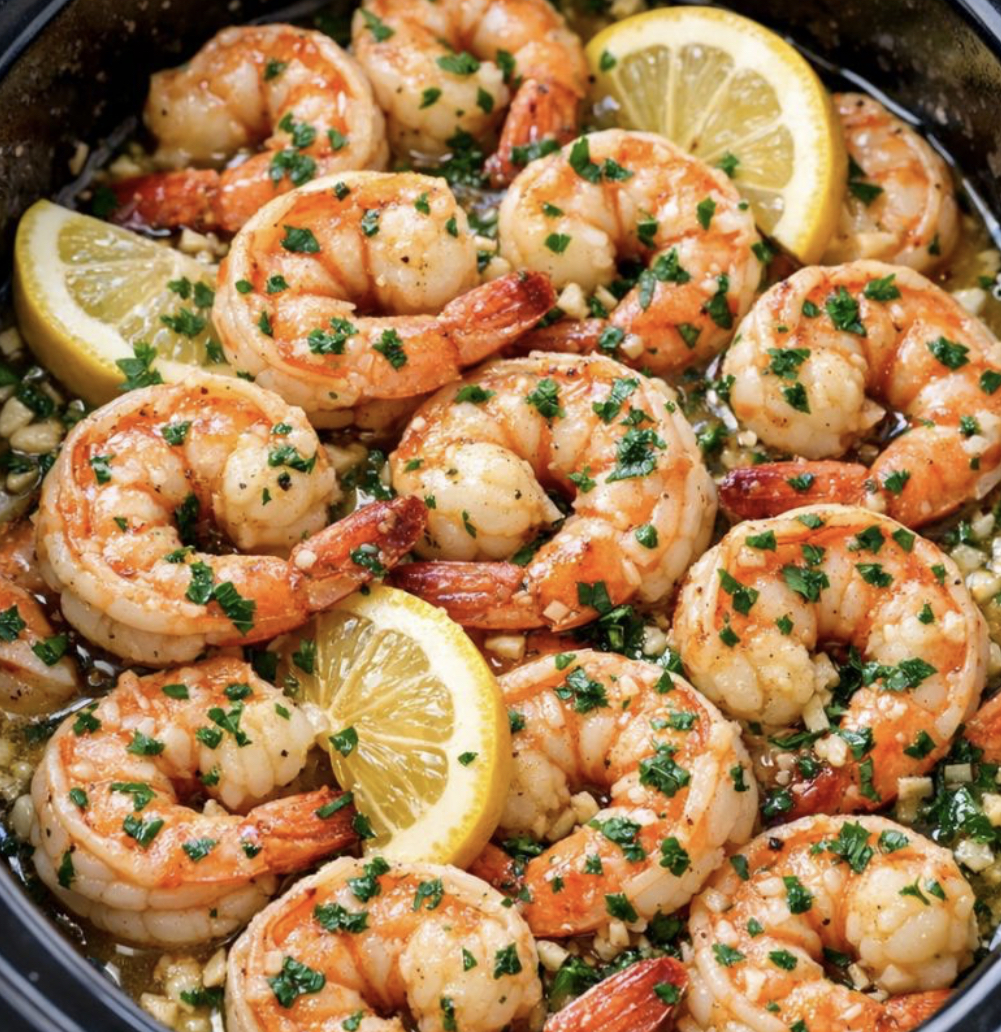
Ingredients
Five simple ingredients. Each one earns its place.
2 pounds raw frozen shrimp, peeled and deveined (tail on or off) – The star of the show. Raw frozen shrimp are ideal. They go straight from the freezer to the slow cooker – no thawing needed. Look for shrimp that are already peeled and deveined to save time. Tail-on shrimp look prettier and give you something to hold onto. Tail-off shrimp are easier to eat. Both work. Choose medium or large shrimp (31/40 or 21/25 count). Do not use cooked shrimp – they will become rubbery and overcooked. Do not thaw the shrimp first. The size of the shrimp matters for cook time – larger shrimp (21/25 count) may need closer to 2 hours; smaller shrimp (41/50 count) may be done at 1½ hours.
½ cup unsalted butter, cut into pieces – The richness. Unsalted butter gives you control over the salt level (you add salt separately). Cut the butter into small pieces (about ½-inch cubes) so it melts evenly and quickly. Do not substitute margarine – it has too much water and will make the sauce thin. Do not use salted butter unless you reduce the added salt.
4 cloves garlic, minced (or 1½ teaspoons garlic powder) – The savory depth. Fresh garlic is pungent and aromatic. Mince it finely so it distributes evenly. If you do not have fresh garlic, garlic powder works beautifully – it blends seamlessly into the sauce and has a slightly milder, sweeter flavor. Do not use garlic salt – it will add too much sodium.
¼ cup fresh lemon juice (about 2 lemons) – The brightness. Fresh lemon juice is essential. It adds acidity that cuts through the richness of the butter and balances the savory garlic. Bottled lemon juice lacks the brightness and complexity of fresh. Do not substitute. Roll the lemons on the counter before juicing to get the most juice.
1 teaspoon kosher salt, plus more to taste – The enhancer. Kosher salt dissolves evenly and seasons the shrimp and the sauce. The shrimp themselves have a natural salinity, but they need a little help. Taste the sauce at the end and add more salt if needed. Use half as much table salt.
Directions
Follow these simple steps for frozen shrimp that will earn a permanent spot in your rotation.
Step 1 – Layer the frozen shrimp
Place the raw frozen shrimp in an even layer on the bottom of a 4- to 6-quart slow cooker.
The shrimp should go in straight from the freezer. Do not thaw first.
It is okay if they are a bit clumped together, but scatter them as evenly as you can so they cook at the same rate. Use your hands (or a spoon) to break up any large frozen clumps.
Step 2 – Add the butter, garlic, and salt
Scatter the butter pieces evenly over the top of the frozen shrimp.
Sprinkle the minced garlic (or garlic powder) and kosher salt over everything.
Step 3 – Add the lemon juice
Pour the fresh lemon juice over the shrimp, butter, and garlic.
Do not add water or broth. The shrimp will release liquid as they cook and create their own sauce.
Step 4 – Cook
Cover the slow cooker with the lid.
Cook on LOW for 1½ to 2 hours.
Do not cook on HIGH. The shrimp cook quickly and evenly on LOW. HIGH would risk overcooking them.
The shrimp are done when they are:
-
Opaque (not translucent)
-
Pink (not grayish)
-
Firm but still tender
-
The centers are no longer translucent
Start checking around the 1½-hour mark, especially if your slow cooker tends to run hot. Overcooked shrimp are rubbery and tough. Undercooked shrimp are translucent and soft. Check early.
Step 5 – Stir and taste
Once the shrimp are cooked, gently stir them in the lemon-butter-garlic sauce to coat evenly.
Taste the sauce. Add a pinch more salt if needed.
If you would like a little extra brightness, squeeze in another splash of fresh lemon juice at this point.
Step 6 – Serve
Turn the slow cooker to WARM.
Serve the shrimp straight from the crock. Spoon the shrimp and plenty of the sauce over rice, pasta, or crusty bread so it can soak up all the flavor.
Then watch your family go silent as they take their first bite. That silence is the highest compliment.
Tips for Best Results
These small details separate a good shrimp dish from a great one.
Do not thaw the shrimp – This is not a typo. The recipe is designed for frozen shrimp. The slow cooker gently thaws and cooks them simultaneously. Thawed shrimp would cook too quickly and may become rubbery.
Use raw shrimp, not cooked – Cooked shrimp will become tough and rubbery in the slow cooker. Raw shrimp cook perfectly in 1½ to 2 hours. Always check the package – it should say “raw” or “uncooked.”
Do not add extra liquid – The frozen shrimp release their own liquid as they thaw. That liquid combines with the butter and lemon to create the perfect amount of sauce. Adding water or broth will make the sauce thin and watery.
Do not cook on HIGH – LOW is essential. The gentle heat cooks the shrimp evenly without making them tough. HIGH would cook the edges too quickly while the centers remain frozen.
Check for doneness early – Shrimp cook quickly. Start checking at 1½ hours. Overcooked shrimp are rubbery and sad. Undercooked shrimp are translucent and soft. The sweet spot is when they are just opaque and pink.
Fresh lemon juice is essential – Bottled lemon juice lacks the brightness and complexity of fresh. Squeeze your own. The extra two minutes of effort make a noticeable difference.
Use unsalted butter – Unsalted butter gives you control over the salt level. The shrimp and the added salt provide plenty of flavor. Salted butter could make the dish too salty.
Serve immediately – Shrimp are best right after cooking. They can become rubbery if left on WARM for too long. Serve as soon as they are done.
Spoon the sauce over everything – The lemon-butter-garlic sauce is the best part. Do not let it go to waste. Spoon it over the shrimp. Spoon it over rice, pasta, or bread. Use it as a dipping sauce.
Creative Variations
Five ingredients is the starting point. Here is how to make this recipe your own.
Spicy Lemon Garlic Shrimp
Add ½ teaspoon of crushed red pepper flakes along with the garlic. The heat cuts through the richness of the butter and adds a warm, spicy kick. Serve with extra hot sauce on the side.
Herbed Lemon Garlic Shrimp
Add 1 teaspoon of dried oregano, 1 teaspoon of dried basil, and 1 tablespoon of fresh chopped parsley. The herbs add an Italian-inspired note. Serve over pasta with grated Parmesan cheese.
Cajun Lemon Shrimp
Add 1 tablespoon of Cajun seasoning (and reduce or omit the salt – Cajun seasoning is salty). The spicy, herbal, peppery blend adds heat and complexity. Serve with rice and andouille sausage for a Louisiana-inspired meal.
Lemon Dill Shrimp
Add 1 tablespoon of fresh chopped dill (or 1 teaspoon of dried dill) along with the garlic. Dill and shrimp are a classic pairing. The bright, slightly anise-like herb complements the lemon and butter beautifully.
White Wine Lemon Shrimp
Add ¼ cup of dry white wine (Pinot Grigio or Sauvignon Blanc) along with the lemon juice. The wine adds acidity, depth, and a subtle fruitiness. The alcohol cooks off, leaving only flavor.
Parmesan Lemon Shrimp
After cooking, stir in ¼ cup of grated Parmesan cheese. The salty, nutty cheese adds umami and makes the sauce even richer. Serve over pasta with extra Parmesan on top.
Caper Lemon Shrimp
Add 2 tablespoons of drained capers along with the garlic. Capers add a briny, tangy, salty punch that pairs beautifully with the lemon and butter. This is a piccata-style shrimp.
Coconut Lemon Shrimp
Replace half of the butter with coconut oil. Add ¼ cup of coconut milk and 2 tablespoons of shredded coconut. The coconut adds sweetness and a tropical note. Serve over jasmine rice.
Serving Suggestions
This lemon garlic shrimp is spectacular on its own. Here is how to serve it.
Over rice – White rice, brown rice, or jasmine rice. The rice soaks up all that glorious lemon-butter sauce. This is the classic and best choice.
Over pasta – Linguine, angel hair, or spaghetti. The noodles catch the sauce beautifully. Toss the pasta in a little of the sauce before adding the shrimp on top. Add a sprinkle of fresh parsley and Parmesan cheese.
With crusty bread – Warm, crusty bread for dipping into the lemon-butter sauce. A baguette, sourdough, or ciabatta works beautifully. This is the simplest and most satisfying way to serve it.
Over zucchini noodles – For a low-carb option, serve the shrimp and sauce over spiralized zucchini noodles (zoodles). The zoodles soften slightly in the warm sauce.
Over cauliflower rice – Another low-carb option. The cauliflower rice soaks up the sauce without the carbs of regular rice.
With roasted vegetables – Roasted asparagus, broccoli, or Brussels sprouts alongside the shrimp. The caramelized vegetables complement the bright, buttery shrimp.
As an appetizer – Serve the shrimp in a bowl with toothpicks or small forks. Provide plenty of crusty bread for dipping into the sauce. A perfect party appetizer.
In tacos – Pile the shrimp into warm corn or flour tortillas. Top with shredded cabbage, avocado, and a drizzle of the lemon-butter sauce. Shrimp tacos, elevated.
Storage and Reheating
Shrimp are best fresh, but leftovers can be enjoyed.
Refrigerator – Store shrimp and sauce together in an airtight container for 1 to 2 days. Shrimp do not keep as long as chicken or beef. Eat leftovers within 2 days.
Freezer – Freezing is not recommended. The texture of cooked shrimp becomes rubbery and unpleasant when frozen and thawed. Make only what you will eat within a day or two.
Reheating from fridge – The microwave is the easiest method. Heat in 30-second bursts at 50% power until just warmed through. Do not overheat – shrimp become rubbery. The stovetop works too – warm gently in a covered saucepan over low heat for 3 to 5 minutes, adding a splash of lemon juice or water to loosen the sauce.
Do not overheat – Overheating is the enemy of leftover shrimp. Gentle, low-heat reheating is essential. Better to eat them slightly cool than rubbery and tough.
Cold shrimp salad – Leftover shrimp can be chopped and mixed with mayonnaise, celery, and herbs for a shrimp salad. Serve on a bed of lettuce or in a sandwich.
Why Shrimp Work in the Slow Cooker (And Why Most People Get It Wrong)
Most slow cooker recipes for seafood are terrible. The shrimp turn out rubbery. The fish turns into mush.
Why does this recipe work?
Shrimp cook in minutes, not hours – Most slow cooker recipes cook for 4, 6, or 8 hours. Shrimp cook in 1½ to 2 hours. That is the secret. Do not leave shrimp in the slow cooker all day. They will be ruined.
Low heat is essential – LOW heat (around 190°F) gently cooks the shrimp without toughening them. HIGH heat would cook the edges too quickly, leaving the centers undercooked or the whole shrimp rubbery.
Frozen shrimp are better than fresh for this method – Frozen shrimp release moisture slowly as they thaw. That moisture becomes part of the sauce. Fresh shrimp do not have that same slow-release moisture.
The butter and lemon protect the shrimp – The fat in the butter coats the shrimp, helping them cook evenly. The acid in the lemon helps keep them tender.
The key takeaway: Shrimp are fast. Even in a slow cooker. Do not treat them like a pot roast.
Frequently Asked Questions
Can I use fresh (not frozen) shrimp?
Yes. Reduce the cook time to 1 hour on LOW. Check for doneness at 45 minutes. Fresh shrimp cook even faster than frozen. Watch them carefully.
Can I use cooked frozen shrimp?
No. Cooked shrimp will become tough and rubbery in the slow cooker. Use raw shrimp only.
Can I use pre-cooked shrimp from the deli?
No. Same problem – they will become rubbery. Raw shrimp only.
Can I use shrimp with the shells on?
Yes, but the sauce will be messier, and the shrimp will be harder to eat. Peeled shrimp are strongly recommended for ease of eating.
My shrimp are rubbery. What went wrong?
You overcooked them. Shrimp cook quickly. Start checking at 1½ hours. Every slow cooker is different. Next time, check earlier. Also, make sure you are using LOW heat, not HIGH.
My shrimp are undercooked. What should I do?
If the shrimp are still translucent after 1½ hours, cook for an additional 15 to 30 minutes. Check every 15 minutes. Undercooked shrimp are safe to continue cooking – they just need a little more time.
Can I double this recipe?
Only if your slow cooker is 7 quarts or larger. A standard 6-quart slow cooker can hold about 4 pounds of shrimp in a single layer. Overcrowding will lead to uneven cooking.
Can I add vegetables to the slow cooker?
Yes. Add thinly sliced bell peppers, onions, or cherry tomatoes. Add them at the beginning – they will soften and add flavor to the sauce. Do not add delicate vegetables like spinach or zucchini – they will turn to mush.
Can I use salted butter instead of unsalted?
Yes. Reduce the added kosher salt to ½ teaspoon. Taste the sauce at the end and add more salt if needed.
Is this recipe keto-friendly?
Yes. Shrimp are low-carb. Butter is fat. Lemon juice has minimal carbs. Garlic has minimal carbs. Serve over cauliflower rice or zucchini noodles for a complete keto meal.
Final Thoughts
Some recipes are complicated because they are trying to impress.
This recipe is simple because it knows it does not need to try.
Five ingredients. A slow cooker. A little over an hour. That is all it takes to create a shrimp dish that is buttery, garlicky, bright, and absolutely delicious.
The frozen shrimp go in hard and cold. They come out tender, pink, and perfect. The butter melts into a rich sauce. The garlic adds savory depth. The lemon adds brightness. And the whole thing tastes like something you would order at a nice restaurant.
This is the recipe you make when you want something special but do not have a lot of time. The recipe you make when you forgot to take the shrimp out of the freezer. The recipe you make when you want to impress someone without stressing yourself out.
Serve it over rice. Serve it over pasta. Serve it with crusty bread for dipping.
However you serve it, serve it with love.
Because that is what this food is – love, slow-cooked and served warm, in under two hours.
Now go get that frozen shrimp.
Your slow cooker is waiting.