
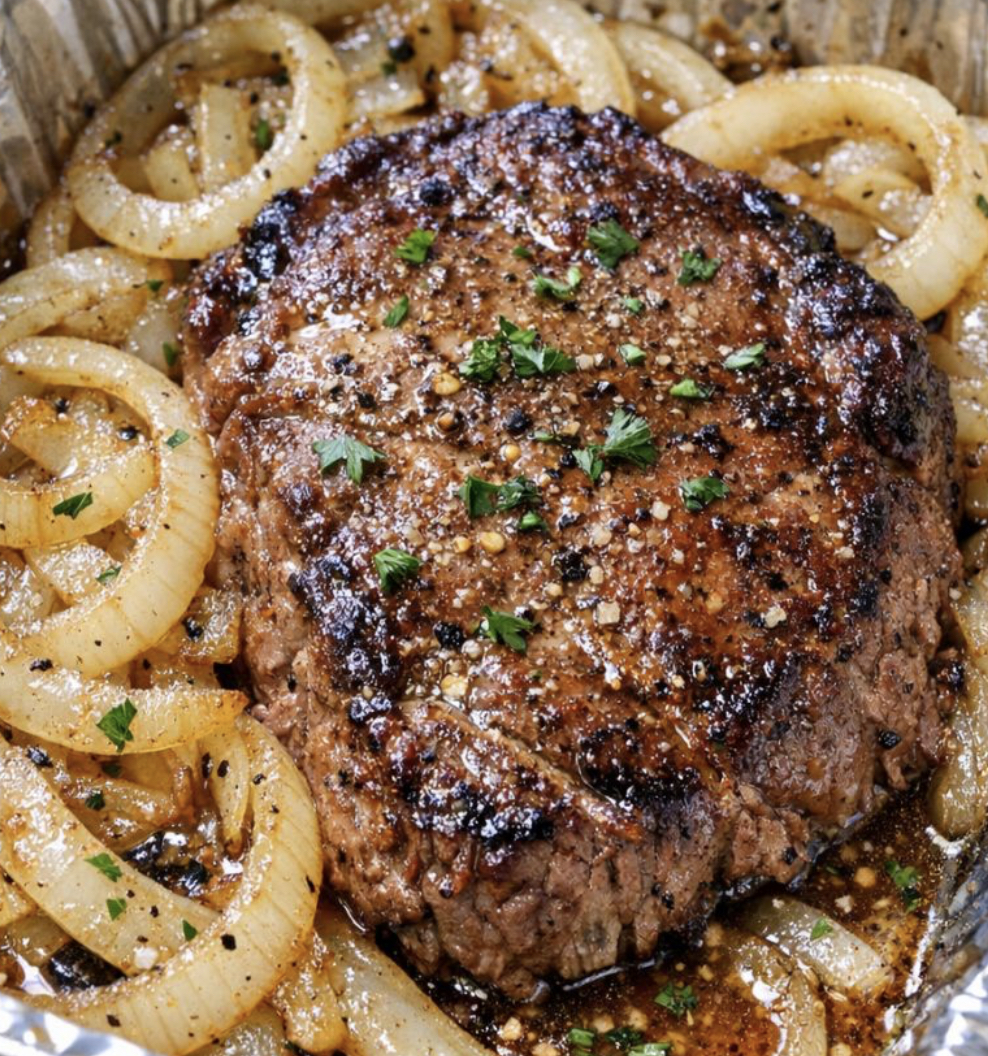
Ingredients
Four simple ingredients. Choose them well.
1½ to 2 pounds beef steak (such as sirloin, round, or chuck, about 1-inch thick) – The star of the show. You do not need expensive cuts for this method. Sirloin is a great balance of flavor and tenderness. Round steak is lean and budget-friendly. Chuck steak has more marbling and becomes very tender. Look for steaks that are about 1 inch thick. If your steak is thicker, add a few minutes to the cook time. If it is thinner, reduce the time. Choose steaks with a little marbling – the fat adds flavor and moisture. Do not use pre-cut “stir-fry” strips or thinly sliced steaks – they will overcook.
2 large onions, thinly sliced into rings or half-moons – Yellow onions are the classic choice. They have the perfect balance of sweetness and sharpness. As they cook in the sealed packet, they soften, release their moisture, and become sweet and almost jammy. The steam from the onions helps cook the steak gently. Slice them thinly (about ¼ inch) so they cook through. Sweet onions (Vidalia, Walla Walla) work beautifully and add even more sweetness. Red onions work too but have a slightly sharper flavor.
3 tablespoons olive oil or melted butter – The fat that carries flavor and helps everything cook evenly. Olive oil adds a fruity, peppery note. Butter adds richness and a nutty, dairy sweetness. Both work beautifully. Choose based on your preference or what you have on hand. Do not use extra-virgin olive oil if you are concerned about smoke point – regular olive oil or melted butter is fine at 400°F.
1½ teaspoons salt and 1 teaspoon black pepper (combined, or to taste) – The only seasonings you need. Salt enhances the natural flavor of the beef and onions. Pepper adds warmth and a subtle, piney, floral note. Use kosher salt if you have it. Use freshly ground black pepper if you can. This is not a complicated spice blend. Let the beef and onions shine.
Foil (heavy-duty aluminum foil) – Not an ingredient, but essential. Use heavy-duty foil. Regular foil can tear during cooking or when opening. You need 4 large sheets, each big enough to wrap one portion of steak and onions with room to fold and seal – about 12×12 inches.
Directions
Follow these simple steps for steak and onion foil bake that will earn a permanent spot in your rotation.
Step 1 – Preheat the oven
Preheat your oven to 400°F (200°C) .
Tear off 4 large sheets of heavy-duty aluminum foil. Each sheet should be big enough to wrap around a portion of steak and onions with room to fold and seal – about 12×12 inches.
Step 2 – Prepare the onions
Slice the onions into thin rings or half-moons. Place them in a medium bowl.
Drizzle with the olive oil or melted butter.
Sprinkle with about half of the salt and pepper mixture.
Toss gently with your hands or tongs until the onions are well coated.
Step 3 – Prepare the steak
Cut the steak into 4 even portions. If you are using one large steak, cut it into 4 equal pieces. If you are using 4 small steaks, leave them whole.
Pat each piece dry with paper towels. This helps the seasoning stick and prevents steaming inside the packet.
Season both sides of each steak with the remaining salt and pepper.
Step 4 – Assemble the foil packets
Lay out the foil sheets on your counter.
Divide the onions evenly among the centers of the foil sheets. Make a little bed of onions for each portion.
Place one piece of steak on top of each mound of onions.
If any oil or seasoning is left in the onion bowl, spoon it over the steaks.
Step 5 – Seal the packets
Fold each foil sheet up around the steak and onions.
Bring the long sides together over the top and fold them down tightly. Fold multiple times to create a tight seal.
Roll up the ends snugly as well.
Make sure there are no gaps. No steam should be able to escape. A tight seal is essential.
Step 6 – Bake
Arrange the foil packets on a baking sheet in a single layer.
Place the baking sheet in the preheated oven.
Bake for 20 to 25 minutes.
-
20 minutes – Medium-rare to medium doneness
-
25 minutes – Medium to medium-well
-
For tougher cuts (like chuck), add 5 to 10 minutes
Step 7 – Rest and open
Carefully remove the baking sheet from the oven. Use oven mitts – the packets are very hot.
Let the packets rest for 5 minutes. This allows the juices to redistribute inside the meat.
Use caution when opening the packets – the steam will be very hot. Open away from your face.
Step 8 – Serve
Open each packet. Spoon the soft onions and juices over the steak.
Serve directly from the foil (placed on plates) or transfer the steak and onions to plates.
Watch your family take their first bite and close their eyes in bliss.
Tips for Best Results
These small details separate a good foil-baked steak from a great one.
Use heavy-duty foil – Regular foil can tear during cooking or when opening. Heavy-duty foil is worth the extra cost. Do not use non-stick foil – it can be harder to seal.
Pat the steak dry – Dry meat browns better (even in a foil packet) and allows the seasoning to stick. Wet meat will steam more than it roasts.
Do not skip the onions – The onions are not just a topping. They create a bed for the steak, release moisture that turns into steam, and infuse the meat with sweet, aromatic flavor. The foil packet method works without them, but it is much better with them.
Slice the onions thinly – Thin slices (about ¼ inch) cook through and become soft and sweet. Thick chunks of onion may remain crunchy and harsh.
Season generously – A foil packet concentrates flavors. Do not be shy with the salt and pepper. The beef and onions can handle it.
Seal the packets tightly – This is the most important step. No steam should escape. A loose seal means dry steak. Fold the edges over multiple times.
Do not open the packets during cooking – The steam inside is what keeps the steak moist and cooks the onions. Opening a packet releases that steam. Trust the process.
Let the packets rest before opening – Five minutes of rest allows the juices to redistribute. If you open immediately, the juices will run out onto the foil. Patience pays off.
Watch the steam when opening – The steam inside the packets is very hot. Open away from your face. Let the steam escape for a few seconds before diving in.
Spoon the juices over the steak – The juices at the bottom of the packet are pure liquid gold – a combination of beef juices, onion juices, and oil. Do not leave them behind.
Creative Variations
Four ingredients is the starting point. Here is how to make this recipe your own.
Garlic Steak and Onion Foil Bake
Add 4 to 6 cloves of minced garlic to the onions before tossing with oil. The garlic melts into the onions and infuses the steak with sweet, pungent flavor. Add ½ teaspoon of garlic powder to the seasoning blend for even more garlic.
Herbed Steak and Onion Foil Bake
Add 1 teaspoon of dried thyme, 1 teaspoon of dried rosemary, or 2 tablespoons of fresh chopped parsley to the onion mixture. The herbs add an earthy, aromatic note. Fresh rosemary sprigs placed on top of the steak before sealing are especially good.
Balsamic Steak and Onion Foil Bake
Add 1 tablespoon of balsamic vinegar to the onion mixture. The vinegar adds tanginess and sweetness and helps the onions caramelize. Use a good quality balsamic for the best flavor.
Mushroom and Onion Steak Foil Bake
Add 8 ounces of sliced cremini mushrooms to the onion mixture. The mushrooms release their earthy flavor and become tender and meaty. Use a little extra oil to coat the mushrooms.
Bell Pepper and Steak Foil Bake
Add 1 sliced bell pepper (any color) to the onion mixture. The bell pepper adds sweetness, color, and a fresh vegetal note. Red and yellow peppers are sweetest. Green peppers are slightly bitter.
Spicy Steak and Onion Foil Bake
Add ½ teaspoon of crushed red pepper flakes or 1 diced jalapeño (seeds and all) to the onion mixture. The heat cuts through the richness of the beef. Serve with extra hot sauce on the side.
Worcestershire Steak and Onion Foil Bake
Add 1 tablespoon of Worcestershire sauce to the onion mixture. The Worcestershire adds umami, tang, and fermented depth. It is a classic pairing with beef.
Steak and Onion with Compound Butter
After cooking, top each steak with a slice of compound butter (butter mixed with garlic, herbs, or blue cheese). The butter melts over the hot steak, adding richness and flavor.
Serving Suggestions
This steak and onion foil bake is a complete meal. Here is how to serve it.
Directly from the foil – Place each sealed packet on a plate. Let everyone open their own at the table. It is fun, it is impressive, and it keeps the steak hot.
With crusty bread – Warm, crusty bread for sopping up those delicious juices at the bottom of the foil. A baguette or sourdough works beautifully.
With mashed potatoes – Creamy mashed potatoes soak up the beef and onion juices. A classic, comforting combination.
With roasted potatoes – Toss potato wedges with olive oil, salt, and pepper. Roast on a separate baking sheet alongside the foil packets (or while the packets rest).
With a simple green salad – A sharp vinaigrette cuts through the richness. Mixed greens, cherry tomatoes, and a lemony dressing.
Over rice – White rice or brown rice absorbs the juices beautifully. Spoon the steak, onions, and juices over the rice.
With steamed vegetables – Steamed broccoli, asparagus, or green beans alongside the steak. The fresh vegetables balance the rich, savory beef.
In sandwiches – Slice the cooked steak thinly. Pile it onto a toasted roll with the soft onions and a smear of horseradish sauce. An incredible steak sandwich.
Storage and Reheating
This steak is best fresh, but leftovers are still delicious.
Refrigerator – Store steak, onions, and juices together in an airtight container for up to 3 days. The steak may lose some of its tenderness.
Freezer – Freezing is not recommended. The texture of the steak will change when frozen and thawed. Make only what you will eat within a few days.
Reheating from fridge – The best method is the oven. Place the steak and onions in a foil packet again. Heat at 350°F for 8 to 10 minutes. The microwave works in a pinch – use 50% power in 30-second bursts – but the steak may become tough.
Do not overheat – Gentle reheating is essential. Overheating will make the steak tough and dry.
Cold steak salad – Slice the leftover steak thinly. Serve over a bed of greens with the cold onions, cherry tomatoes, and a vinaigrette. A delicious steak salad.
Why This Method Works for Tougher Cuts
You might be skeptical about using budget cuts like round or chuck steak for this recipe.
Here is why it works.
The foil packet creates a steamy environment – When the steak is sealed in foil with the onions, the moisture from the onions and the steak itself turns to steam. That steam surrounds the steak, cooking it gently and evenly.
Steam tenderizes – The moist heat of the steam helps break down the tough connective tissue in budget cuts. It is similar to braising, but faster and with less liquid.
The onions add moisture – The sliced onions release a surprising amount of liquid as they cook. That liquid becomes steam and also pools at the bottom of the packet, creating a shallow braising liquid.
Lower temperature (400°F vs. 500°F for searing) – Traditional steak cooking uses very high heat to create a crust. This method uses moderate heat, which is gentler on tougher cuts.
Sirloin – The best balance of flavor and tenderness. Cook for 20 minutes.
Round steak – Lean and budget-friendly. Cook for 22 to 25 minutes. Slice thinly against the grain after cooking.
Chuck steak – Heavily marbled and very flavorful. Cook for 25 to 30 minutes. The extra time breaks down the connective tissue.
Do not use this method for filet mignon or other very tender cuts – they deserve a hot skillet and a crust. This method is for the affordable steaks that need a little help staying juicy.
Frequently Asked Questions
Can I use a different type of onion?
Yes. Yellow onions are classic. Sweet onions (Vidalia, Walla Walla) add even more sweetness. Red onions work but have a slightly sharper flavor. Shallots work but use more – they are smaller.
Can I use a different oil?
Yes. Avocado oil, vegetable oil, or canola oil all work. Do not use extra-virgin olive oil if you are concerned about smoke point – it is fine at 400°F, but regular olive oil is safer.
Can I add other vegetables?
Absolutely. Add sliced bell peppers, mushrooms, zucchini, or even thin potato slices. Add them to the onion mixture. The vegetables should be sliced thinly so they cook through.
My steak is overcooked. What went wrong?
Your steak was too thin, or you cooked it too long. Next time, use a thicker steak (1 inch) and check for doneness at 18 to 20 minutes.
My steak is undercooked. What can I do?
Reseal the packet and bake for an additional 3 to 5 minutes. Check again. Every oven is different.
My onions are still crunchy. What went wrong?
Your onions were sliced too thick. Next time, slice them thinly (about ¼ inch). If they are still crunchy, the packet may not have been tightly sealed – steam escaped.
Can I double this recipe?
Yes. Use two baking sheets. Place 4 packets on each sheet. Rotate the sheets halfway through baking (swap top and bottom racks). Do not stack the packets – they need to be in a single layer.
Can I cook this on a grill instead of an oven?
Yes. This is a great camping or grilling recipe. Place the foil packets on a grill over medium heat. Cook for 15 to 20 minutes, flipping once halfway through. The exact time depends on your grill.
Can I use frozen steak?
Not recommended. Frozen steak will release too much water as it thaws, creating a soupy mess. Thaw the steak in the refrigerator overnight before using.
Is this recipe keto-friendly?
Yes. Steak, onions, oil, salt, and pepper are all keto-friendly. Onions have some carbs but are fine in moderation.
Final Thoughts
Some recipes are complicated because they are trying to impress.
This recipe is simple because it knows it does not need to try.
Four ingredients. Foil packets. A hot oven. That is all it takes to create a steak dinner that is juicy, tender, and deeply satisfying.
The steak cooks in its own juices, surrounded by sweet, aromatic onions. The steam keeps everything moist. The high heat creates a little bit of browning and caramelization. And the best part? No skillet to scrub. No grill to clean. No smoke alarm to silence.
This is the recipe you make on busy weeknights when you want something special but do not have a lot of time. The recipe you make when the weather is too cold for grilling or too hot for the stove. The recipe you make when you want to feed your family a delicious steak dinner without spending a fortune on expensive cuts.
Serve it in the foil at the table. Serve it on a plate with the onions spooned over the top. Serve it with crusty bread to soak up the juices.
However you serve it, serve it with love.
Because that is what this food is – love, sealed in foil and baked until perfect.
Now go get those onions.
Your oven is waiting.