
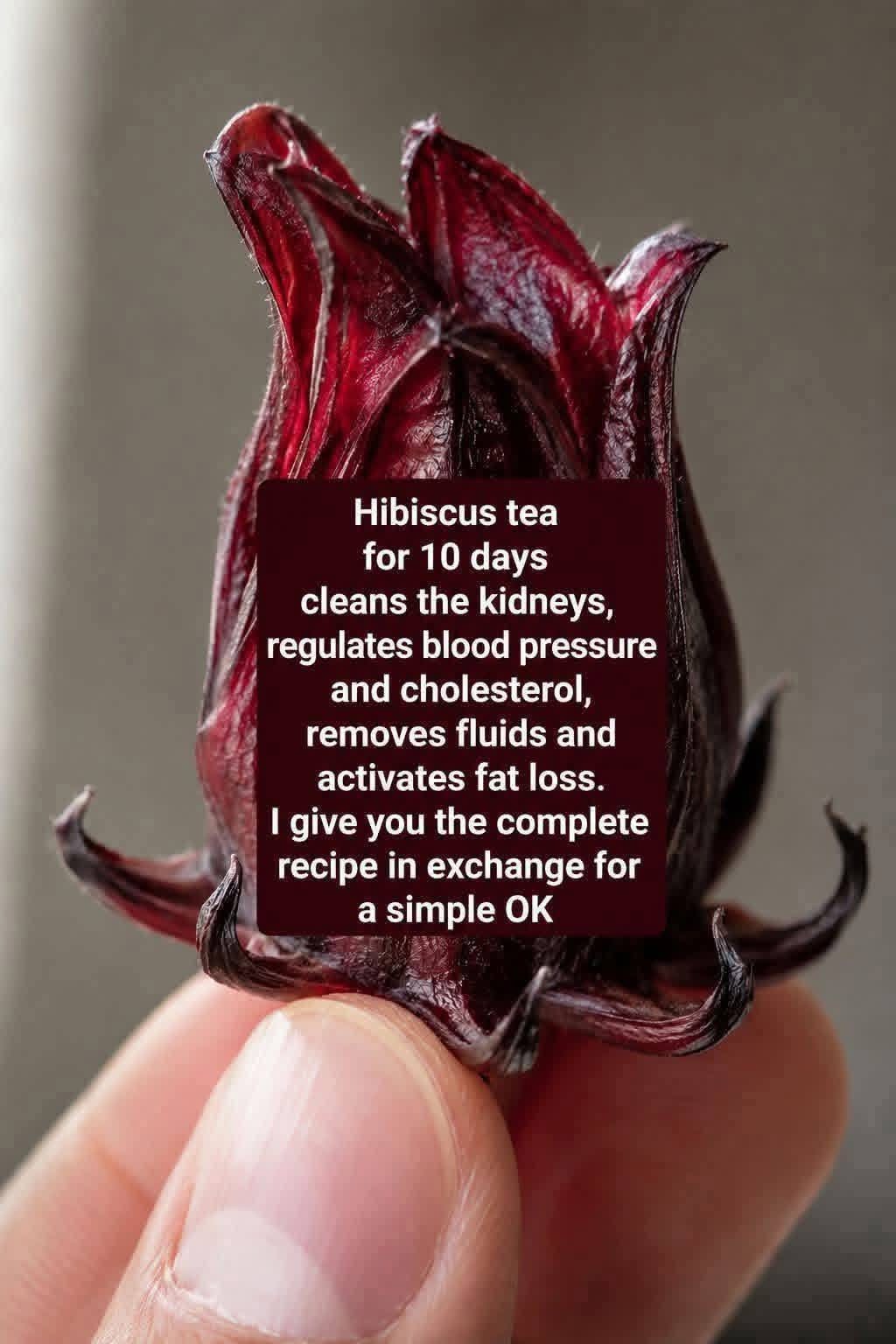
Hibiscus Tea and Kidney Health: What Does the Science Say?
Hibiscus tea, made from the dried calyces of the Hibiscus sabdariffa plant, has been used for centuries in traditional medicine across Africa, Asia, and Latin America. It’s widely known for its tart, cranberry-like flavor and deep red color, but recent scientific research has been investigating its potential benefits for kidney health.
How Hibiscus Tea May Benefit Kidney Function
1. Acts as a Natural Diuretic
One of the most well-documented effects of hibiscus tea on the kidneys is its ability to increase urine output. A clinical study involving 78 participants with mild to moderate hypertension found that those who consumed hibiscus extract experienced a significant increase in urine volumecompared to both a placebo group and even a group taking the prescription medication lisinopril.
This diuretic effect is important because increased urine production can help:
-
Flush out waste products and toxins
-
Reduce fluid retention
-
Lower blood pressure by reducing overall blood volume
The diuretic action is thought to come from anthocyanins—the compounds that give hibiscus its deep red color—as well as the plant’s ability to inhibit angiotensin-converting enzyme (ACE) and reduce aldosterone levels, both of which affect how the kidneys handle fluid and sodium.
2. May Help Prevent Kidney Stones
A human study specifically examined hibiscus tea’s effect on uric acid excretion—a key factor in certain types of kidney stones. Researchers gave 1.5 grams of dried roselle calyces (the part of the plant used for tea) twice daily to participants with and without a history of kidney stones.
The results showed a significant increase in uric acid excretion and clearance in participants who had a history of kidney stones. This “uricosuric effect” suggests that hibiscus tea may help prevent uric acid-based kidney stones by helping the body eliminate excess uric acid more efficiently.
3. Protects Against Kidney Damage in CKD Models
Animal research has provided compelling evidence for hibiscus tea’s protective effects on the kidneys. In a 2017 study using a rat model of chronic kidney disease (CKD), researchers found that both aqueous extracts of hibiscus and isolated anthocyanins significantly lessened the adverse effects of kidney disease in a dose-dependent manner.
The protective effects were comparable to those achieved with lisinopril, a standard ACE inhibitor medication used to protect kidney function in CKD patients. The study concluded that hibiscus and its anthocyanins “could be considered as possible promising safe dietary agents that could be used to attenuate the progression of human CKD”.
4. Reduces Oxidative Stress in the Kidneys
Another animal study investigated the effects of hibiscus extract on drug-induced kidney damage. The results showed that hibiscus exhibited antioxidant properties, reducing oxidative stress and mitigating renal damage.
Oxidative stress—an imbalance between damaging free radicals and protective antioxidants in the body—plays a significant role in the progression of kidney disease. By neutralizing free radicals, hibiscus tea may help protect kidney tissue from ongoing damage.
Clinical Evidence in Humans with Kidney Disease
Lowering Blood Pressure While Protecting the Kidneys
A 2024 randomized controlled clinical trial specifically examined hibiscus extract as an add-on treatment for patients with mild chronic kidney disease and high blood pressure. Seventy-two participants received either hibiscus extract (350 mg every 12 hours) plus valsartan (a blood pressure medication), or valsartan plus hydrochlorothiazide (a standard diuretic).
Key findings included:
-
Both groups showed significant blood pressure reduction
-
The hibiscus group demonstrated a statistically significant decrease in lipid profile (cholesterol levels)
-
No statistically significant differences were found between groups regarding the reduction of kidney function markers, suggesting hibiscus was at least as effective as the standard diuretic
A separate 2016 study of 78 hypertensive patients found that hibiscus consumption improved both urine output and creatinine clearance—an important measure of how well the kidneys filter waste from the blood.
Important Safety Considerations
A Documented Case of Kidney Injury
While the research is largely positive, there is one case report of acute kidney injury linked to hibiscus tea consumption. A 22-year-old woman who drank hibiscus tea daily for two months developed acute tubulointerstitial nephritis (ATIN)—an inflammatory condition of the kidney tissue.
She presented with:
-
Elevated blood urea nitrogen (22.9 mg/dL)
-
Elevated creatinine (2.67 mg/dL)
-
Proteinuria (protein in urine)
-
Sterile pyuria (white blood cells in urine without infection)
After treatment with prednisolone (a steroid medication), her kidney function returned to normal within one month.
This is currently the only reported case of hibiscus tea causing kidney injury, and it appears to have been an allergic or idiosyncratic reaction rather than a predictable toxic effect. However, it’s an important reminder that “natural” doesn’t always mean “safe for everyone.”