
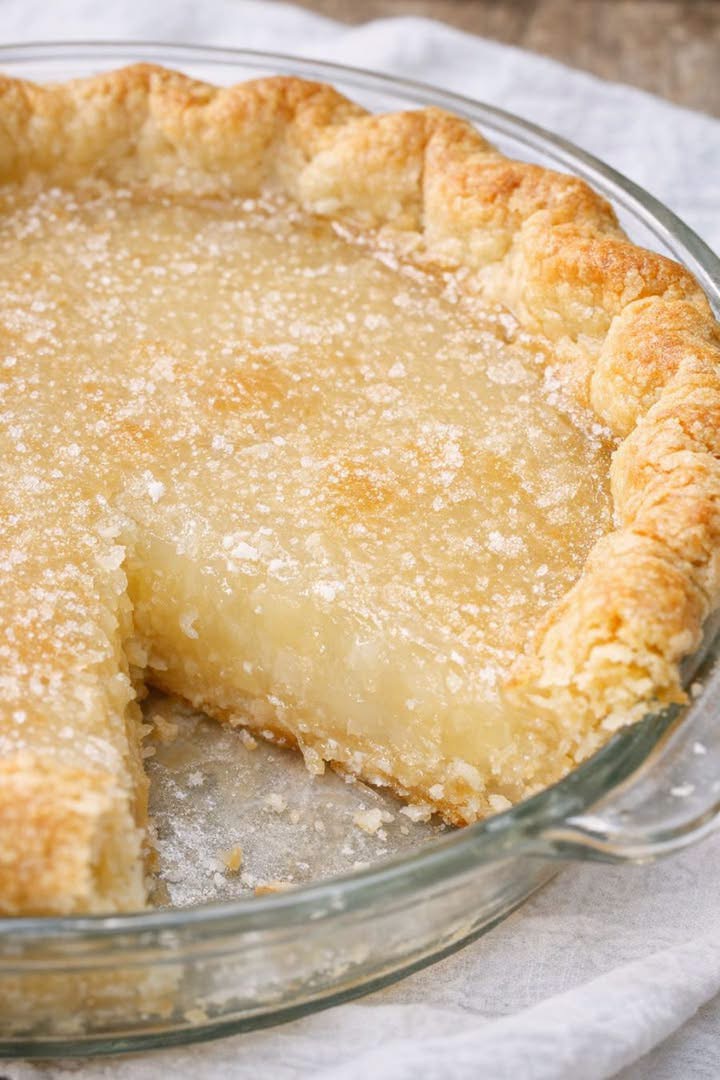
Southern 3-Ingredient Water Pie
There are recipes that sound like a practical joke, and then there are recipes that are pure magic. This Southern 3-Ingredient Water Pie is absolutely the latter. With just a pie crust, sugar, and water, this Depression-era dessert transforms the humblest pantry staples into a silky, custard-like pie that tastes like a warm hug from grandma. It’s the kind of recipe that makes you believe in kitchen miracles.
What I love most about this pie is its beautiful simplicity and fascinating history. Born out of necessity during the Great Depression, resourceful home cooks created this dessert when eggs and dairy were scarce but they still craved something sweet . The science is brilliant—as it bakes, the sugar melts, the butter emulsifies, and the flour leaches just enough starch to bind the whole mixture into a creamy, custard-like filling . It’s a testament to the ingenuity of home cooks who could turn water into pie.
Ingredients
-
1 (9-inch) unbaked pie crust(store-bought deep-dish works best for a flaky, golden base)
-
1½ cups granulated sugar
-
2 cups room-temperature water
Directions
-
Preheat and prepare: Preheat your oven to 400°F (200°C). Place a rack in the middle of the oven. Set a glass 9-inch pie plate with the unbaked pie crust on a baking sheet to catch any drips and make it easier to move. If the crust is very soft, chill the pie shell in the refrigerator for about 10 minutes while the oven heats. This helps the crust stay flaky and hold its shape .
-
Mix the filling: In a medium bowl or large liquid measuring cup, whisk together the granulated sugar and room-temperature water until the sugar is mostly dissolved. The mixture will look thin—that’s exactly what you want .
-
Fill the crust: Pour the sugar-water mixture gently into the unbaked pie crust. Fill carefully so you don’t splash over the edges. The liquid level should come close to the top of the crust but not overflow .
-
Bake: Carefully slide the baking sheet with the pie into the preheated oven. Bake at 400°F for 20 minutes to help the crust start to set and the filling begin to thicken around the edges .
-
Reduce heat and continue: After 20 minutes, reduce the oven temperature to 350°F (175°C) without opening the door if possible. Continue baking for another 30–40 minutes. The edges of the crust should be deep golden and the filling should look mostly set with a slight wobble in the center, similar to a soft custard .
-
Protect the crust: If the crust edges are browning too quickly before the filling is set, loosely cover just the rim with strips of foil or a pie shield and continue baking until done .
-
Cool completely: Remove the pie from the oven and place the glass pie plate on a cooling rack. The filling will appear a bit jiggly and watery at first—this is normal and will firm up as it cools. Cool at least 2 hours at room temperature so the center can finish setting into a creamy, custard-like texture .
-
Chill and serve: For the cleanest slices, chill the pie in the refrigerator for several hours or overnight before cutting. The filling firms up beautifully when cold . Slice into wedges using a sharp knife, wiping it clean between cuts. Serve chilled or at room temperature.
Variations
-
Flavor Boost: Add a teaspoon of vanilla extract or a splash of apple cider vinegar to the sugar-water mixture for a more complex, rounded flavor .
-
Spiced Water Pie: Mix a pinch of cinnamon or nutmeg into the sugar before adding it to the water .
-
Citrus Note: Add 1 teaspoon of lemon zest along with the vanilla .
-
Sprite Pie: Substitute Sprite or another lemon-lime soda for the water—the carbonation and citric acid create a distinct, caramelized version .
-
Almond Variation: Substitute almond extract for vanilla for a nutty, warm flavor .
Expert Tips
-
Don’t stir the filling: Once you pour the sugar-water into the crust, don’t stir! The layers will meld together beautifully during baking .
-
Bake on a baking sheet: This makes it easy to move the pie in and out of the oven and catches any drips .
-
Cool completely: The pie will be watery when it comes out of the oven. The magical gelling process happens entirely during cooling and chilling—don’t rush it .
-
Use a deep-dish crust: A standard depth crust may not contain all the liquid. For the most reliable results, use a deep-dish pie crust .
-
Store properly: Cover and refrigerate leftovers for up to 4-5 days. The flavor and texture actually improve as it chills .
Frequently Asked Questions
-
Does water pie really taste good?Yes! Think buttery vanilla custard with a gentle sweetness, similar to a sugar cream or chess pie. If you love simple, old-fashioned desserts, you’ll appreciate its charm .
-
How does it thicken without eggs? Flour is the thickening agent. As the pie bakes, the flour releases starch that binds the liquid, creating a custard-like texture .
-
Why is my pie runny? This usually means it needed more bake time, the oven runs cool, or it was sliced before cooling completely. Bake until the center is mostly set with only a slight jiggle, then cool for at least 2 hours and chill thoroughly .
-
Can I use a store-bought crust?Absolutely. A store-bought deep-dish crust works perfectly and keeps this pie truly simple .
-
Can I use milk instead of water?You can, but then it’s a different pie entirely. Classic water pie uses water. If you want a richer version, swap half a cup of the water for milk .
-
What’s the history behind water pie? It originated during the Great Depression as a way for families to enjoy dessert without using scarce, expensive ingredients like eggs and milk .
What to Serve With This Dish
-
A dollop of lightly sweetened whipped cream or a dusting of powdered sugar .
-
Fresh berries or a tart fruit sauce for contrast .
-
A cup of black coffee or unsweetened tea to balance the sweetness .
-
A scoop of vanilla ice cream for an extra indulgent treat.
Final Thoughts
This Southern 3-Ingredient Water Pie is proof that the best recipes often come from the humblest beginnings. It’s a delicious reminder that creativity and resourcefulness in the kitchen can create something truly magical. Whether you’re making it for a nostalgic Sunday dinner or just because you’re curious about this Depression-era marvel, I hope you enjoy every buttery, custard-like bite.