
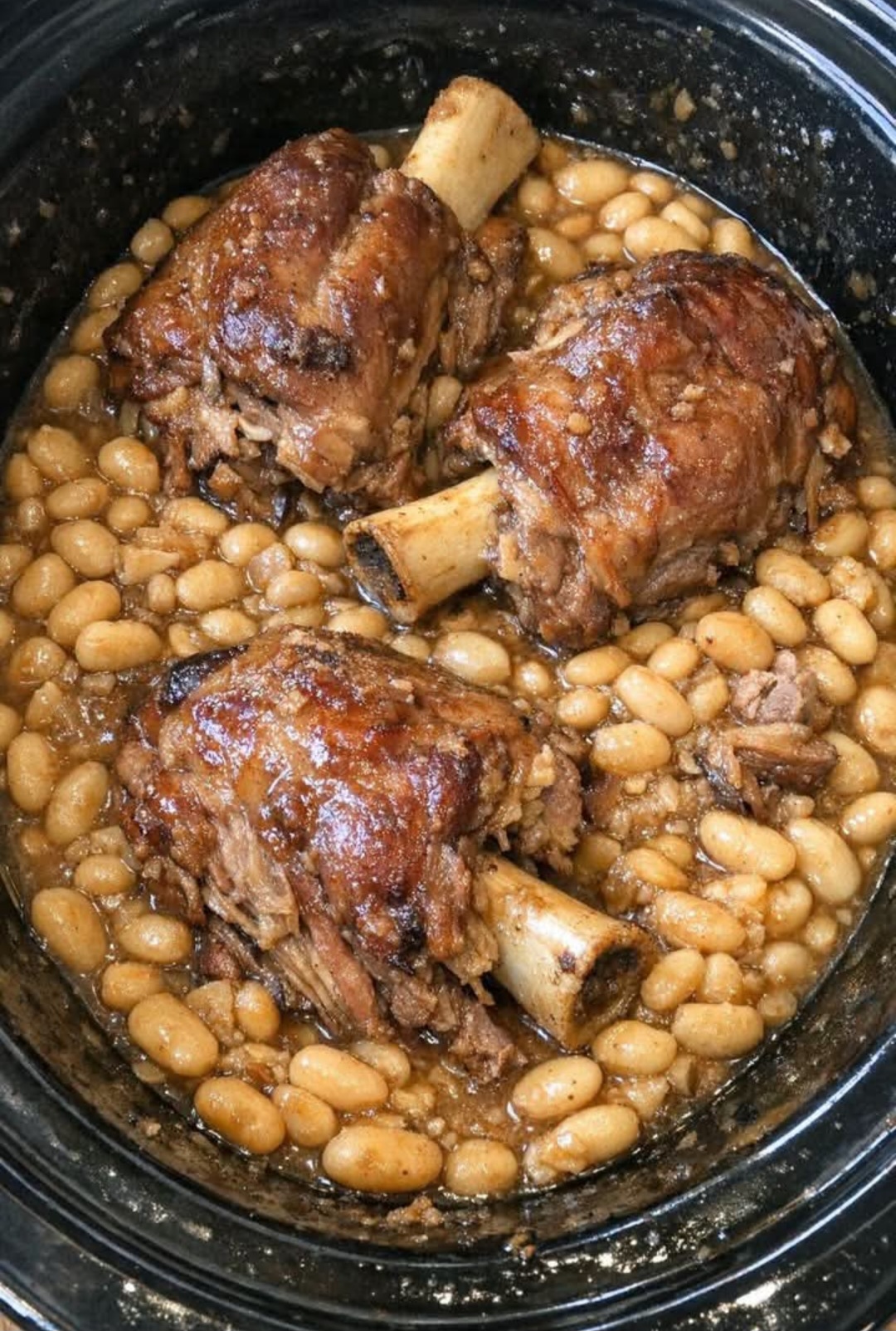
Slow Cooker Depression Era Pork Shanks and Navy Beans
My great aunt made this slow cooker pork shanks and navy beans recipe every spring when money was tight and the family still needed a hearty meal on the table. She knew exactly how to turn a few inexpensive ingredients into something that tasted like it had been simmering all day—and technically, it was.
This old-fashioned recipe starts with meaty bone-in pork shanks, dried navy beans, water, and salt. That is all you need. The magic comes from the slow cooker. Hours of gentle cooking transform the tough pork shanks into fall-apart tender meat, while the navy beans become creamy and the cooking liquid turns rich, silky, and deeply savory.
It is the perfect example of budget-friendly comfort food: inexpensive ingredients, very little hands-on work, and an incredibly satisfying finished dish.
Serve it in wide bowls with plenty of the creamy beans and their glossy broth. Add crusty bread, cornbread, steamed cabbage, or sautéed greens, and you have a filling family dinner that feels wonderfully old-fashioned.
Why You’ll Love This Recipe
Only 4 basic ingredients make the entire dish.
Pork shanks become incredibly tender after slow cooking.
Dried navy beans turn creamy and flavorful as they absorb the pork-rich cooking liquid.
It is an excellent budget-friendly family meal.
The slow cooker does almost all of the work.
Leftovers taste even better the next day.
The naturally gelatin-rich pork creates a thick, silky cooking liquid without needing flour or a complicated sauce.
Ingredients
2 pounds bone-in pork shanks
Pork shanks are an inexpensive cut that rewards slow cooking. They contain meat, connective tissue, and bone, which contribute tremendous flavor and richness as they cook. After several hours in the slow cooker, the meat becomes fork-tender and practically falls from the bone.
1 pound dried navy beans
Navy beans are small white beans with a creamy texture when fully cooked. They absorb the savory pork flavor beautifully and release starch into the cooking liquid, helping create the dish’s characteristic thick, comforting consistency.
6 cups water
Water provides the cooking liquid needed to soften the dried beans and slowly braise the pork. Start with 6 cups and add a little more during cooking only if necessary to keep the beans submerged.
2 teaspoons kosher salt
Salt brings out the flavor of both the beans and pork. Because there are so few ingredients in this recipe, proper seasoning makes a noticeable difference. Start with the recommended amount and adjust to taste at the end.
How to Make Slow Cooker Pork Shanks and Navy Beans
1. Prepare the Navy Beans
Rinse the dried navy beans thoroughly under cool running water. Pick through them carefully and remove any small stones, damaged beans, or other debris.
Set the cleaned beans aside while you prepare the pork.
2. Pat the Pork Shanks Dry
Use paper towels to pat the pork shanks dry.
This small step helps the meat brown more effectively and encourages the development of those flavorful browned surfaces that make the finished dish taste richer.
3. Brown the Pork Shanks
Heat a large skillet over medium-high heat. Add the pork shanks and brown them on all sides, about 3–4 minutes per side.
If the shanks begin sticking badly, add a teaspoon or two of neutral cooking oil.
You are not trying to cook the pork through at this stage. The goal is simply to create a deeply browned exterior that adds extra flavor to the slow-cooked dish.
4. Layer the Slow Cooker
Place the rinsed navy beans in the bottom of a 5- to 6-quart slow cooker.
Arrange the browned pork shanks over the beans, keeping them nestled together rather than stacking them tightly on top of one another.
5. Add the Water and Salt
Pour in 6 cups of water.
The beans should be fully submerged, while the pork shanks should be mostly covered. Depending on the size and shape of the shanks, the bones may stick slightly above the liquid.
Sprinkle in the kosher salt and gently stir around the beans.
6. Slow Cook Until Tender
Cover the slow cooker and cook on LOW for 8–10 hours.
The exact cooking time can vary depending on your slow cooker and the age of the beans, so use tenderness as your main guide.
The pork should be extremely tender and easy to pull apart with a fork, while the navy beans should be creamy throughout rather than firm or chalky.
7. Check the Liquid
Around the 4–5 hour mark, check the slow cooker.
If the beans are no longer submerged, add enough hot water to cover them by approximately ½ inch.
Avoid adding excessive water. The finished dish should have a thick, stew-like consistency, not resemble a thin bean soup.
8. Thicken the Cooking Liquid
Once the beans and pork are completely tender, taste the cooking liquid and add additional salt if needed.
If the liquid is thinner than you prefer, you have two easy options.
Remove the lid and cook on HIGH for 20–30 minutes to encourage some evaporation.
Or, for a naturally thicker texture, mash a small handful of the cooked navy beans against the side of the slow cooker with the back of a spoon. Stir them back into the beans and liquid.
The released starch will help create a creamier, more luxurious texture.
9. Serve
Carefully remove the pork shanks from the slow cooker. The meat may be so tender that it begins slipping away from the bones.
Spoon generous portions of navy beans and their savory cooking liquid into wide bowls.
Place a whole pork shank on top, or pull the meat from the bones and divide it among the bowls.
Finish by spooning some of the rich cooking liquid over the pork and beans.
Pro Tips for the Best Pork Shanks and Navy Beans
Brown the pork well. Although you can technically skip this step, taking a few minutes to deeply brown the shanks gives the finished dish noticeably more savory flavor.
Do not drown the beans. You need enough liquid for the dried beans to cook properly, but excessive water can leave you with a thin soup instead of a thick, hearty meal.
Check older beans carefully. Very old dried beans can take much longer to soften and sometimes remain firm even after prolonged cooking.
Use LOW for the best texture. The long, gentle cooking time allows the pork’s connective tissue to gradually break down while the beans become tender.
Do not use the WARM setting to cook dried beans. Cook them on LOW or HIGH so the slow cooker reaches and maintains an appropriate cooking temperature.
Let the beans help thicken the dish. Mashing a small portion of the cooked beans is one of the easiest ways to create a naturally creamy consistency without adding another ingredient.
Be careful with the bones. Once the pork becomes extremely tender, the bones can separate unexpectedly. Use tongs and a wide spoon or spatula when removing the shanks.
Easy Variations
Although the beauty of this recipe is its four-ingredient simplicity, you can adapt it when you have additional ingredients available.
For a smokier flavor, substitute a portion of the pork with a smoked ham hock.
For a different inexpensive cut, pork hocks or pork neck bones can also work well. Cuts containing plenty of bone and connective tissue are especially good for creating a rich cooking liquid.
For a more soup-like meal, add additional water toward the end of cooking and serve the beans and pork with plenty of broth.
For an extra-thick, almost baked-bean-style consistency, remove the lid near the end and allow some of the liquid to reduce.
What to Serve With Pork Shanks and Navy Beans
This hearty slow cooker meal pairs beautifully with simple sides.
Crusty bread: Perfect for soaking up the rich, silky cooking liquid.
Cornbread: A classic Southern-style companion that adds a slightly sweet contrast.
Steamed cabbage: Its mild flavor and tender texture balance the richness of the pork.
Sautéed greens: Collard greens, kale, or another hearty green add freshness and color.
Simple green salad: A crisp salad provides a refreshing contrast to the creamy beans.
For a traditional finishing touch, place black pepper, vinegar, or finely chopped raw onion on the table so everyone can season their bowl to taste.
How to Store Leftovers
Allow leftovers to cool promptly and refrigerate them within 2 hours of cooking.
Store the pork and beans in airtight containers in the refrigerator. The dish will thicken as it chills, and the flavors often become even more developed overnight.
When reheating, warm gently on the stovetop or in the microwave. Add a small splash of water if the beans have become too thick.
Frequently Asked Questions
Can I make pork shanks and navy beans without browning the pork?
Yes. The dish will still cook successfully, but browning the pork first adds deeper flavor and a more appealing color to the finished meal.
Do navy beans need to be soaked first?
This recipe is written for unsoaked dried navy beans. Simply rinse and pick them over before adding them to the slow cooker. Cooking time can vary depending on the beans.
How do I know when the pork shanks are done?
The pork is ready when the meat is fall-apart tender and pulls easily away from the bone with a fork.
Why are my beans still hard?
Bean age, cooking temperature, and altitude can all affect cooking time. Very old dried beans can be particularly stubborn. Continue cooking until the beans are completely tender.
The Ultimate Budget Comfort Food
There is something special about recipes that prove you do not need an expensive grocery list to make an unforgettable dinner. Slow Cooker Depression Era Pork Shanks and Navy Beans takes one humble cut of pork and a simple bag of dried beans and transforms them into a deeply comforting meal.
After hours of slow cooking, the pork becomes incredibly tender, the beans turn creamy, and the broth develops a rich, silky texture from the pork’s natural collagen. With just four simple ingredients, you get a generous, satisfying dinner that feels like the kind of meal generations of home cooks relied on.
It is economical, filling, comforting, and remarkably easy—and that combination is exactly why this old-fashioned slow cooker recipe deserves a place in your regular dinner rotation.