
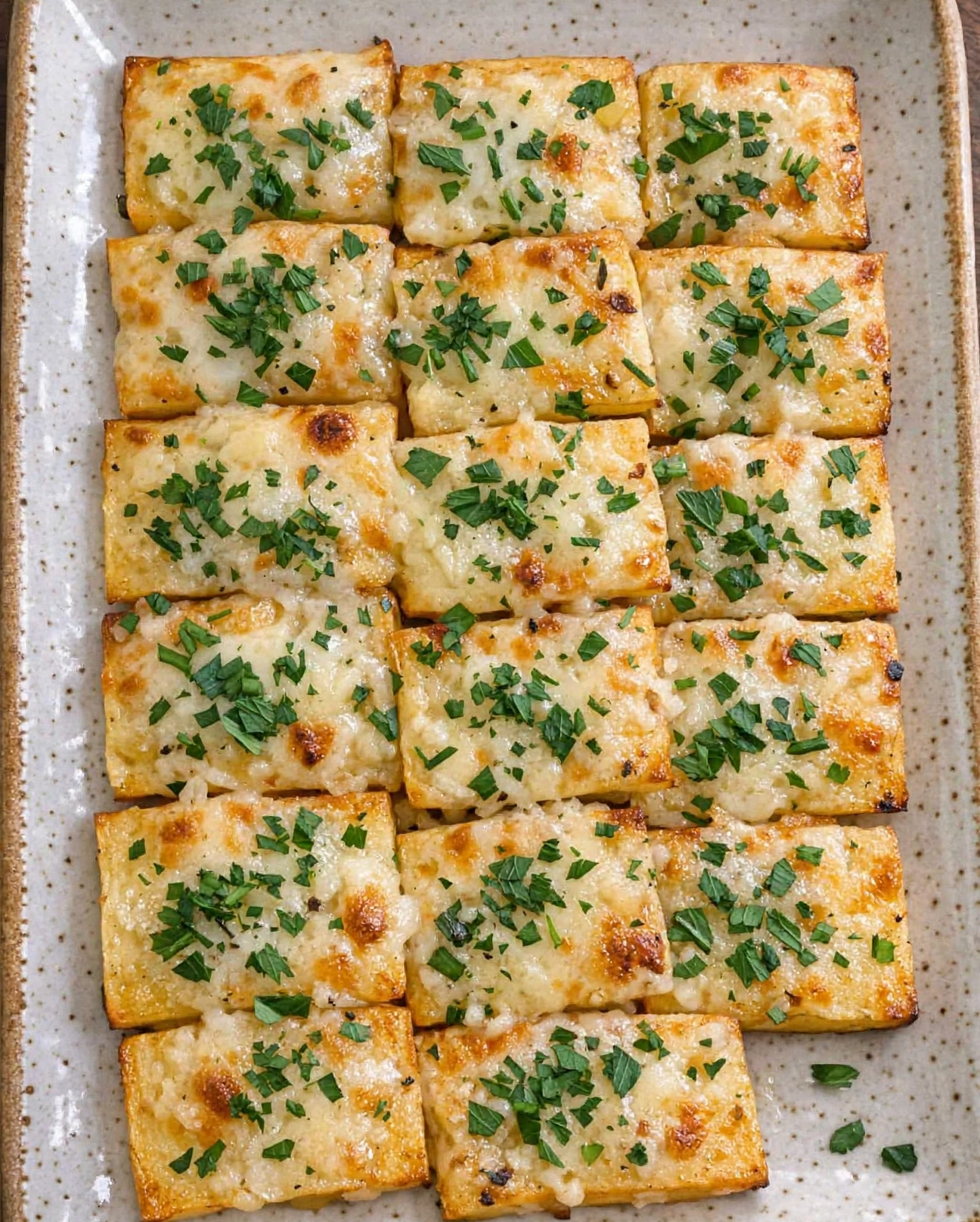
Watched my aunt make these for her garden club luncheon last week, and the ladies could not stop reaching for more. By the time everyone had settled in for lunch, these golden little potato tiles had become one of the most talked-about dishes on the table. It’s easy to understand why: tender potatoes, buttery edges, creamy melted Muenster cheese, and fresh herbs come together in a simple side dish that looks elegant without requiring fancy ingredients or complicated preparation.
These Oven-Baked Muenster Herb Potato Tiles are proof that an ordinary bag of potatoes can become something truly special. Made with just 4 simple ingredients, they deliver the comforting flavors of old-fashioned home cooking with a presentation pretty enough for a garden club luncheon, holiday buffet, Sunday supper, or family gathering.
The secret is in the preparation. Thin, evenly sliced potato pieces bake until their edges turn lightly golden, then receive a generous topping of Muenster cheese and freshly chopped herbs. A final trip to the oven melts the cheese into a creamy blanket while the potatoes finish cooking to tender perfection.
Even better, you don’t need a deep fryer, a long list of seasonings, or hours in the kitchen. Just slice, brush, bake, and enjoy.
If you’re looking for an easy potato side dish that feels a little more special than ordinary roasted potatoes, these cheesy herb potato tiles deserve a place on your table.
Why You’ll Love These Muenster Herb Potato Tiles
There are plenty of potato recipes worth keeping, but this one stands out for its simplicity, versatility, and beautiful presentation.
– Only 4 ingredients: Potatoes, Muenster cheese, fresh herbs, and butter are all you need to create this flavorful side dish.
– Crisp edges and tender centers: Baking the potatoes before adding the cheese helps develop golden edges while allowing the centers to become soft and delicious.
– Creamy, mild cheese flavor: Muenster melts beautifully over the potatoes, creating a smooth, savory topping without overpowering the other ingredients.
– Fresh garden-herb flavor: Parsley, chives, or dill add freshness and make the finished dish look lovely on a serving platter.
– Perfect for entertaining: The individual potato tiles look attractive arranged on a platter, making them ideal for luncheons, potlucks, brunches, and holiday meals.
– Easy to customize: You can change the herbs, adjust the potato shape, or use a different variety of potato to suit your preferences.
– Budget-friendly comfort food: A few everyday ingredients transform inexpensive potatoes into a side dish that feels special enough for company.
Ingredients for Oven-Baked Muenster Herb Potato Tiles
This recipe uses four basic ingredients, each contributing something important to the finished dish.
1. Russet Potatoes — 2 Pounds, Peeled
Russet potatoes are an excellent choice because their relatively high starch content helps them develop a fluffy, tender interior as they bake. Their firm structure also makes it easier to cut neat, rectangular pieces that hold their shape on the serving platter.
For the best results, choose potatoes that are relatively uniform in size. This makes slicing easier and helps the pieces cook at approximately the same rate.
Peeling the potatoes gives the tiles a smooth, polished appearance, although you can leave the skins on if you prefer a more rustic presentation. If you do, scrub them thoroughly before cutting.
2. Muenster Cheese — 8 Ounces, Sliced or Shredded
Muenster cheese gives these potato tiles their creamy, savory topping. It has a mild flavor and a smooth melting quality that pairs naturally with buttery potatoes and fresh herbs.
You can use thin slices cut to fit each potato tile or shred the cheese for easier distribution. Slices create a particularly attractive finish, while shredded cheese makes it simple to cover every piece evenly.
For the best texture, add the cheese toward the end of baking rather than at the beginning. This allows the potatoes to cook first without exposing the cheese to unnecessary heat.
3. Mixed Fresh Herbs — 2 Tablespoons, Finely Chopped
Fresh herbs brighten the rich combination of potatoes, butter, and cheese.
A mixture of parsley, chives, and dill works especially well:
– Parsley contributes a clean, fresh flavor and a lovely green finish.
– Chives add a delicate onion-like note that complements the cheese.
– Dill brings a distinctive, old-fashioned flavor that works beautifully in luncheon dishes.
Use whichever herbs you enjoy most. A single fresh herb can work just as well as a mixture, so there’s no need to buy several varieties if you already have something growing in your garden.
4. Melted Butter — 2 Tablespoons
Melted butter helps the potato surfaces brown and adds the rich flavor that makes this simple side dish taste so comforting.
Brushing the potato tiles with butter before baking helps them develop golden edges while preventing them from tasting dry. A little butter on the baking sheet also helps reduce sticking.
Unsalted butter gives you more control over the final seasoning. If you use salted butter, keep that in mind when deciding whether to add salt.
Optional pantry staples: Salt and black pepper can be added to taste if desired. They are not included in the four-ingredient count.
How to Make Oven-Baked Muenster Herb Potato Tiles
Follow these simple steps for golden, cheesy potato tiles with tender centers and beautifully melted cheese.
Step 1: Preheat the Oven
Preheat your oven to 400°F (200°C).
Lightly brush a baking sheet or shallow rectangular baking dish with some of the melted butter. You want a thin coating across the surface to help prevent sticking and encourage browning.
For crispier edges, use a large, light-colored metal baking sheet rather than a deep dish. The wider surface allows more heat to circulate around the potatoes.
Step 2: Slice and Shape the Potatoes
Peel the russet potatoes and slice them into even planks approximately 1/4 inch thick.
Trim the edges as needed to create neat rectangular tiles. Don’t worry if every piece isn’t perfectly identical; a little variation gives the finished platter a homemade appearance.
After cutting, pat the potatoes dry with a clean kitchen towel or paper towels.
Why this matters: Removing excess surface moisture helps the potatoes brown instead of steaming. Keeping the slices close in thickness also ensures that they cook evenly.
Save the trimmed potato pieces for another meal. They can be added to homemade soup, breakfast hash, or mashed potatoes.
Step 3: Arrange the Potato Tiles
Place the potato pieces in a single layer on the prepared baking sheet.
Leave a little space between the pieces whenever possible. Crowding them together can trap steam and prevent the edges from becoming golden.
Brush the tops with the remaining melted butter, making sure the surfaces are lightly coated.
If you enjoy a little extra seasoning, add a light sprinkle of salt and freshly ground black pepper.
Step 4: Bake Until Lightly Golden
Transfer the baking sheet to the preheated oven.
Bake for 20–25 minutes, checking toward the end of the cooking time.
The bottoms should begin to turn golden, and the potatoes should be starting to soften. They don’t need to be completely cooked at this stage because they will return to the oven with the cheese.
Cooking time can vary depending on the thickness of the slices, the type of baking sheet, and your oven.
If your potatoes are still quite firm after 25 minutes, give them a few additional minutes before adding the topping.
Step 5: Add the Muenster Cheese and Herbs
Carefully remove the baking sheet from the oven.
Place a piece of Muenster cheese on each potato tile, or sprinkle the shredded cheese evenly across the pieces.
Scatter the finely chopped fresh herbs over the cheese.
Try to distribute the herbs evenly so that every potato gets a little of that fresh, garden-inspired flavor.
For a more decorative presentation, reserve a small pinch of herbs to sprinkle over the finished tiles just before serving.
Step 6: Return to the Oven
Place the baking sheet back in the oven and bake for another 8–10 minutes.
The cheese should melt completely, and the potatoes should become tender all the way through.
To check for doneness, gently pierce one of the thicker potato pieces with a fork. It should slide in easily without encountering a firm center.
If you’d like deeper golden edges, allow the potatoes a few extra minutes in the oven, watching carefully to prevent the cheese from overbrowning.
Step 7: Serve Warm
Remove the finished potato tiles from the oven and let them rest for a minute or two.
Use a thin spatula to transfer them carefully to a serving platter.
Finish with the reserved fresh herbs, if desired, and serve while the cheese is warm and soft.
These baked Muenster cheese potatoes are at their best shortly after baking, when the edges are golden, the centers are tender, and the cheese is still beautifully melted.
Expert Tips for Perfect Potato Tiles
A few simple techniques can make the difference between ordinary baked potatoes and a platter of golden, attractive potato tiles.
Cut the Potatoes Evenly
Aim for slices approximately 1/4 inch thick. Thicker pieces take longer to cook, while very thin slices can become too crisp before the centers soften.
Consistent sizing is especially important when you’re preparing the dish for guests.
Dry the Potatoes Before Baking
After slicing, pat the potatoes thoroughly dry.
Excess moisture creates steam, which can interfere with browning. Dry surfaces and a light coating of butter help the potatoes develop a more appealing golden finish.
Avoid Overcrowding the Pan
Arrange the potato tiles in a single layer with a little room between them.
If you’re doubling the recipe, use two baking sheets rather than piling the pieces together. Crowding can make the potatoes soft instead of lightly crisp around the edges.
Add the Cheese Near the End
Muenster cheese melts quickly, so it doesn’t need to bake for the entire cooking time.
Adding it during the final 8–10 minutes gives the potatoes time to soften while allowing the cheese to melt without becoming excessively browned or oily.
Choose Fresh Herbs for the Best Flavor
Freshly chopped herbs give these potato tiles a bright flavor and an attractive finish.
Chives and parsley are particularly versatile, but dill is an excellent choice when you want the dish to feel like something served at an old-fashioned luncheon.
Make Them Extra Golden
For more color and crispness, let the potato tiles bake until their undersides are lightly golden before adding the cheese.
You can also briefly use the oven’s broiler at the end, but watch closely. Cheese can brown very quickly under direct heat.
Serve Them Promptly
The potatoes are most appealing straight from the oven. As they cool, the cheese begins to firm and the crisp edges gradually soften.
If you are serving them at a gathering, time the final baking stage so that the tiles can go directly from the oven to the table.
Easy Variations to Try
Once you’ve made the basic recipe, it’s easy to adapt these four-ingredient potato tiles to suit different meals.
Creamy Yukon Gold Potato Tiles
Replace the russet potatoes with Yukon Gold potatoes for a naturally buttery flavor and creamy interior.
They may be a little less firm when cut into shapes, so handle them gently when transferring them to the baking sheet.
Garlic Herb Potato Tiles
Add a small amount of minced garlic to the melted butter before brushing it over the potatoes.
Garlic isn’t part of the original four-ingredient recipe, but it adds a savory note that works wonderfully with Muenster cheese.
Cheddar and Herb Potato Tiles
Swap the Muenster for mild or sharp cheddar if that’s what you have in the refrigerator.
Cheddar creates a more pronounced cheese flavor, while Muenster keeps the original version creamy and mild.
Rosemary Potato Tiles
Use finely chopped rosemary in place of the mixed herbs for an earthier flavor.
Rosemary pairs particularly well with roast chicken, pork chops, and other oven-roasted meats. Use it sparingly because its flavor is stronger than parsley or chives.
Rustic Skin-On Potato Tiles
Leave the skins on the potatoes for a more casual, rustic side dish.
The skins add texture and color, although the pieces may look less like perfectly shaped tiles.
What to Serve with Muenster Herb Potato Tiles
These cheesy potato tiles are versatile enough for everyday dinners and special occasions.
For a Comforting Family Dinner
Serve them alongside roast chicken, baked ham, pork chops, or roast beef. Their mild cheese flavor complements savory main dishes without competing with stronger seasonings.
Add steamed green beans, roasted carrots, or buttered peas to complete the plate.
For a Garden Club Luncheon
Arrange the tiles on a platter with a sprinkle of fresh herbs and serve them alongside a crisp green salad.
A light vinaigrette helps balance the richness of the cheese and butter. Tomato salad, cucumber salad, or a simple bowl of seasonal vegetables would also be lovely additions.
For Brunch
These potato tiles make a delicious accompaniment to scrambled eggs, a vegetable frittata, or a simple breakfast casserole.
Add fresh fruit and warm rolls for an easy brunch menu that looks inviting without requiring hours of preparation.
For a Holiday Table
Serve them with roasted turkey, baked ham, or a glazed pork loin.
Their individual portions make them easy to arrange on a buffet, and the fresh herbs provide a little color among traditional holiday dishes.
For a Simple Meatless Meal
Pair the potato tiles with a large green salad, roasted seasonal vegetables, and crusty bread.
The potatoes and cheese make the meal satisfying, while the vegetables add freshness and variety.
Make-Ahead and Storage Tips
These potato tiles are best freshly baked, but a little planning can make them easier to serve when you’re entertaining.
Preparing ahead: You can wash, peel, and cut the potatoes shortly before cooking. If you need to prepare them earlier, keep the cut pieces submerged in cold water in the refrigerator to prevent browning. Drain and dry them thoroughly before baking.
Storing leftovers: Allow the cooked potato tiles to cool, then transfer them to an airtight container and refrigerate within two hours. For best quality, enjoy them within 3–4 days.
Reheating: Arrange the leftovers in a single layer on a baking sheet and warm them in a 350°F (175°C) oven until heated through. The oven helps restore some of the crispness that may be lost during refrigeration.
Freezing: Freezing is not recommended for the best texture. The potatoes can become grainy or watery after thawing, and the melted cheese may change consistency.
For entertaining: If you’re making these for a luncheon or family gathering, prepare the herbs and cheese in advance, then bake the potatoes shortly before serving.
Frequently Asked Questions
Can I use a different cheese?
Yes. Muenster is ideal because it melts smoothly and has a mild flavor, but Monterey Jack, mild cheddar, or provolone can also work. The flavor and browning may vary depending on the cheese you choose.
Do I have to peel the potatoes?
No. Peeling creates a neater, more polished appearance, but leaving the skins on gives the potato tiles a rustic look. Scrub the potatoes well if you plan to keep the skins.
Why aren’t my potato tiles crispy?
The most common reasons are excess moisture, overcrowding, or insufficient baking time. Pat the potato slices dry, arrange them in a single layer, and let them develop some golden color before adding the cheese.
Can I prepare these with dried herbs?
Yes. Dried herbs can be used if fresh ones aren’t available. Because dried herbs have a more concentrated flavor, use a smaller amount and distribute them evenly over the cheese.
How do I know when the potatoes are done?
The edges should be lightly golden, the cheese should be melted, and a fork should slide easily into the thickest potato piece. If the center still feels firm, continue baking until tender.
Are these potato tiles suitable for a party?
Absolutely. Their individual shape makes them easy to serve, and they look attractive on a platter. For larger gatherings, bake them in batches or use two baking sheets to avoid overcrowding.
A Simple Potato Side Dish Worth Sharing
Sometimes the recipes people remember most aren’t the complicated ones. They’re the dishes made with familiar ingredients, a little care, and the kind of practical kitchen wisdom passed from one home cook to another.
These Oven-Baked Muenster Herb Potato Tiles bring all of that to the table. Tender russet potatoes, creamy melted cheese, fresh herbs, and buttery golden edges create a side dish that feels comforting enough for a weeknight dinner and pretty enough for a special luncheon.
With just four main ingredients and a straightforward baking method, you can turn an ordinary potato into something your family and guests will be happy to reach for again.
Serve them beside roast chicken, add them to your next brunch spread, or bring a platter to a family gathering. Don’t be surprised if someone asks how you made them before the last potato tile disappears.
After all, the best recipes are often the simplest ones—the kind that make everyday ingredients feel special and give everyone one more reason to gather around the table.