
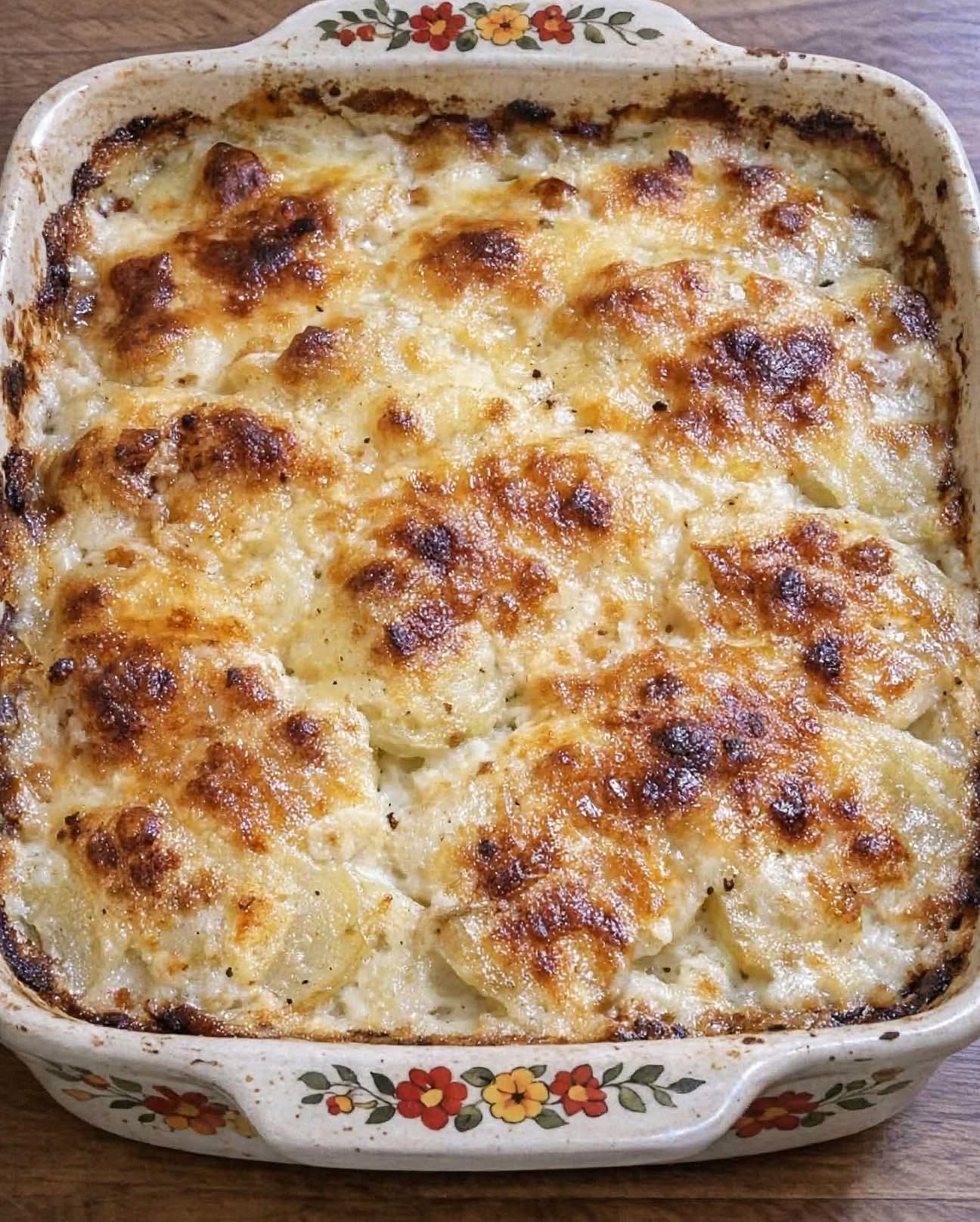
Oven-Baked 4-Ingredient Potato Dauphinoise – A Classic Creamy Potato Casserole
Found handwritten in my mother’s recipe box from 1962, this oven-baked 4-ingredient potato dauphinoise is one of those old-fashioned recipes that proves simple ingredients can create something truly special. I made it for my book club, thinking it would be a quiet little side dish, but everyone wanted the recipe before the evening was over!
There is something irresistible about thinly sliced potatoes baked slowly in rich cream until every layer turns tender and luscious. Add melted cheese and a beautifully golden top, and you have a comforting potato casserole that feels elegant enough for company but easy enough for an ordinary weeknight. It is the kind of dependable, homemade dish that belongs in every family recipe collection.
Inspired by classic French potatoes dauphinoise, this easy version uses just four main ingredients: Yukon Gold potatoes, heavy cream, cheese, and salt. As everything bakes together, the cream settles between the delicate potato slices, creating a rich, velvety texture while the cheese forms a deliciously golden finish.
Whether you are preparing Sunday supper, hosting a holiday dinner, or looking for a crowd-pleasing dish for your next book club gathering, this creamy baked potato casserole delivers old-fashioned comfort with very little fuss.
Why You’ll Love This 4-Ingredient Potato Dauphinoise
– Only four main ingredients: You do not need a long shopping list or expensive specialty ingredients to make this satisfying side dish.
– Rich and creamy layers: Thinly sliced potatoes absorb the cream as they bake, becoming tender and full of flavor.
– A golden, cheesy top: Gruyère adds a delicious nutty flavor, while sharp white cheddar offers a familiar, savory alternative.
– Perfect for entertaining: The beautiful layered presentation makes this dish look impressive on any dinner table.
– Easy to prepare ahead: Assemble it before your guests arrive, then bake until tender and bubbling.
– A versatile family favorite: Serve it with roasted meat, holiday ham, vegetables, or a fresh green salad.
Ingredients for Oven-Baked Potato Dauphinoise
This recipe makes approximately 6 servings, depending on portion size.
1. Yukon Gold Potatoes – 2 Pounds
The potatoes are the foundation of this classic creamy potato dish. Yukon Gold potatoes have a naturally buttery flavor and a creamy texture that works beautifully in layered casseroles. They soften during baking while maintaining enough structure to create attractive slices.
Peel the potatoes and slice them thinly and evenly. Aim for slices approximately 1/8 inch thick so they cook at a similar rate.
2. Heavy Cream – 2 Cups
Heavy cream gives the dauphinoise its signature richness. As it heats in the oven, it coats the potato slices and creates a luxurious sauce that thickens as the casserole rests.
For the creamiest result, use full-fat heavy cream rather than milk. Milk contains more water and will produce a thinner, less indulgent sauce.
3. Gruyère or Sharp White Cheddar Cheese – 1 1/2 Cups, Shredded
Cheese brings savory depth and helps create the irresistible golden top.
Gruyère cheese is an excellent choice for a traditional French-inspired flavor. It melts smoothly and contributes a delicate nuttiness that complements the cream and potatoes.
Sharp white cheddar is a delicious alternative if you prefer a stronger cheese flavor or want to use something you already have in the refrigerator.
Freshly shredded cheese generally melts more smoothly than many pre-shredded varieties.
4. Salt – 1 1/2 Teaspoons
Salt enhances the natural flavor of the potatoes, balances the richness of the cream, and brings out the savory character of the cheese.
Sprinkle it between the layers rather than adding it all in one place. If your cheese is particularly salty, start with a little less and adjust to taste.
Optional: A little butter or cooking spray for greasing the baking dish does not need to count toward the four main ingredients. Black pepper or garlic can also be added if desired, although the original four-ingredient version keeps the flavor wonderfully simple.
How to Make Oven-Baked 4-Ingredient Potato Dauphinoise
Step 1: Prepare the Oven and Baking Dish
Preheat your oven to 375°F (190°C). Lightly butter or grease a medium-sized baking dish, approximately 9 × 9 inches or a similar capacity.
Greasing the dish helps prevent sticking and makes serving easier.
Step 2: Slice the Potatoes
Peel the Yukon Gold potatoes and cut them into thin, even slices, approximately 1/8 inch thick.
A mandoline slicer makes this step especially easy, but a sharp knife works just as well. Keep the slices uniform so thinner pieces do not overcook while thicker pieces remain firm.
For the best texture, do not rinse away all the potato starch after slicing. The natural starch helps the cream develop a slightly thicker sauce.
Step 3: Build the Potato Layers
Arrange a layer of potato slices across the bottom of the prepared baking dish, slightly overlapping them.
Sprinkle with a little salt and some of the shredded cheese. Continue layering the potatoes, salt, and cheese until everything has been used, finishing with a generous layer of cheese on top.
Try to distribute the ingredients evenly so every serving has tender potatoes and plenty of cheesy flavor.
Step 4: Add the Heavy Cream
Slowly pour the heavy cream over the layered potatoes, allowing it to flow into the spaces between the slices.
Gently press down on the potatoes with the back of a spoon to help the cream settle throughout the dish. Avoid pressing too hard, as you want to preserve the layers.
Step 5: Bake Until Tender
Cover the baking dish loosely with aluminum foil and bake for 45 minutes.
The foil traps moisture and allows the potatoes to soften without browning too quickly.
Remove the foil and continue baking for another 25–30 minutes, or until the potatoes are fork-tender and the cheese on top is golden brown and bubbling.
If the top browns before the potatoes are fully tender, loosely cover the dish again and continue baking until the center is cooked through.
Step 6: Let the Dauphinoise Rest
Remove the dish from the oven and let it rest for 10–15 minutes before serving.
This resting time is important. The cream thickens slightly, the layers settle, and the portions become easier to serve neatly.
Bring the dish straight to the table while it is still warm, with its bubbling edges and golden cheese crust.
Pro Tips for the Best Creamy Potato Dauphinoise
Slice evenly for consistent cooking. Uniform potato slices are the secret to a casserole that is tender from edge to center. Aim for thin slices of approximately 1/8 inch.
Choose the right potatoes. Yukon Gold potatoes are ideal for a creamy texture with distinct layers. Russet potatoes also work, but they tend to soften more and may produce a less structured casserole.
Use full-fat cream. Heavy cream delivers the richness and consistency that make this dish special. Lower-fat alternatives may leave the sauce thinner.
Do not rush the baking process. The potatoes need enough time to soften and absorb the cream. Check the center with a thin knife before removing the dish from the oven.
Watch the cheese topping. If the cheese becomes deeply golden before the potatoes are ready, cover the dish loosely with foil to prevent excessive browning.
Allow time to rest. Serving immediately may cause the creamy layers to spread. A short resting period helps the casserole hold its shape.
Season thoughtfully. Because the cheese contributes saltiness, taste your ingredients and adjust the salt if necessary.
Easy Variations to Try
One of the best things about this easy potato dauphinoise recipe is how easily you can adapt it to suit your family’s preferences.
– Garlic-infused dauphinoise: Rub a cut garlic clove around the inside of the baking dish before adding the potatoes for a subtle aromatic flavor.
– Black pepper and herb version: Add freshly ground black pepper and a small pinch of thyme for extra depth.
– Extra-cheesy potatoes: Combine Gruyère with a little sharp cheddar for a flavorful, golden topping.
– Budget-friendly version: Use sharp cheddar instead of Gruyère to keep the ingredient cost manageable without sacrificing a delicious result.
– Make-ahead version: Assemble the casserole a few hours before baking, cover, and refrigerate. Allow extra baking time if it is still cold when placed in the oven.
For the most traditional French-inspired experience, keep the ingredients simple and let the cream, potatoes, and cheese do the work.
What to Serve With Potato Dauphinoise
Because this dish is rich and creamy, it pairs beautifully with savory main courses and fresh vegetables.
For Sunday supper: Serve alongside roast chicken, pork tenderloin, or roasted beef, with steamed green beans or glazed carrots.
For holiday dinners: Pair it with baked ham, roast turkey, or a special family roast. Its golden top makes it a lovely addition to a festive table.
For a simple weeknight meal: Add grilled chicken, pan-seared pork chops, or baked fish, along with a crisp green salad.
For book club gatherings and potlucks: Serve generous spoonfuls alongside a fresh salad dressed with lemon vinaigrette. The bright, tangy flavors balance the richness of the potatoes.
For a vegetarian meal: Pair the casserole with roasted broccoli, sautéed mushrooms, or a colorful platter of seasonal vegetables.
For an extra-cozy supper, add warm dinner rolls and a simple green vegetable. The combination is satisfying without making the meal unnecessarily complicated.
Make-Ahead, Storage, and Reheating
Make ahead: Assemble the potatoes, cheese, salt, and cream in the baking dish, then cover and refrigerate for a few hours before baking. Because the dish starts cold, it may need additional baking time. Check that the center is fully tender.
Refrigerate leftovers: Allow the casserole to cool, then transfer leftovers to an airtight container and refrigerate within two hours. Enjoy within 3–4 days.
Reheat in the oven: Cover the dish with foil and warm at 325°F (165°C) until heated through. Remove the foil near the end if you want to refresh the golden top.
Reheat individual portions: Microwave a serving in short intervals until hot throughout. The cheese topping will be softer than when freshly baked.
Freezing: Cream-based potato casseroles can change texture after freezing, sometimes becoming grainy or watery. For the best results, enjoy this dish freshly baked or refrigerated.
Frequently Asked Questions
Is potato dauphinoise the same as scalloped potatoes?
They are similar, but traditional potatoes dauphinoise are associated with thinly sliced potatoes baked in cream, often with garlic. Scalloped potato recipes vary and may use milk-based sauces or flour-thickened mixtures. Cheese is common in many modern dauphinoise variations, including this easy four-ingredient version.
Do I need to boil the potatoes first?
No. The potatoes go into the baking dish raw and cook directly in the cream. Thin, evenly sliced potatoes and sufficient baking time help ensure they become tender.
Why are my dauphinoise potatoes still firm?
They may be sliced too thickly, the baking dish may be too deep, or the oven temperature may be inaccurate. Cover the dish again and continue baking until a knife slides easily through the center.
Can I use a different cheese?
Absolutely. Gruyère offers a traditional nutty flavor, while sharp white cheddar is a practical and flavorful substitute. Choose a cheese that melts well and complements the creamy potatoes.
Can I prepare this recipe the night before?
You can assemble it several hours ahead, but overnight storage with raw potatoes submerged in cream may affect their color and texture. For the best results, assemble it on the same day and refrigerate until baking.
How do I know when it is done?
The top should be golden and bubbling, and a thin knife should pass easily through the center without encountering firm potato slices. Let the casserole rest for 10–15 minutes before serving.
A Timeless Family Recipe Worth Keeping
This oven-baked 4-ingredient potato dauphinoise is proof that an extraordinary side dish does not need a complicated recipe. With tender layers of potatoes, rich cream, savory cheese, and a little salt, you can create a golden, comforting casserole that feels special enough for guests and familiar enough for family supper.
It is easy to understand why a recipe like this would earn a place in a mother’s handwritten recipe box. It uses everyday ingredients, fills the kitchen with the wonderful aroma of potatoes and melted cheese, and pairs beautifully with so many meals.
Serve it at your next Sunday dinner, holiday gathering, or book club evening, and do not be surprised when someone asks for the recipe.
Sometimes the simplest old-fashioned recipes are the ones everyone remembers.