
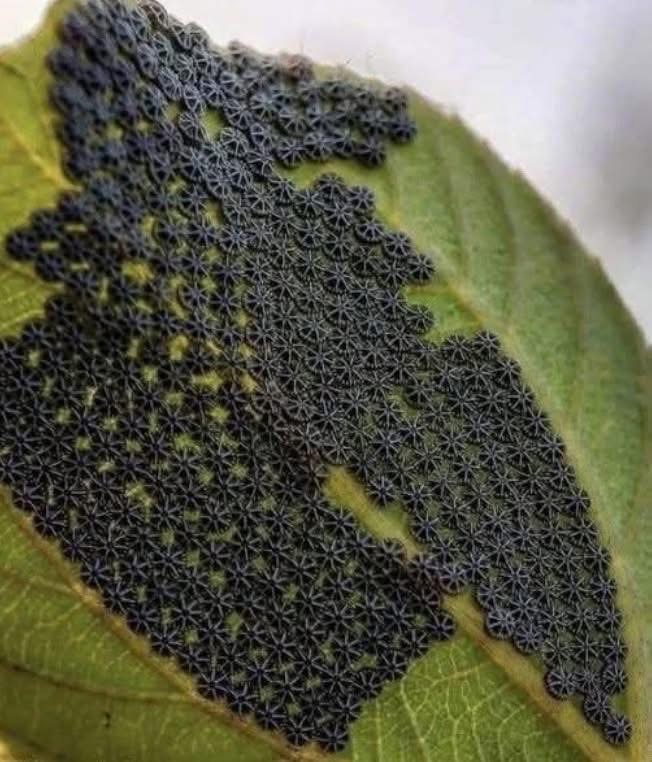
If you’re a gardener or nature lover, chances are you’ve noticed curious, tiny clusters on the twigs of your trees in early spring. Maybe they caught your eye with their strange symmetry, like miniature sci-fi sculptures hidden in plain sight. Before you reach out to poke or remove them — stop! You may be looking at the eggs of the Mourning Cloak butterfly, a fascinating native species whose survival depends on your gentle curiosity.
What Are Mourning Cloak Butterfly Eggs?
The Mourning Cloak butterfly (Nymphalis antiopa) is one of the very first butterflies to appear each spring — sometimes emerging even before the last snow melts. With their dark maroon wings trimmed in pale yellow and dotted with shimmering blue spots, they’re a unique sight.
But their eggs? They’re even more intriguing.
-
Laid in circular rings around twigs and stems
-
Host trees include:
-
Willows
-
Elms
-
Poplars
-
Birch
-
Each egg is only the size of a pinhead and features seven distinct white ridges, making it look like a miniature starburst. Fresh eggs appear pale green or amber yellow, gradually darkening to black as the caterpillars grow inside.
Why You Should Never Touch Them
Though they may look strange — even a little creepy — Mourning Cloak eggs are a vital part of the ecosystem.
Here’s why you should leave them alone:
-
They’re fragile: Even light contact can damage the outer shell and kill the caterpillar inside.
-
They’re exposed: Touching them can dislodge eggs or make them easier prey for ants and birds.
-
They’re beneficial: These butterflies contribute to pollination and serve as food for other species.
-
They’re a part of nature’s balance: Removing them disrupts natural biodiversity.
The Life Cycle of a Mourning Cloak Butterfly
Understanding their development shows just how special these little “alien eggs” are:
-
Egg Stage (0–2 weeks): Eggs are laid in tight rings on branches and hatch after about 10–15 days.
-
Larval Stage (Caterpillar): The black caterpillars with red spots feed in groups — a rare butterfly behavior that offers them protection.
-
Pupal Stage (Chrysalis): Once mature, caterpillars form camouflaged chrysalises that resemble curled leaves.
-
Adult Stage: After about 2 weeks, the adult butterfly emerges. It may live up to 10 months — among the longest of all North American butterflies.
A Friend in Disguise
Mourning Cloaks aren’t showy flower hoppers. They feed on:
-
Tree sap
-
Rotting fruit
-
Animal dung
These behaviors make them important recyclers in forest ecosystems. And since they hibernate during winter, they’re one of the few butterflies you might spot even in the chill of early spring.
Final Thoughts: Protect the Alien Art on Your Trees
It’s easy to assume something unfamiliar is a pest — but in this case, it’s a miracle in progress. If you spot clusters of ridged, geometric dots on a twig, don’t swat, scrape, or spray.
Instead:
-
Observe quietly
-
Take a photo
-
Let nature do its thing
You’ll be helping a beautiful butterfly complete its incredible journey — and adding your garden to the chain of life that keeps our planet buzzing, fluttering, and thriving.
Stay Curious
So next time you stumble across something that looks like alien art clinging to your trees… know you’re witnessing nature’s quiet masterpiece in the making.