
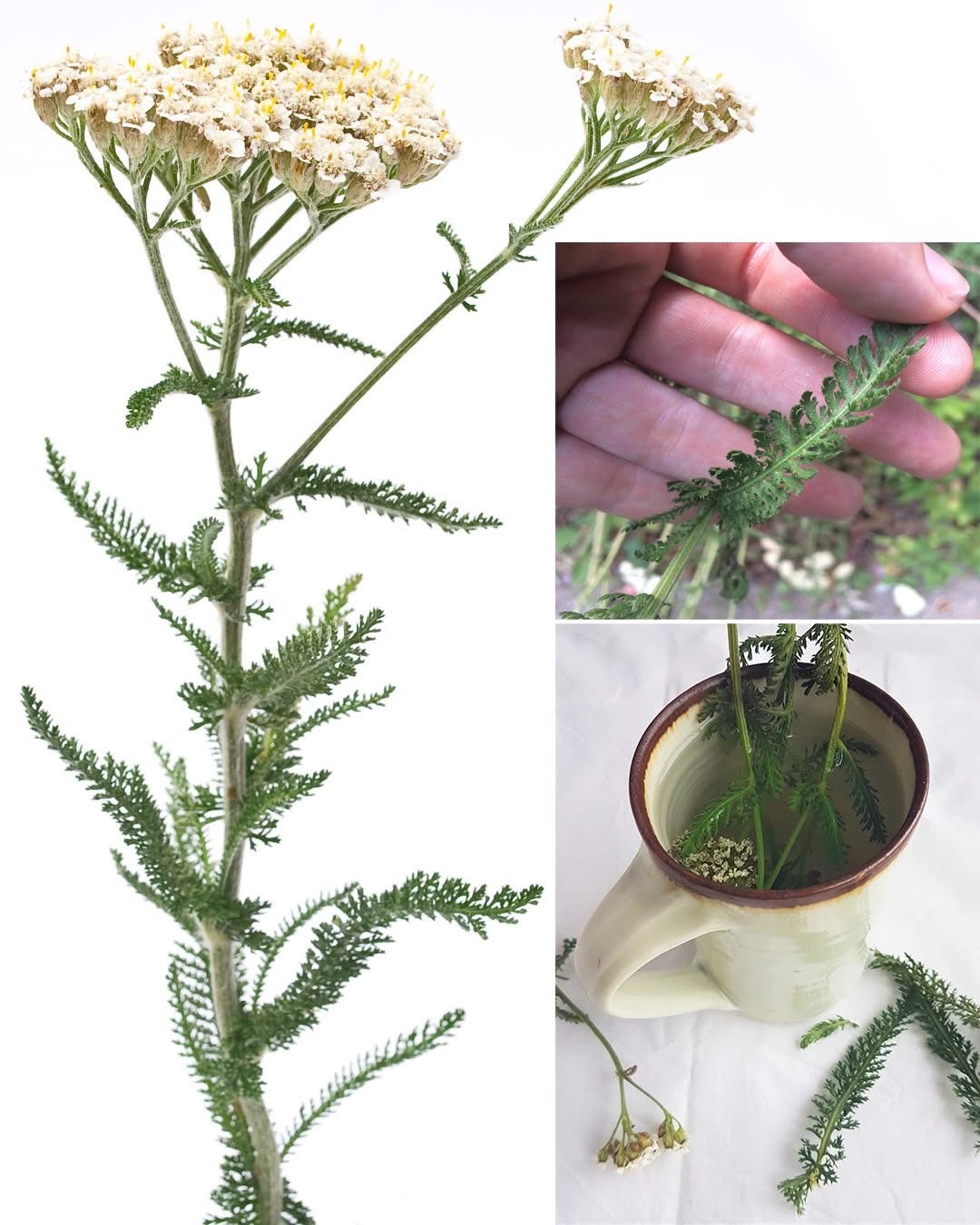
Botanical Overview
-
Scientific Name: Achillea millefolium
-
Common Names: Yarrow, Milfoil, Soldier’s Woundwort, Nosebleed Plant, Thousand-leaf, Carpenter’s Weed
-
Family: Asteraceae (Daisy family)
-
Habitat: Found in temperate regions across North America, Europe, and Asia — common in meadows, grasslands, roadsides, and gardens.
Plant Description:
-
Height: 30–90 cm (1–3 feet)
-
Flowers: Small, tightly clustered, white or pale pink with yellow centers
-
Leaves: Feathery, fern-like, finely divided
-
Stem: Erect, sometimes slightly hairy
Historical and Traditional Uses of Yarrow
-
Ancient Greece: Legend has it that Achilles used yarrow to treat soldiers’ wounds, giving the plant its botanical name.
-
Native American Medicine: Valued for treating fevers, digestive issues, wounds, and bleeding.
-
European Folk Medicine: Used for colds, fevers, digestive health, and as a tonic.
-
Medieval Lore: Carried as a charm for protection and used in love divinations.
Medicinal Properties of Yarrow
-
Anti-inflammatory
-
Antimicrobial
-
Astringent
-
Diaphoretic (promotes sweating)
-
Hemostatic (stops bleeding)
-
Digestive stimulant
-
Vulnerary (promotes wound healing)
Health Benefits of Yarrow
1. Wound Healing
-
Stops bleeding and promotes healing of cuts and abrasions.
-
Contains achilleine, which aids blood clotting.
2. Cold and Flu Support
-
Yarrow tea promotes sweating, helping break fevers.
-
Often used with elderflower and peppermint in traditional remedies.
3. Digestive Aid
-
Stimulates bile flow, eases bloating, cramps, and indigestion.
4. Menstrual Relief
-
Regulates menstrual flow and eases cramps with its antispasmodic effects.
5. Anti-inflammatory Effects
-
Reduces inflammation both internally (as tea) and externally (as poultice).
6. Antimicrobial Activity
-
Traditionally used to prevent infections in wounds.
How to Use Yarrow
1. Yarrow Tea (Infusion)
-
Ingredients: Fresh or dried yarrow leaves and flowers.
-
Preparation:
-
Use 1–2 tsp dried (or 2–4 tsp fresh) yarrow per cup of boiling water.
-
Steep 10–15 minutes.
-
-
Uses: For colds, fevers, digestive discomfort, and menstrual pain.
2. Yarrow Poultice
-
Crush fresh yarrow leaves and flowers.
-
Apply directly to wounds to help stop bleeding and promote healing.
3. Yarrow Tincture
-
Steep fresh yarrow in alcohol for several weeks.
-
Use for concentrated internal or external applications.
4. Yarrow Bath
-
Add yarrow tea infusion to warm bathwater to soothe irritated skin and sore muscles.
5. Yarrow Salve
-
Infuse yarrow in oil, mix with beeswax to create a healing salve for skin issues.
Active Constituents in Yarrow
-
Alkaloids (Achilleine): Helps with blood clotting.
-
Volatile Oils (Azulene, Camphor, Cineole): Anti-inflammatory, antimicrobial.
-
Flavonoids (Apigenin, Luteolin): Antioxidant, anti-inflammatory.
-
Tannins: Astringent, aids in wound healing.
-
Sesquiterpene Lactones: Supports digestion.
Safety and Precautions
-
Pregnancy: Avoid, may stimulate the uterus.
-
Allergies: Can cause reactions in those allergic to Asteraceae family plants.
-
Photosensitivity: May make skin more sensitive to sunlight when applied topically.
-
Interactions: May interfere with blood thinners due to its clotting effects.
⚠️ Always consult a healthcare provider or qualified herbalist before medicinal use.
Final Thoughts
Yarrow is a remarkable herb with deep historical roots and impressive medicinal properties. Whether used in teas, tinctures, poultices, or salves, it remains a versatile ally in natural wellness. By understanding its benefits, applications, and precautions, you can harness the full power of this ancient plant in a safe and effective way.