
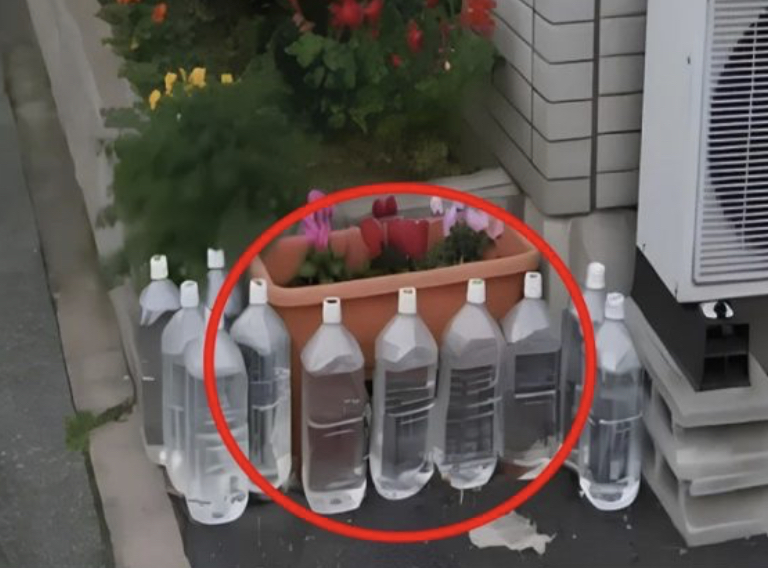
If you’ve ever wandered through a quiet residential neighborhood in Japan, you may have noticed something a little peculiar — clear plastic water bottles lined neatly along fences, garden walls, or driveways. At first glance, they might look like forgotten recyclables or leftovers from a picnic. But these bottles are very much deliberately placed, and they even have a name: nekoyoke, which means “cat deterrents” in Japanese.
What’s the Purpose?
Although cats are adored in Japan (just think of Maneki-neko or cat cafes!), stray cats can become a nuisance in some areas. They may dig in flowerbeds, spray on doorways, or even use gardens as litter boxes. In response, some residents place water-filled bottles outside their homes to deter them.
The idea is to keep stray cats away from private spaces without harming them, using a simple and passive technique.
How People Think It Works
This may sound odd to non-Japanese observers, but it’s actually a common sight in many Japanese cities and towns. So how are these bottles supposed to work?
Here’s the theory:
-
When sunlight or artificial light hits the water inside the bottles, it creates flashes or reflections that cats might find startling.
-
Some believe the distorted reflections or even the curved surfaces of the water bottles confuse cats’ depth perception.
-
As a result, cats might be discouraged from hanging around or entering these areas.
Where Did This Practice Start?
Interestingly, this tradition didn’t originate in Japan. It’s believed to have started in Western countries in the 1980s, where similar tactics were used — not for cats, but to deter dogs from peeing on lawns.
Japan adapted the idea with its own cultural twist, applying it more widely to protect walkways, gardens, and courtyards from stray cats instead of dogs.
But… Does It Actually Work?
That’s the big question.
Animal behavior experts generally agree that water bottles are not a consistently effective method for deterring cats — especially in areas with little light or during nighttime hours. Most cats simply ignore them once they realize there’s no real threat.
Still, many people in Japan continue this tradition:
-
Out of habit
-
Because it’s non-invasive and harmless
-
And maybe, because there’s still hope that it just might work
More Than Just a Cat Deterrent
Whether or not the bottles succeed in their goal, they’ve become something more meaningful — a quirky cultural symbol and a visual representation of Japanese values:
-
Creativity in finding low-tech solutions
-
Respect for life, avoiding harm to animals
-
And a love of order, neatness, and subtle aesthetics
Visitors often find these rows of bottles mysterious or charming — they’re now as much a part of the landscape as lanterns and vending machines.
💬 Final Thoughts
Even though science hasn’t proven their effectiveness, nekoyoke water bottles remain a fascinating example of local ingenuity and cultural tradition. They reflect how people respond to everyday problems in thoughtful — and sometimes unconventional — ways.
Next time you’re in Japan, keep an eye out for them. These humble water bottles may seem simple, but they carry a story of community, creativity, and cultural curiosity.
Have You Seen Similar Practices?
Do you know of any other unusual or clever traditions from around the world that aim to solve daily challenges in unique ways? Share them in the comments — we’d love to hear from you!