
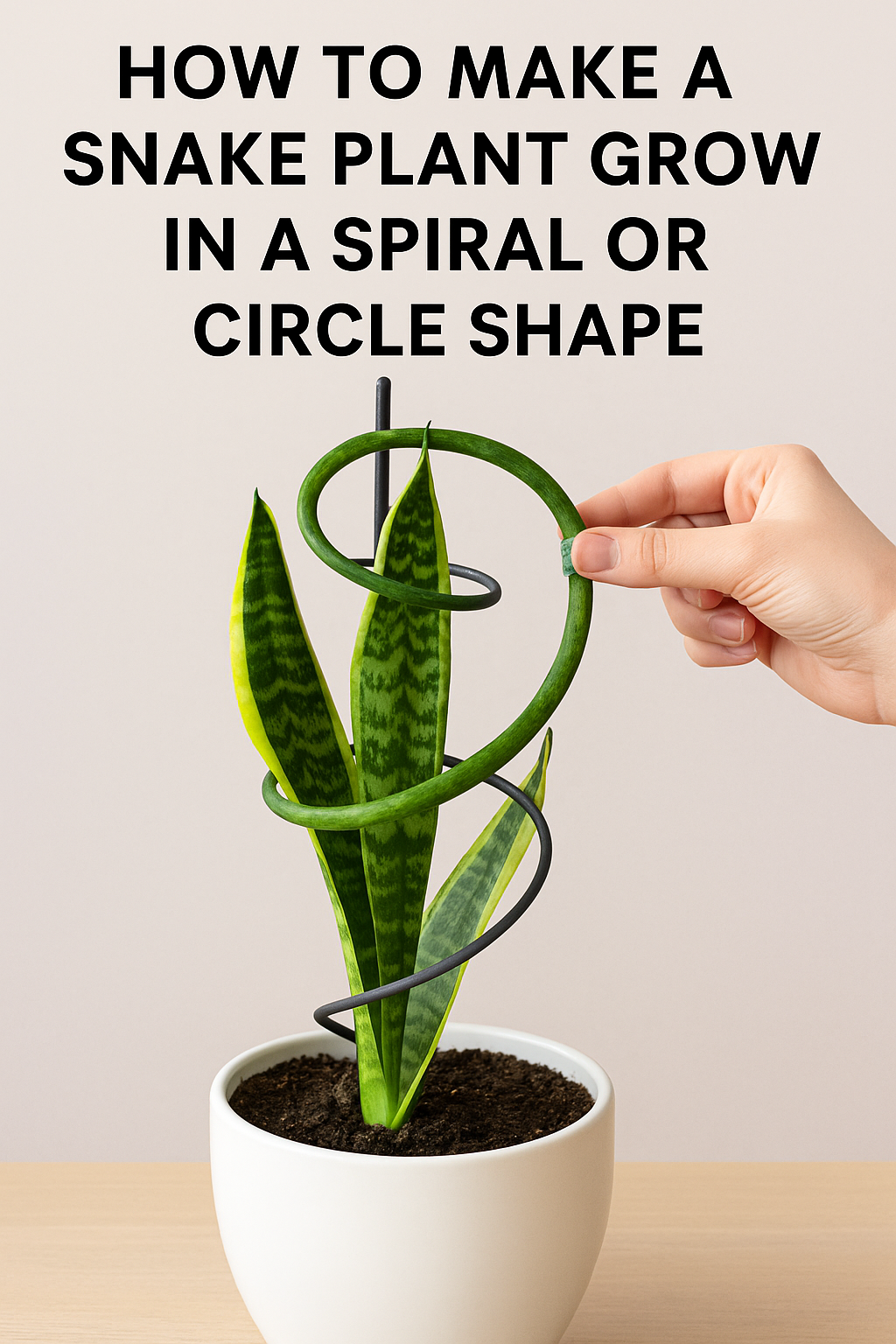
The snake plant (Sansevieria), with its tall, sword-like leaves and fuss-free nature, is one of the most popular succulents in modern homes—and for good reason. It’s tough, stylish, and even helps purify the air. But did you know that with a little creativity and care, you can train your snake plant to grow in a spiral or circular shape?
This decorative twist (literally!) can turn your ordinary plant into a stunning living sculpture. Whether you’re trying to make a bold statement or just elevate your plant game, here’s your complete guide to growing a spiral snake plant.
Step 1: Start with the Right Plant
Before shaping begins, choosing the right plant and variety is crucial.
-
✅ Younger plants are more pliable and easier to train than mature ones. Mature leaves are stiff and prone to snapping if bent too aggressively.
-
✅ Look for compact, symmetrical growth, which provides a better base for shaping.
Best Snake Plant Varieties for Spirals:
-
Sansevieria trifasciata ‘Laurentii’ – tall and graceful with yellow margins
-
Sansevieria ‘Zeylanica’ – dense, upright growth with strong vertical lines
-
Sansevieria ‘Hahnii’ – naturally grows in a rosette, making it easier to guide
Step 2: Get a Spiral Frame or Trellis
Now for the fun part: training your plant to follow a spiral!
You’ll need a support structure to guide the growth. Think of it as a trellis designed for curves.
Options include:
-
A pre-made spiral plant frame
-
A DIY wire trellis (using sturdy craft wire or a reshaped tomato cage)
-
A custom bamboo or wooden ring frame
Gently insert the frame into the soil, close to the base of the plant. Make sure it’s stable but don’t push too hard—avoid damaging the root system.
Step 3: Shape and Train the Leaves
This is where patience pays off.
-
Start slowly. Choose the longest and most flexible leaves first.
-
Bend gently in the direction of your spiral, following the frame’s shape.
-
Use soft plant ties (like Velcro strips, foam-covered wire, or garden twine) to secure the leaves at multiple points along the frame.
-
Space the ties evenly—one near the base, one mid-leaf, and one higher up for full support.
-
Continue working from the inside out, leaf by leaf, allowing room for the plant to grow and adapt.
🕒 Tip: Give your plant time to adjust between bending sessions. Don’t try to force all the leaves at once—this could cause breakage.
Step 4: Maintenance and Long-Term Care
Once the shape starts to take form, keep the spiral neat with a little regular attention.
-
Rotate the pot weekly so all sides get equal light—this helps maintain symmetry.
-
Re-tie or adjust leaf supports as new growth appears.
-
Prune only if necessary—avoid cutting flexible leaves still in training.
What to Avoid
-
Don’t use tight ties that dig into the leaves.
-
Don’t try to spiral old, stiff leaves—these are best left as they are.
-
Don’t overwater! Snake plants prefer to dry out between waterings. Excess moisture can lead to rot, especially with confined roots.
Final Thoughts
Shaping a snake plant into a spiral or circular design may take a bit of patience, but the results are absolutely worth it. With the right variety, a little support, and some gentle guidance, your ordinary plant can become a living piece of art.
Perfect for minimalist interiors, plant lovers, or anyone looking to add a touch of organic elegance to their space.