
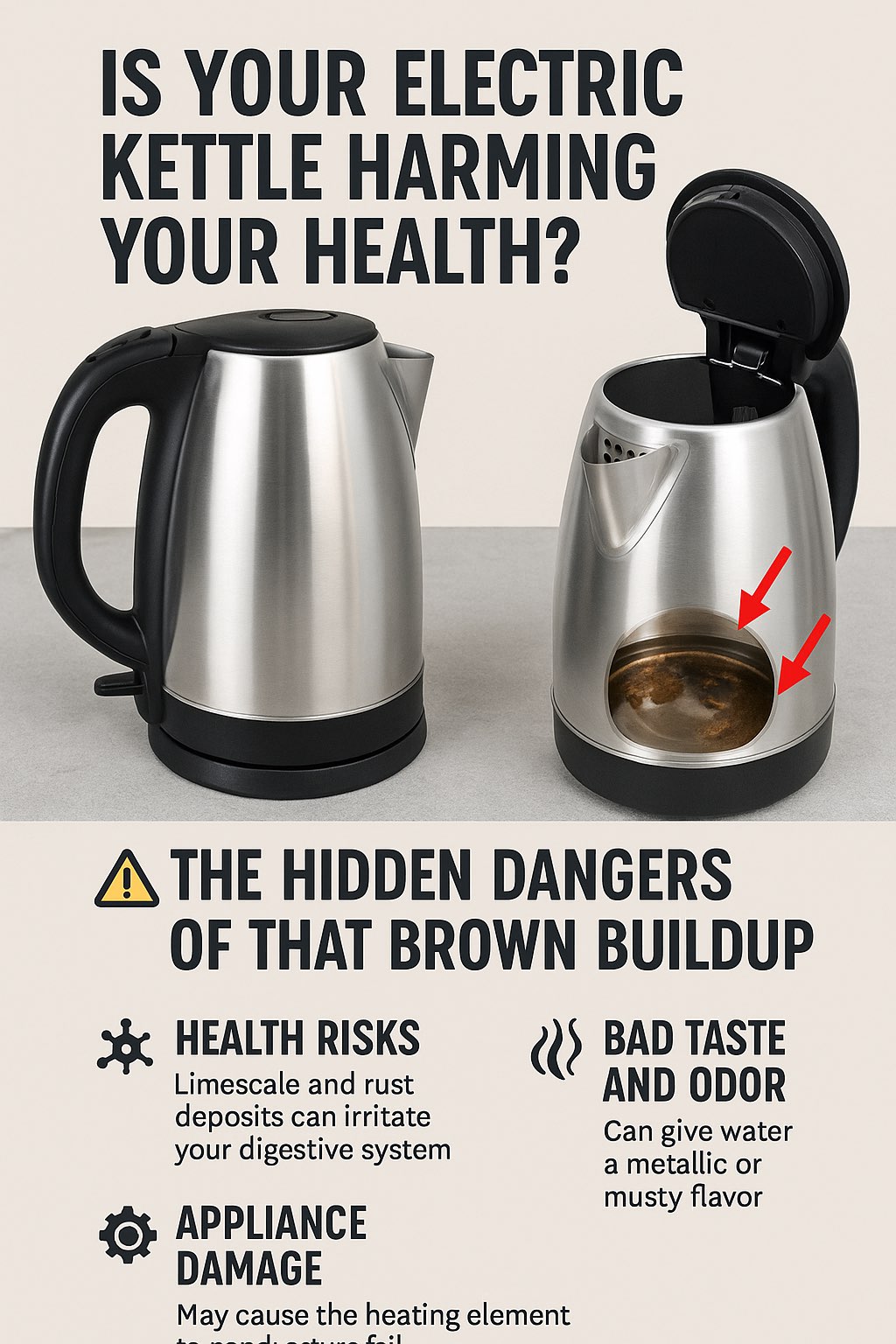
For millions of households around the world, an electric kettle is a quiet hero of the kitchen — boiling water at lightning speed for tea, coffee, oatmeal, and quick meals. But while you rely on it daily, you might be overlooking a potential health hazard forming right under your nose (and in your water).
Take a moment to look inside your kettle. Do you see brown, red, or chalky residue at the bottom? You’re not alone — and it’s not just cosmetic. That seemingly harmless buildup could be affecting your health, your taste buds, and your appliance more than you think.
🧪 What Is That Brown Buildup?
That strange discoloration — often brown, reddish, or chalky white — is typically a combination of two things:
1. Limescale (Calcium & Magnesium Deposits)
If you live in an area with hard water, your kettle will accumulate a chalky residue over time. This is limescale — a mineral buildup caused by repeated boiling of water that’s rich in calcium and magnesium.
2. Rust or Metal Corrosion
In older or cheaper kettles (especially those made with lower-grade stainless steel or exposed heating elements), metal parts may begin to corrode, leading to rust flakes that settle in your water — or worse, get poured into your cup.
❗ Why This Should Concern You
🚨 Health Risks
Drinking water contaminated with rust or excessive limescale isn’t instantly dangerous, but it can irritate the digestive system, especially in young children, older adults, or those with weakened immune systems. Over time, consistent exposure may stress the kidneys or impact nutrient absorption.
🫖 Bad Taste and Odor
Ever noticed your tea or coffee has a strange metallic or musty taste? That’s not your imagination — it could be mineral or rust contamination altering the flavor and smell.
⚙️ Appliance Damage
Limescale is also the enemy of your appliance. It can coat the heating element, causing your kettle to:
-
Take longer to boil
-
Use more electricity
-
Overheat or burn out prematurely
✅ What You Should Do Immediately
1. Inspect Your Kettle
-
Unplug the kettle and let it cool.
-
Look inside with a flashlight. Check for rust-colored spots, white crusty deposits, or blackened heating elements.
-
Swirl a small amount of clean water inside to see if particles loosen or float.
2. Clean It Naturally
Try this natural descaling method to clean your kettle without harsh chemicals:
Ingredients:
-
1 part white vinegar (or lemon juice)
-
1 part water
Steps:
-
Fill the kettle halfway with the vinegar/water mix.
-
Boil the solution and let it sit for 30 minutes to 1 hour.
-
Pour out the solution and scrub any remaining residue with a soft brush or cloth.
-
Rinse several times with clean water to remove any vinegar smell or taste.
💡 Pro Tip: For heavy buildup, repeat the process twice.
3. Switch to a Filtered Water Source
Using filtered or distilled water can drastically reduce mineral buildup and extend your kettle’s life.
4. Upgrade Your Kettle If Needed
If your kettle is showing signs of rust or wear, it may be time to invest in a high-quality model. Look for features like:
-
Hidden heating elements
-
Food-grade stainless steel interiors
-
Descaling alerts
-
Built-in water filters
🧼 Prevention Tips
-
Descale monthly if you use the kettle daily — especially in hard water regions.
-
Empty leftover water after each use to prevent standing moisture.
-
Leave the lid open when not in use to allow the inside to dry completely.
-
Use filtered water to minimize mineral deposits.
🧠 Final Thoughts: Don’t Ignore the Signs
An electric kettle is one of the most used appliances in the home — yet it’s also one of the most neglected when it comes to cleaning and maintenance.
That brown buildup you’ve been ignoring? It could be affecting your health, your flavor, and your wallet. But the good news is, with a little awareness and a monthly cleaning habit, you can enjoy safe, fresh, and pure boiled water every time.
☕ Take Action Today:
Check your kettle. Clean it if needed. And if it’s past its prime, consider upgrading — your health is worth it.