
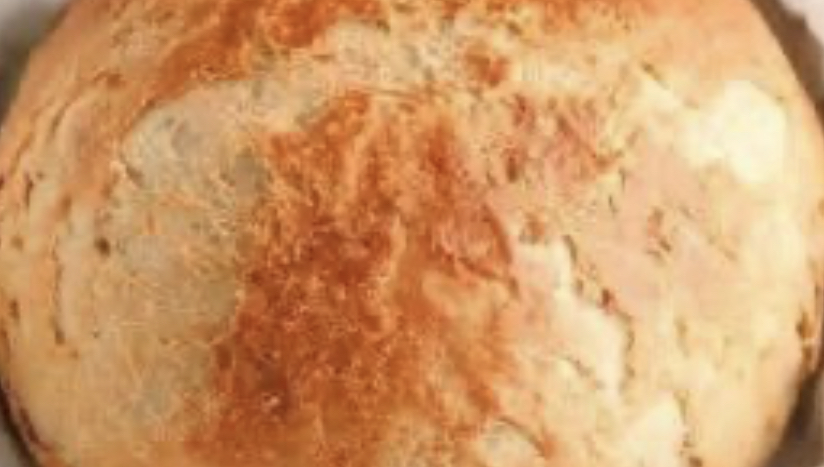
Imagine the aroma of freshly baked bread filling your kitchen, a golden-brown crust crackling as you slice into a soft, airy interior. Sounds like a dream, right? Often, baking artisan bread at home feels like a daunting task, reserved for seasoned bakers armed with complex techniques and endless hours of kneading. But what if we told you that achieving this culinary masterpiece could be incredibly simple, requiring minimal effort and no special skills? Welcome to the magic of No-Knead Artisan Bread—your gateway to homemade bread perfection.
This revolutionary method strips away the intimidation factor, proving that beautiful, crusty, and chewy artisan bread is well within your reach. The secret lies in a long fermentation process and high hydration, which allow time and water to do all the hard work of developing gluten, eliminating the need for strenuous kneading. The result? A loaf that rivals your favorite bakery’s, with a wonderfully irregular crumb and that signature rustic charm, all achieved with just a few basic ingredients and a Dutch oven. It is a game-changer for beginners and experienced bakers alike, promising stellar results with unbelievably little active time.
Whether you are looking to impress guests, elevate your weeknight meals, or simply enjoy the immense satisfaction of baking from scratch, this No-Knead Artisan Bread recipe is a must-try. Prepare to be amazed by how easily you can transform simple staples into a loaf of pure delight. The process is mostly hands-off, involving a simple mix, a long leisurely rise, and a hot bake. Get ready to experience the joy of truly homemade bread—crusty on the outside, tender on the inside, and utterly irresistible.
Why You Will Love This Recipe
-
No Kneading Required: Let time and water do the work. This recipe requires no strenuous kneading, making it accessible to bakers of all skill levels.
-
Simple Ingredients: Just flour, salt, yeast, and water—four basic staples that come together to create something extraordinary.
-
Crusty, Bakery-Quality Results: A Dutch oven creates the perfect steamy environment for a crackly, golden crust and a soft, airy interior.
-
Minimal Active Time: With just 15 minutes of hands-on work, the rest of the time is hands-off rising and baking.
-
Versatile: Easily customize with herbs, cheese, seeds, or spices to make it your own.
-
Deeply Satisfying: There is nothing quite like pulling a beautiful loaf of homemade bread from the oven.
No-Knead Artisan Bread
Prep Time: 15 minutes | Rise Time: 12 to 18 hours | Second Rise: 30 to 60 minutes | Bake Time: 45 to 50 minutes | Total Time: 13 to 20 hours
Yield: 1 large loaf (about 8 to 10 slices)
This no-knead artisan bread delivers everything you want in a homemade loaf—a crisp, golden crust, a soft and airy interior, and a deep, complex flavor developed over a long, slow rise. With minimal effort and just a few ingredients, you can create bread that rivals any bakery.
Ingredients
-
3 cups (360g) all-purpose flour or bread flour, plus more for dusting
-
1½ teaspoons fine sea salt
-
¼ teaspoon instant yeast (or active dry yeast, proofed)
-
1½ cups (360ml) warm water (about 105–115°F / 40–46°C)
Optional Additions:
-
1 tablespoon fresh rosemary, chopped
-
½ cup shredded cheese (cheddar, Gruyere, or Parmesan)
-
2 tablespoons mixed seeds (sesame, poppy, flax)
Instructions
Step 1: Mix the Dough
In a large mixing bowl, combine the flour, salt, and instant yeast. If using active dry yeast, first dissolve it in the warm water for 5 to 10 minutes until foamy, then add to the dry ingredients. Pour the warm water into the dry ingredients. Using a wooden spoon or a spatula, mix until just combined and no dry streaks of flour remain. The dough will be very shaggy and sticky—this is perfectly normal and desired for a high-hydration no-knead dough. Do not overmix. If adding optional ingredients like herbs, cheese, or seeds, stir them in now.
Step 2: First Rise (Bulk Fermentation)
Cover the bowl tightly with plastic wrap or a kitchen towel. Let the dough rest at room temperature (ideally 68–72°F / 20–22°C) for 12 to 18 hours. A longer rise time develops more flavor. The dough should at least double in size, become bubbly, and have a slightly boozy aroma. If your kitchen is warmer, the rise might be quicker (closer to 12 hours); if cooler, it might take longer (closer to 18 hours).
Step 3: Prepare for Shaping
Once the first rise is complete, lightly flour a clean work surface. Gently scrape the dough out of the bowl onto the floured surface. Avoid deflating it too much.
Step 4: Shape the Dough
Lightly flour your hands. Gently fold the edges of the dough towards the center, forming a rough ball. Flip the dough over so the seam is underneath. Using your hands or a bench scraper, gently cup the dough and pull it towards you, rotating it slightly, to create surface tension and form a taut, round loaf.
Step 5: Second Rise (Proofing)
Line a medium-sized bowl (about 8 to 9 inches in diameter) or a proofing basket (banneton) with a generously floured kitchen towel. Carefully transfer the shaped dough, seam-side up, into the prepared bowl or basket. Sprinkle a little more flour over the top of the dough. Cover loosely with plastic wrap or another towel and let it rest for a second rise for 30 to 60 minutes at room temperature. During this time, the dough will puff up slightly.
Step 6: Preheat Oven and Dutch Oven
About 30 minutes before the end of the second rise, place your Dutch oven (with its lid) in the cold oven. Preheat the oven to 450°F (232°C). It is crucial to let the Dutch oven preheat thoroughly to achieve that perfect crust.
Step 7: Bake (Lid On)
Once the oven and Dutch oven are fully preheated, carefully remove the hot Dutch oven from the oven using oven mitts. Be extremely cautious as it will be very hot. Gently uncover your proofed dough. If using a towel-lined bowl, invert the dough directly into the hot Dutch oven (you can use parchment paper to help lift it if preferred, placing the dough with the parchment paper into the pot). If using a banneton, gently flip the dough onto a piece of parchment paper, then use the parchment to carefully lower the dough into the hot Dutch oven. If desired, you can lightly score the top of the dough with a sharp knife or razor blade before baking (a single slash or a cross). Immediately place the lid back on the Dutch oven. Bake for 30 minutes with the lid on. The steam trapped inside the Dutch oven will help the bread rise beautifully and create a fantastic crust.
Step 8: Bake (Lid Off)
After 30 minutes, carefully remove the lid from the Dutch oven. Continue to bake for another 15 to 20 minutes, or until the crust is a deep golden-brown and sounds hollow when tapped on the bottom. The internal temperature should be around 200–210°F (93–99°C).
Step 9: Cool
Carefully remove the bread from the Dutch oven (using oven mitts and the parchment paper if you used it) and transfer it to a wire rack. It is absolutely essential to let the bread cool completely for at least 1 to 2 hours before slicing. Slicing hot bread can result in a gummy texture inside.
Tips for Perfect No-Knead Artisan Bread
-
Use a Kitchen Scale: For the most consistent results, weigh your flour. Measuring by volume can vary, while weighing ensures accuracy.
-
Water Temperature Matters: The water should be warm (105–115°F) to activate the yeast but not so hot that it kills it.
-
Be Patient with the Rise: The long fermentation is key to developing flavor and gluten. Do not rush it. A longer rise yields a more complex, tangy flavor.
-
Handle Gently: When shaping the dough, handle it gently to preserve the air bubbles that create the open, airy crumb structure.
-
Preheat the Dutch Oven: A thoroughly preheated Dutch oven creates an intense burst of steam that helps the bread rise and develop a crispy crust.
-
Score the Dough: Scoring (slashing) the top of the dough before baking allows steam to escape and gives the bread room to expand. It also creates that beautiful, rustic look.
-
Cool Completely: This is crucial. Slicing into a hot loaf releases steam and results in a gummy, doughy interior. Let the bread cool fully on a wire rack for the best texture.
Variations and Additions
-
Rosemary Garlic Bread: Add 1 tablespoon of fresh chopped rosemary and 3 cloves of minced garlic to the dough during mixing.
-
Cheddar Jalapeño: Fold in ½ cup of shredded sharp cheddar cheese and 2 tablespoons of finely chopped pickled jalapeños.
-
Everything Bagel Bread: Sprinkle 2 tablespoons of everything bagel seasoning over the shaped dough before the second rise.
-
Olive Rosemary: Fold in ½ cup of chopped Kalamata olives and 1 tablespoon of fresh rosemary.
-
Seeded Multigrain: Add ¼ cup of rolled oats, 2 tablespoons of flax seeds, and 2 tablespoons of sunflower seeds to the dry ingredients.
-
Parmesan Black Pepper: Add ½ cup of grated Parmesan cheese and 1 teaspoon of coarsely ground black pepper.
-
Whole Wheat Version: Substitute 1 cup of the all-purpose flour with whole wheat flour for a nuttier, heartier loaf. You may need to add an extra tablespoon or two of water.
What to Serve with Artisan Bread
This beautiful loaf is delicious in so many ways:
-
With Butter: Simply slice and spread with salted butter for the ultimate simple pleasure.
-
With Olive Oil: Serve alongside a dish of good-quality olive oil and balsamic vinegar for dipping.
-
Soup Companion: The perfect partner for tomato soup, butternut squash soup, or French onion soup.
-
Sandwiches: Use for grilled cheese, panini, or your favorite deli sandwiches.
-
Bruschetta: Slice, toast, and top with fresh tomatoes, basil, and garlic.
-
Cheese Board: Add to a cheese or charcuterie board for a rustic, impressive touch.
Storage and Freezing
-
Room Temperature: Store bread at room temperature in a paper bag or wrapped in a kitchen towel for up to 2 days. Avoid storing in plastic, which can soften the crust.
-
Freezer: This bread freezes beautifully. Slice the cooled loaf, wrap tightly in plastic wrap, then in aluminum foil, and freeze for up to 3 months. Toast slices directly from the freezer.
-
Revive Stale Bread: To refresh day-old bread, run it under water briefly, then place in a 350°F oven for 5 to 10 minutes. The crust will crisp up, and the interior will become soft again.
The Magic of No-Knead Bread
The no-knead bread method was popularized by Jim Lahey of Sullivan Street Bakery in New York City, who introduced it to home bakers in 2006. The technique relies on a simple principle: a wet, high-hydration dough develops gluten naturally over time through autolyse—the process where flour and water combine, allowing enzymes to break down proteins and form gluten strands without kneading.
The long fermentation also allows for the development of complex flavors, similar to sourdough, without the need for a starter. The Dutch oven replicates the steamy environment of a professional bread oven, creating that signature crispy crust and open crumb structure. It is a method that has changed the way home bakers think about bread, proving that artisan-quality loaves are accessible to everyone.
Why This Recipe Works
The success of this no-knead bread lies in its high hydration and long fermentation. With a hydration level of around 75%, the dough is wet enough to allow gluten to develop on its own over time. The long, slow rise allows the yeast to produce carbon dioxide slowly, creating large, irregular air pockets that give the bread its characteristic open crumb.
Baking in a preheated Dutch oven traps steam released from the dough, which gelatinizes the starches on the surface, creating a glossy, crackly crust. Removing the lid for the second half of baking allows the crust to dry out and deepen in color, resulting in that perfect bakery-style finish.
Nutritional Information
Please note that values are estimates and will vary based on specific ingredients and portion sizes.
Per slice (based on 10 slices):
| Nutrient | Amount |
|---|---|
| Calories | 160–180 |
| Protein | 5–6g |
| Carbohydrates | 32–35g |
| Fat | 1–2g |
| Fiber | 1–2g |
| Sodium | 320–350mg |
Conclusion
No-Knead Artisan Bread is proof that you do not need years of experience or specialized equipment to create something truly beautiful. With just four simple ingredients, a Dutch oven, and a little patience, you can bake a loaf that looks and tastes like it came from a professional bakery.
The process is meditative, the aroma is intoxicating, and the reward—a warm, crusty loaf of homemade bread—is one of life’s simple pleasures. Whether you are a seasoned baker or trying your hand at bread for the first time, this recipe is sure to become a favorite.
I hope this recipe brings the joy of homemade bread to your kitchen. If you give it a try, please leave a comment below. I would love to hear how it turned out for you.