
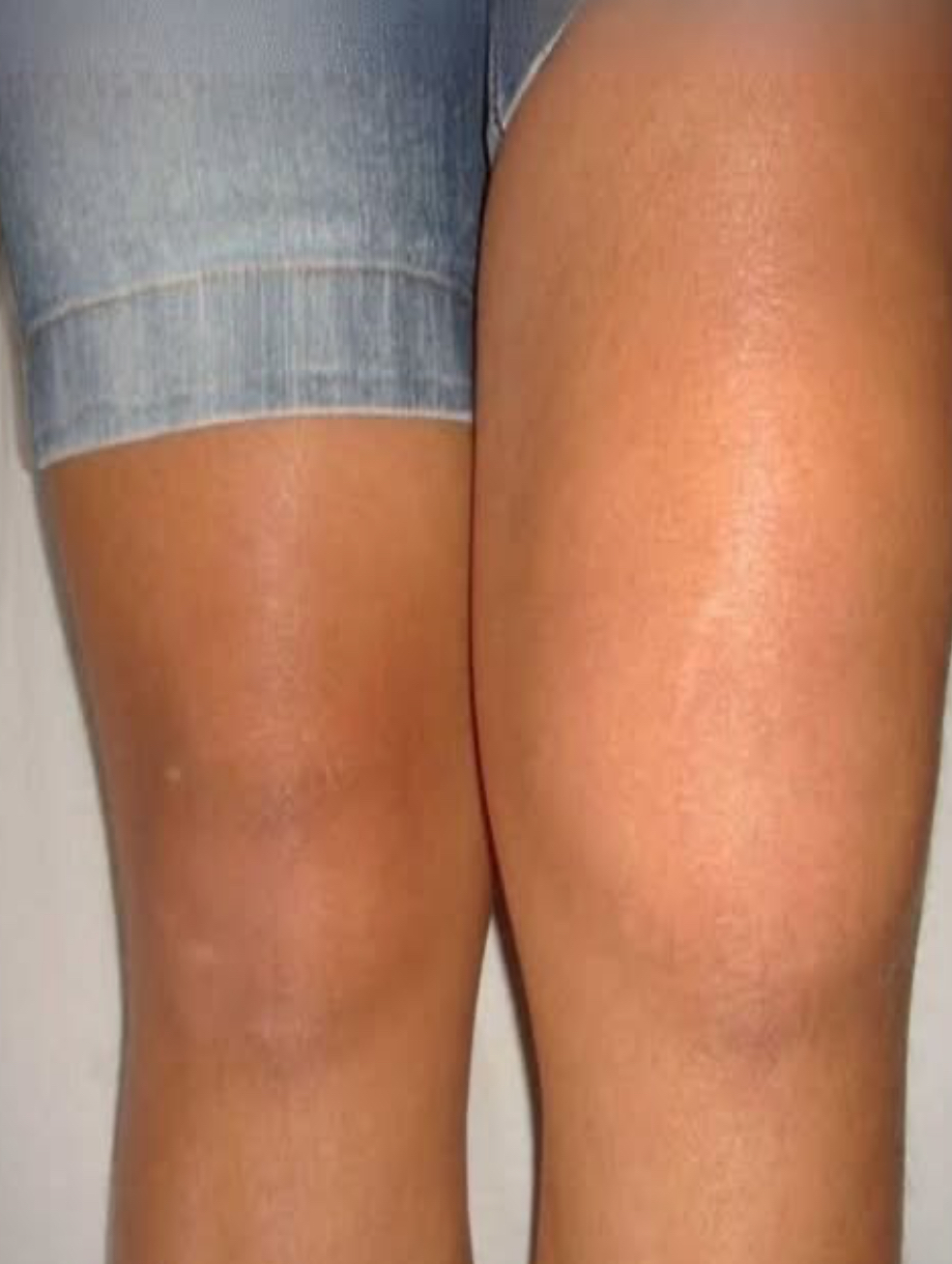
Have you noticed that only one of your knees is swollen, red, or tender — while the other feels completely normal? It’s understandable to feel a bit worried.
Swelling in both knees often suggests systemic conditions like arthritis or gout. But when just one knee is affected, it typically points to a localized problem — something specific, often treatable, and sometimes urgent.
In this article, we’ll explore what unilateral knee swelling could mean, the most common causes, and what steps you can take to relieve discomfort — or recognize when it’s time to see a doctor.
🧠 What Does One-Sided Knee Swelling Indicate?
Swelling in a single knee usually means the issue isn’t affecting your whole body, but rather just that joint. That’s both good news and a cue to take a closer look.
Unlike mild joint stiffness or generalized wear-and-tear, swelling in just one knee might indicate an injury, infection, or inflammation that needs attention.
⚠️ 7 Common Causes of Unilateral Knee Swelling
1. Knee Injury (Sprain, Strain, or Tear)
A twist, fall, or overextension can injure the ligaments (like the ACL or MCL), meniscus, or surrounding tissues. These injuries can cause pain, swelling, and instability in only one knee.
Symptoms:
-
Swelling that starts within hours
-
Pain with movement
-
Feeling like the knee is “giving out”
2. Bursitis
The knee has small fluid-filled sacs called bursae that cushion the joint. Overuse, kneeling, or trauma can cause these sacs to become inflamed.
Symptoms:
-
Swelling at the front or side of the knee
-
Tenderness and warmth
-
Pain when kneeling or walking
3. Infection (Septic Arthritis or Cellulitis)
An infected joint is a medical emergency. Infection can enter the knee through injury, surgery, or even bloodstream spread.
Symptoms:
-
Sudden swelling and redness
-
Severe pain
-
Fever or chills
-
Knee feels hot to the touch
👉 If you suspect infection, seek medical help immediately.
4. Gout or Pseudogout (Calcium Crystal Buildup)
While gout often affects both joints eventually, it can start in just one knee. It’s caused by the buildup of uric acid or calcium pyrophosphate crystals in the joint.
Symptoms:
-
Rapid-onset swelling and redness
-
Intense pain that comes and goes
-
Tenderness even to light touch
5. Baker’s Cyst (Popliteal Cyst)
This fluid-filled sac forms behind the knee when excess joint fluid is pushed out from the knee capsule. It may or may not cause pain.
Symptoms:
-
Swelling behind the knee
-
Tightness or limited motion
-
May burst, causing sharp pain down the calf
6. Osteoarthritis (One-Sided Onset)
Although arthritis is often bilateral, it can start in just one knee. Weight imbalance, past injuries, or repetitive motion can wear down cartilage unevenly.
Symptoms:
-
Gradual swelling and stiffness
-
Worse after activity, better with rest
-
Grinding or clicking in the joint
7. Dislocated Kneecap or Loose Body
Sometimes a piece of cartilage or bone breaks off and floats in the joint, causing irritation and swelling.
Symptoms:
-
Locking or catching sensation
-
Swelling without trauma
-
Unstable feeling when walking
🧊 What to Do at Home: First Steps for Relief
If the swelling is mild and not accompanied by fever or intense pain, try the R.I.C.E. method:
-
Rest: Limit movement to avoid further irritation
-
Ice: Apply cold packs for 15–20 minutes every 2–3 hours
-
Compression: Use a knee brace or wrap to reduce swelling
-
Elevation: Keep the leg raised to help fluid drain
You can also take over-the-counter anti-inflammatories like ibuprofen or naproxen — if approved by your healthcare provider.
⏱️ When to See a Doctor
Seek immediate medical attention if:
-
Your knee is hot, red, and very painful
-
You have fever or chills
-
You can’t bear weight on it
-
The swelling appeared suddenly and severely
-
There’s a visible deformity or history of trauma
If the swelling lasts more than a few days without improvement — even if mild — it’s wise to consult an orthopedic specialist or primary care provider.
🩺 Diagnosis and Treatment Options
Depending on the suspected cause, your doctor may recommend:
-
X-rays or MRI to rule out tears or arthritis
-
Joint aspiration to test for infection or crystals
-
Physical therapy for muscle support and healing
-
Corticosteroid injections for inflammation
-
Surgery, in rare cases (for cysts, loose bodies, or major injuries)
✅ Final Thoughts
Swelling in just one knee might feel like a mystery, but it’s often your body’s way of saying: “Hey, something needs attention here.”
The good news? Most causes of unilateral knee swelling are treatable, especially when caught early. Whether it’s an injury, inflammation, or something more serious, don’t ignore it — listen to your knee, and take action.