
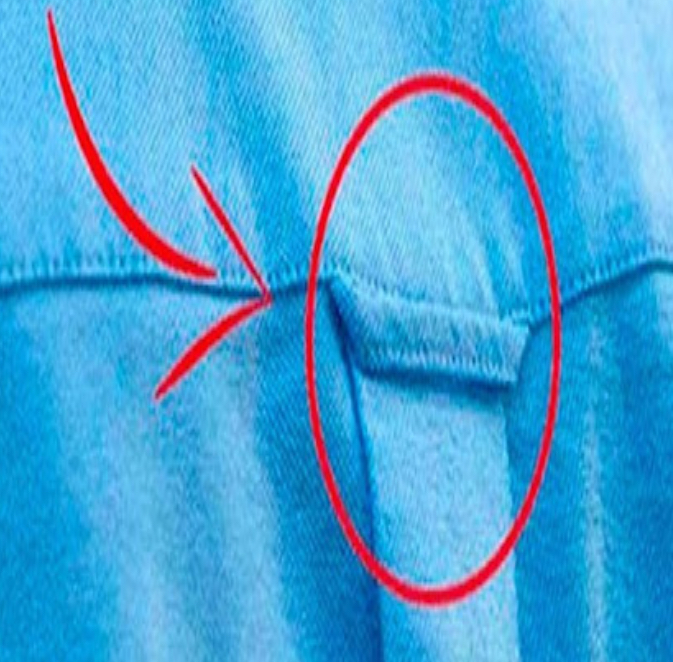
You’ve probably worn button-down shirts for years — maybe even daily — but have you ever noticed that small fabric loop stitched onto the back, just below the collar?
It’s not a defect. It’s not decorative fluff.
That little loop, known as the locker loop, actually has a fascinating backstory that stretches from naval ships to Ivy League campuses and into today’s fashion world.
So what is it, really? And why is it still on shirts in 2025?
Let’s unravel the mystery of the locker loop, and why this tiny detail tells a big story about functionality, tradition, and subtle style.
What Is the Locker Loop?
The locker loop (also called a hanger loop, sweater loop, or backstay) is a small strip of fabric sewn vertically into the back of a shirt — typically centered between the shoulder blades just below the collar.
You’ll most often find it on:
-
Oxford cloth button-downs (OCBDs)
-
Some polos and casual shirts
-
Occasionally even on women’s dress shirts or blazers
At first glance, it might seem pointless. But in truth, the locker loop has functional roots — and a surprising fashion legacy.
The Naval Origins: From Ship to Shirt
The story begins on British Royal Navy ships in the early 20th century.
Sailors lived in tight quarters, often without closets or hangers. They needed a simple way to hang up their shirts that wouldn’t damage the fabric or risk blowing away in rough weather. Thus, the locker loop was born.
Why the Navy loved it:
-
Allowed quick hanging on hooks or nails in lockers
-
Prevented wrinkles in confined spaces
-
Saved shirts from falling or getting soaked in messy cabins
This no-nonsense feature became standard on naval uniforms — and from there, it made its way onto land.
The Ivy League Era: From Utility to Style
Fast forward to the 1950s and ’60s in the U.S. — where Ivy League campuses like Harvard, Yale, and Princeton began embracing British-inspired OCBD shirts. And with them came the locker loop.
What was once a tool of practicality transformed into a badge of authenticity and prep-school cool.
On college campuses:
-
Students used the loops to hang shirts in dorms, just like sailors
-
The loop became a symbol of “real” button-downs — not cheap knockoffs
-
Wearing one suggested taste, tradition, and understated luxury
It was more than just fabric. It was a style statement.
Modern-Day Locker Loop: Why It’s Still Around
These days, most people don’t need to hang their shirts from metal hooks or worry about space in a ship cabin. But the locker loop hasn’t disappeared — and here’s why:
1. Function Still Matters
Many people still use it for hanging shirts in:
-
Gym lockers
-
Bathrooms during a shower
-
Travel spaces with limited closet access
2. It’s a Style Signature
Designers love these small, nostalgic touches. The loop nods to heritage and quality — especially in casual or preppy collections.
3. It Says: “This Shirt Has History”
Even if you never use it, it signals authenticity. It’s a small, purposeful design detail that separates thoughtful fashionfrom throwaway trends.
Fun Fact: It Once Meant “I’m Taken!”
On Ivy League campuses, it became a dating ritual:
If a guy cut off his locker loop, it meant he had a girlfriend.
Meanwhile, girls would wear the guy’s college scarf or pin. Locker loops became silent symbols of relationship status — and occasionally, the cause of hallway drama.
Final Thoughts: Small Detail, Big Meaning
The locker loop is one of those rare design features that blends form and function with deep historical roots. From naval utility to campus fashion and modern streetwear, it’s evolved — but never disappeared.
So next time you put on a shirt and notice that tiny loop on the back, remember:
It’s not just there for decoration — it’s a piece of fashion history hanging right between your shoulders.