
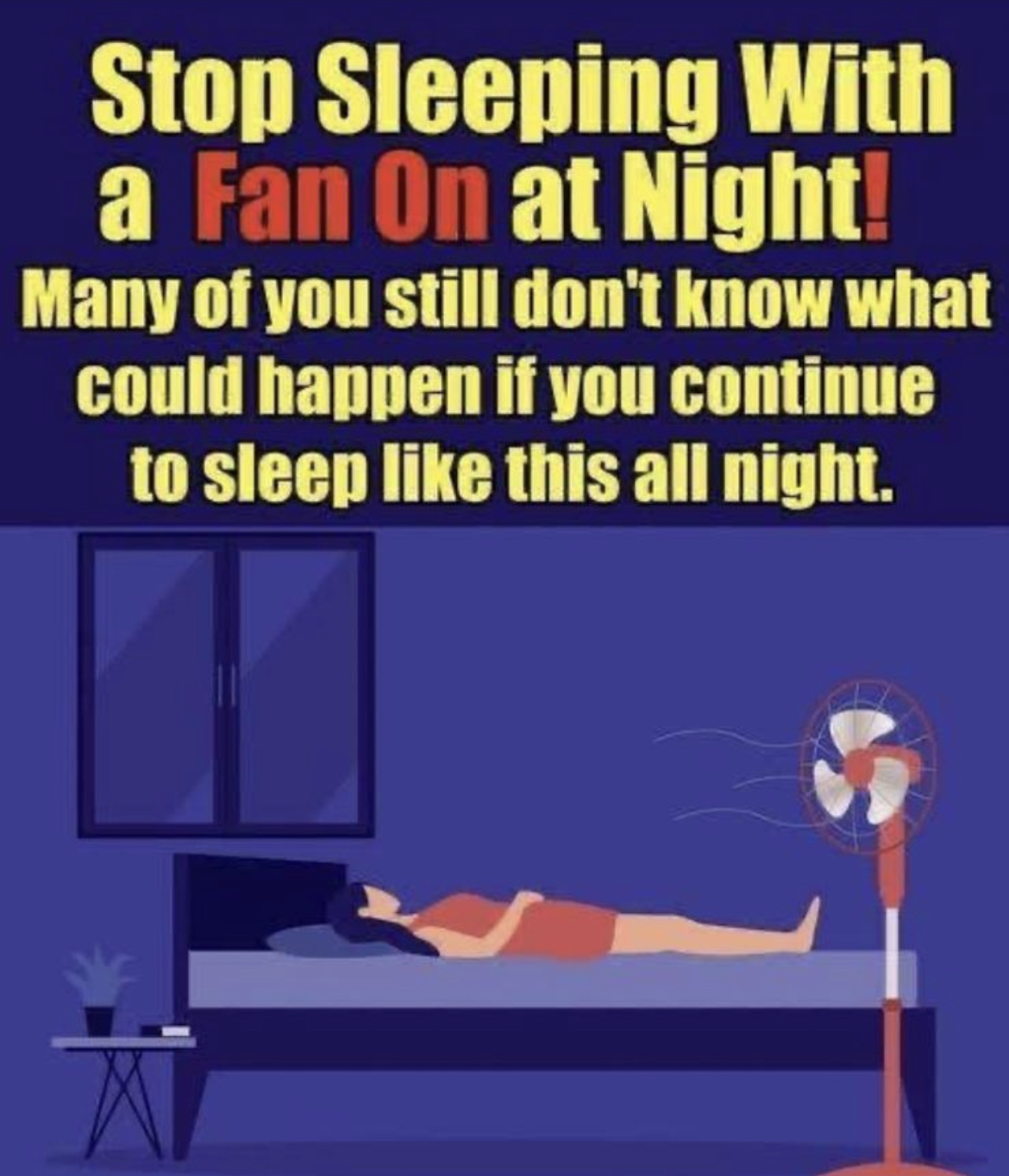
For many, the soft hum of a fan is a nighttime ritual—offering soothing white noise and a sense of cool relief. But while fans are often praised for improving sleep, they may actually be doing the opposite in certain situations. Surprising as it sounds, sleeping with a fan running can interfere with your body’s natural temperature regulation, disrupting the quality of your rest.
Let’s take a closer look at why fans might not be the ultimate sleep aid they seem—and what you can do instead for a truly restful night.
The Science of Sleep and Temperature
Your body temperature naturally drops as you prepare for sleep—a process controlled by your internal clock. According to sleep experts, the optimal bedroom temperature for restful sleep ranges between 60°F and 67°F (15°C to 19°C).
As you enter deep sleep, your ability to regulate temperature decreases. If your environment becomes too warm or too cold, it can interrupt this critical stage, leading to fragmented or shallow sleep.
-
Too hot? You may toss, turn, or wake up sweating.
-
Too cold? Your muscles may tense up, making it harder to fall or stay asleep.
Cooler temperatures promote melatonin production—the hormone responsible for making you feel sleepy. A bedroom that’s too warm can actually delay this process, making it harder to drift off.
How Fans Might Sabotage Your Sleep
1️⃣ Overheating on Warm Nights
Fans create airflow but don’t lower room temperature. On hot nights, they may only provide temporary relief. As your sweat evaporates, you might feel clammy rather than cool—causing you to wake feeling sticky or overheated.
2️⃣ Feeling Too Cold in an Already Cool Room
If your bedroom is within the ideal temperature range, a fan blowing directly on you could over-chill your body. The result? Shivering, muscle tension, and unwanted awakenings as your body tries to stay warm.
3️⃣ Dry Air & Dehydration
Constant airflow can dry out the air, which irritates your skin, throat, and nasal passages. This can disrupt sleep—especially for those with allergies, asthma, or sinus issues.
Healthier Alternatives for Better Sleep
If you love the sound or airflow of a fan but want to protect your sleep quality, try these expert-backed alternatives:
-
White Noise Machines: Provide relaxing sounds like rain, waves, or gentle static—without affecting room temperature.
-
Humidifiers & Air Purifiers: Help maintain optimal air moisture and purity, reducing irritants that can disturb sleep.
-
Smart Thermostats: Adjust your room’s temperature automatically to support your sleep cycle.
-
Breathable Bedding & Sleepwear: Choose lightweight, natural fabrics like cotton or linen that promote airflow.
-
Cooling Mattresses & Pillows: Gel-infused or ventilated designs help disperse heat and keep you comfortable all night.
The Big Picture: Why Quality Sleep Matters
Good sleep isn’t just about how many hours you get—it’s about how restorative those hours are. Poor sleep has been linked to serious health concerns, including heart disease, diabetes, depression, and weakened immunity.
By understanding the impact of temperature and making small adjustments to your sleep environment, you can set yourself up for deeper, more refreshing sleep.
What Works for You?
Do you use a fan at night? Have you noticed how it affects your sleep? Share your tips in the comments below!
And if you found this article helpful, pass it along to friends or family who might be looking for better ways to optimize their sleep environment.