
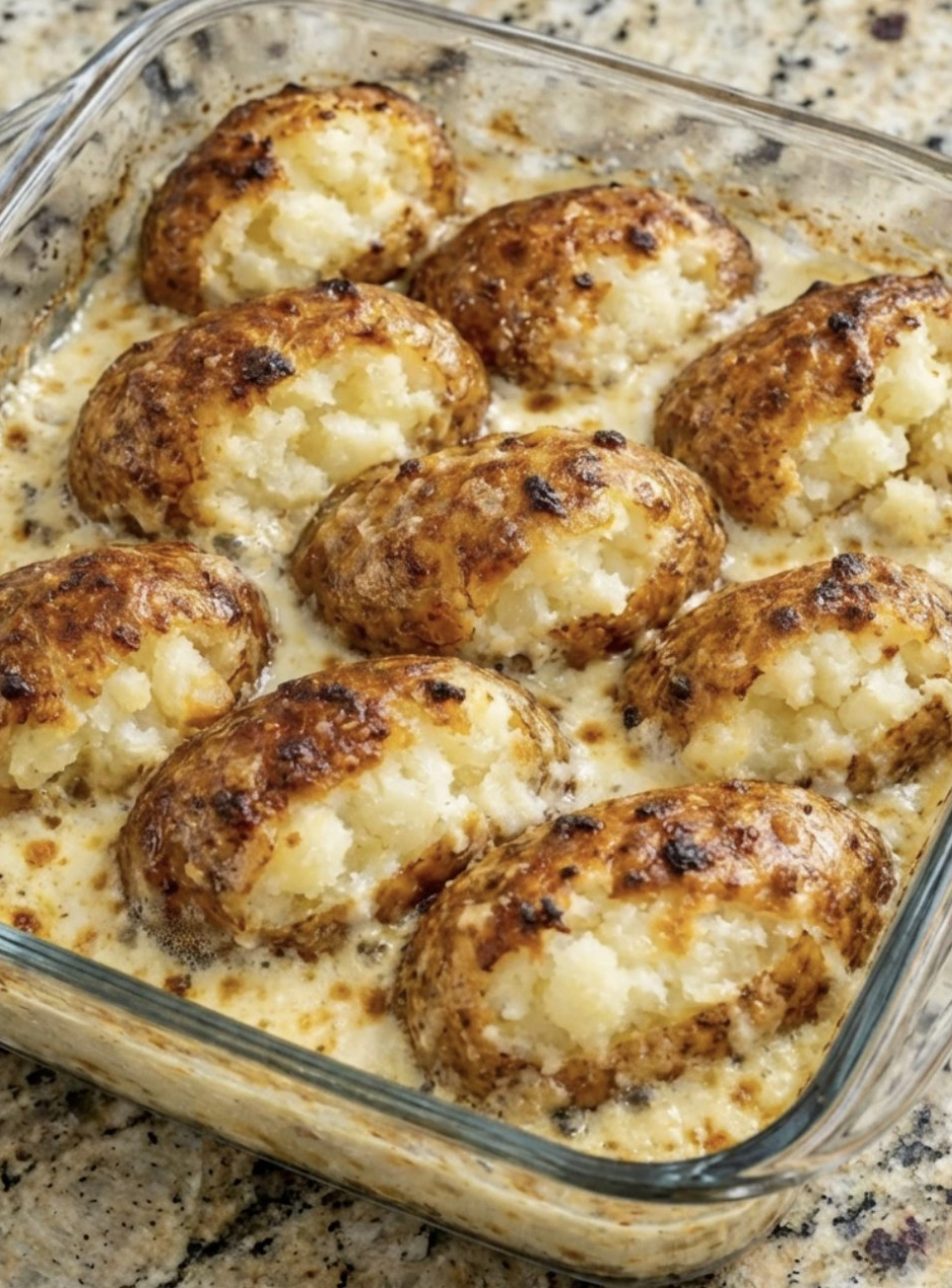
The Creamiest, Tangiest, Most Addictive Potatoes You Will Ever Make (Yes, Three Ingredients)
Let me tell you about a potato transformation that will change the way you think about baked potatoes forever.
You know the classic baked potato. Crunchy skin. Fluffy interior. A pat of butter melting into the crevice. It is good. It is comforting. It is… predictable.
Now forget everything you know.
These Buttermilk Baked Potatoes are something else entirely. The potatoes bake once until they begin to soften. Then you pour tangy buttermilk and golden butter over them, letting the liquid soak deep into every crevice. Then they bake again.
What emerges from the oven is a potato that defies expectations. The tops are golden and slightly crispy. The insides are soft, fluffy, and infused with a creamy, tangy richness that regular baked potatoes can only dream of. The buttermilk seeps into the flesh, transforming it into something that tastes like a cross between a baked potato, a potato casserole, and pure magic.
And the best part?
Three ingredients. Potatoes. Buttermilk. Butter.
That is it.
Three ingredients. One hour. A side dish that steals the show.
Let me show you why these 3-Ingredient Buttermilk Baked Potatoes will become your most-requested recipe.
Why This Recipe Is a Revelation
You have made baked potatoes a hundred times. You have never made them like this.
The buttermilk soaks in – Instead of sitting on top like sour cream, buttermilk penetrates the potato flesh during the second bake. Every bite is infused with that signature tangy creaminess. The potato absorbs the buttermilk like a sponge, becoming impossibly moist and flavorful from the inside out.
Golden, crispy tops – The first bake dries out the potato skins. The second bake, with butter and buttermilk, creates a golden, slightly crunchy top layer that contrasts beautifully with the soft, fluffy interior. It is the best of both textures in one potato.
No fancy equipment – You do not need a stand mixer, a food processor, or even a potato masher. You need a baking dish, a fork, and an oven. That is it.
Only three core ingredients – Potatoes, buttermilk, butter. That is the whole list. Salt and pepper are optional at the table. You do not even need them. The tangy buttermilk and rich butter provide plenty of flavor on their own.
Budget-friendly comfort – Potatoes are cheap. Buttermilk is cheap. Butter is cheap. This entire dish costs less than a few dollars and feeds seven people. That is old-school, Depression-era wisdom that still works today.
A side dish that becomes the main event – Serve these potatoes alongside a roast chicken, a steak, or a pork chop. Or serve them on their own with a salad for a light meal. They are that good.
Ingredients
Three simple ingredients. Choose them well.
4 medium russet potatoes (about 900g total)– Russet potatoes are the star here. They are starchy, which means they bake up light and fluffy on the inside. Their thick skins hold up to the double-baking process. Do not use waxy potatoes like red potatoes or Yukon golds – they will not achieve the same fluffy interior. Look for medium-sized russets that are firm, smooth, and free of green spots or sprouts.
1 cup buttermilk – Buttermilk is the secret weapon. It is tangy, slightly thick, and packed with flavor. The acidity tenderizes the potato flesh and adds a subtle brightness that regular milk or cream cannot replicate. Do not substitute regular milk (too thin, not tangy). Do not substitute sour cream thinned with milk (the texture will be wrong). If you do not have buttermilk, you can make a quick substitute: add 1 tablespoon of white vinegar or lemon juice to 1 cup of regular milk, stir, and let sit for 5 minutes. It is not the same as real buttermilk, but it works in a pinch.
2 tablespoons butter, melted – Butter adds richness, helps with browning, and carries flavor into the potato. Use unsalted butter so you control the salt level. Melt it before drizzling so it distributes evenly. Do not substitute margarine – it has too much water and will not create the same golden, crispy top.
Optional (not counted in the 3 ingredients): pinch of salt, pinch of black pepper – These are for serving, not for cooking. Add them at the table to taste. The buttermilk and butter provide plenty of flavor on their own, but a sprinkle of flaky salt and fresh cracked pepper takes these potatoes over the top.
That is it. Three core ingredients. One optional sprinkle. Unforgettable potatoes.
Directions
Follow these simple steps for buttermilk baked potatoes that will earn a permanent spot in your rotation.
Step 1 – Preheat the oven
Heat your oven to 400°F (200°C) .
Lightly grease a baking dish with butter or cooking spray, or line it with parchment paper. A 9×13-inch baking dish works perfectly for 4 medium potatoes. If your potatoes are large, use a larger dish or a rimmed baking sheet.
Step 2 – Prepare the potatoes
Wash and dry the potatoes thoroughly. Scrub them under cool running water with a vegetable brush. Pay special attention to any eyes or deep crevices.
Pierce each potato several times with a fork. This allows steam to escape during baking. If you skip this step, the potatoes could burst in the oven. Make about 6 to 8 pierces per potato, spaced evenly.
Step 3 – First bake
Place the potatoes directly in the prepared baking dish. They should not touch each other – give them a little space for air to circulate.
Bake for 35 to 40 minutes, until they begin to soften but are not fully cooked. A fork inserted into the center should meet some resistance. The potatoes should yield to gentle pressure but not be completely tender.
Step 4 – Add the buttermilk mixture
Carefully remove the potatoes from the oven. They will be hot. Use oven mitts.
Cut a slit across the top of each potato. Do not cut all the way through – just deep enough to open the potato. Gently press the ends toward the center to open the slit wider.
Pour the buttermilk evenly over the potatoes. Aim for the slits so the liquid soaks inside, but do not worry if some runs off. The potatoes will absorb what they can.
Drizzle the melted butter over the top of each potato. Try to get some butter into the slits and some on the skins.
Step 5 – Finish baking
Return the potatoes to the oven.
Bake for another 10 to 15 minutes, until the potatoes are tender all the way through and the tops are slightly golden.
You will know they are done when a fork slides easily into the center with no resistance. The tops should look lightly browned and slightly crispy in spots. The buttermilk and butter will have created a golden, almost caramelized crust on the exposed potato flesh.
Step 6 – Serve
Let the potatoes cool for a few minutes before serving. They will be extremely hot straight from the oven.
Add salt and pepper if desired. A sprinkle of flaky sea salt and freshly cracked black pepper is perfect.
Serve warm, spooning any remaining buttermilk-butter liquid from the bottom of the dish over each potato.
Watch your family take their first bite and close their eyes in bliss.
Tips for Best Results
These small details separate good baked potatoes from extraordinary ones.
Use russet potatoes, not waxy potatoes – Russets are starchy. That starchiness is what creates the fluffy, tender interior. Waxy potatoes (red, Yukon gold, fingerling) have less starch and will become dense and gluey instead of light and fluffy.
Pierce the potatoes thoroughly – Do not skip this. Steam needs a place to escape. Unpierced potatoes can explode in the oven. It is rare, but it happens. Six to eight fork pricks per potato is plenty.
Do not overbake the first round – The first bake should leave the potatoes partially cooked but still firm in the center. If you bake them until they are fully tender, they will fall apart when you add the buttermilk. 35 to 40 minutes is a guideline – check with a fork.
Pour the buttermilk slowly – Pour slowly and aim for the slits. The potatoes will absorb what they can. Do not worry if some pools in the bottom of the dish. That liquid will reduce and become a buttery, tangy sauce.
Do not skip the second bake – The second bake is where the magic happens. The buttermilk soaks into the potato flesh. The butter helps create that golden, crispy top. Ten to fifteen minutes is enough.
Let them rest before serving – A few minutes of resting allows the buttermilk to fully absorb and the potatoes to cool slightly. They will be extremely hot straight from the oven.
Salt and pepper at the table – Let people season their own potatoes. Some will want a heavy hand. Some will want none at all. The buttermilk and butter provide plenty of flavor on their own.
Serve immediately – These potatoes are best hot and fresh from the oven. The crispy tops soften as they sit. Serve within 10 to 15 minutes of pulling them from the oven.
Creative Variations
Three ingredients is the beginning. Here is how to make these potatoes your own.
Cheesy Buttermilk Potatoes
During the last 5 minutes of baking, sprinkle ½ cup of shredded cheddar, Parmesan, or Gruyère cheese over the potatoes. Return to the oven until the cheese is melted and bubbly. The cheese adds saltiness, richness, and those beautiful browned bits.
Garlic Buttermilk Potatoes
Add 2 minced garlic cloves to the melted butter before drizzling over the potatoes. The garlic infuses the butter and toasts slightly during the second bake. For even more garlic flavor, rub the potato skins with a cut garlic clove before the first bake.
Herbed Buttermilk Potatoes
Add 1 teaspoon of dried herbs (thyme, rosemary, oregano, or a blend) to the melted butter before drizzling. Or sprinkle fresh chopped chives, parsley, or dill over the finished potatoes. The herbs add color and freshness.
Bacon Buttermilk Potatoes
Cook 4 slices of bacon until crispy. Crumble and sprinkle over the potatoes just before serving. The smoky, salty crunch contrasts beautifully with the creamy, tangy potato.
Spicy Buttermilk Potatoes
Add ½ teaspoon of cayenne pepper or crushed red pepper flakes to the buttermilk before pouring. The heat cuts through the richness. Serve with extra hot sauce on the side for heat lovers.
Scallion Sour Cream Swirl
After baking, dollop a spoonful of sour cream onto each potato and top with sliced scallions. The cool, tangy sour cream complements the warm, tangy buttermilk interior. This is the loaded baked potato of your dreams.
Parmesan Crust Potatoes
Sprinkle ¼ cup of grated Parmesan cheese over the potatoes during the last 5 minutes of baking. The Parmesan creates a crispy, salty, umami-rich crust on top of the golden buttermilk.
Smoked Paprika Potatoes
Add ½ teaspoon of smoked paprika to the melted butter before drizzling. The smoky, slightly spicy paprika adds depth and a beautiful orange-red color to the golden tops.
Serving Suggestions
These potatoes are a spectacular side dish. Here is how to serve them.
Alongside a roast chicken – The tangy, creamy potatoes are the perfect companion to a juicy, herb-roasted chicken. Spoon pan drippings over everything.
With a grilled steak – The richness of the potatoes stands up to a big, beefy steak. Add a green vegetable on the side for a complete meal.
Under a pork chop – Place a seared pork chop on top of a split buttermilk potato. The juices from the pork soak into the potato. Heaven.
With a simple green salad – For a lighter meal, serve the potatoes alongside a sharp, lemony salad. The acidity of the vinaigrette cuts through the richness of the potatoes.
As a breakfast potato – Top a split buttermilk potato with a fried egg, crispy bacon, and a sprinkle of chives. Breakfast of champions.
With roasted vegetables – Serve the potatoes alongside roasted Brussels sprouts, broccoli, or asparagus. The caramelized vegetables complement the creamy potatoes beautifully.
As a vegetarian main – Pile the potatoes high with sautéed mushrooms, wilted spinach, and a dollop of Greek yogurt. A satisfying meatless meal.
With a bowl of soup – Serve the potatoes on the side of a bowl of tomato soup, French onion soup, or beef stew. Dipping the potato into the soup is highly encouraged.
Storage and Reheating
These potatoes are best fresh, but leftovers are still delicious.
Refrigerator – Store leftover potatoes in an airtight container for up to 3 days. The crispy tops will soften, but the flavor remains excellent.
Freezer – Not recommended. The texture of the potato flesh changes significantly when frozen and thawed. Make only what you will eat within a few days.
Reheating from fridge – The best method is the oven. Place potatoes on a baking sheet and warm at 350°F for 10 to 15 minutes. The tops will re-crisp slightly. The microwave works in a pinch – heat on 50% power in 30-second bursts – but the texture will be softer.
The best leftover – Scoop the potato flesh from the skins. Mash it with a little extra buttermilk or sour cream. Serve as a side dish or use as a topping for shepherd’s pie. Leftover buttermilk potatoes are also delicious cold, sliced and pan-fried in butter until crispy.
Do not reheat more than once – Reheat only what you will eat. Repeated reheating dries out the potato and makes the texture gluey.
What Is Buttermilk? (And Why It Works So Well Here)
If you have ever wondered what buttermilk actually is, you are not alone.
Traditional buttermilk is the liquid left over after churning butter. It is thin, tangy, and slightly thick. Modern commercial buttermilk is made by adding lactic acid bacteria to low-fat or skim milk. The bacteria ferment the milk, producing lactic acid, which thickens the milk and gives it that signature tangy flavor.
Why does buttermilk work so well in this recipe?
Acidity – The lactic acid in buttermilk tenderizes the potato flesh. It breaks down some of the starches, creating a softer, more tender interior.
Tanginess – That signature sour tang adds brightness and complexity. It balances the richness of the butter and creates a more interesting flavor profile than plain milk or cream.
Body – Buttermilk is slightly thicker than regular milk. It clings to the potato flesh instead of running off. This helps it penetrate the potato instead of just pooling in the bottom of the dish.
Browning – The sugars and proteins in buttermilk promote browning. That golden, crispy top is thanks in part to the buttermilk.
Do not substitute regular milk. Do not substitute cream. Buttermilk is the star. Let it shine.
Frequently Asked Questions
Can I use Yukon gold potatoes instead of russets?
You can, but the texture will be different. Yukon golds are waxier and less starchy. They will be creamy rather than fluffy. Still delicious, but not the same. If using Yukon golds, reduce the first bake time by 5 to 10 minutes.
Can I make these dairy-free?
Yes, but they will not be the same. Use dairy-free buttermilk substitute (add 1 tablespoon of lemon juice to 1 cup of unsweetened plain almond or oat milk, let sit for 5 minutes). Use vegan butter. The tanginess will be similar, but the richness will be reduced.
Can I use low-fat buttermilk?
Yes. Low-fat buttermilk works fine. The texture will be slightly thinner, but the flavor will be similar. Do not use fat-free buttermilk – it lacks the body to cling to the potatoes.
My potatoes are still hard after the second bake. What went wrong?
Either your potatoes were very large, or your oven temperature is inaccurate. Bake for an additional 5 to 10 minutes. Check with a fork. Next time, use medium potatoes instead of large ones.
Can I add cheese to the buttermilk mixture?
Yes. Stir ½ cup of shredded cheese into the buttermilk before pouring. The cheese will melt into the potato and create an even richer, more decadent dish.
Can I make these in a convection oven?
Yes. Reduce the temperature by 25°F (to 375°F) and check for doneness a few minutes early. Convection ovens cook faster and more evenly.
Can I double this recipe?
Yes. Use a larger baking dish (or two dishes) and arrange the potatoes so they are not touching. Cook time remains the same if the potatoes are not overcrowded.
Why do I need to pierce the potatoes before baking?
Steam builds up inside the potato as it bakes. Piercing gives that steam a place to escape. Unpierced potatoes can explode in the oven. It is rare, but it happens. Do not skip this step.
Can I add garlic powder or onion powder to the buttermilk?
Absolutely. Add ½ teaspoon of either (or both) to the buttermilk before pouring. The powders will dissolve and infuse the potato with savory flavor.
Final Thoughts
Some recipes are complicated because they are trying to impress.
This recipe is simple because it does not need to try.
Three ingredients. A hot oven. A little patience. That is all it takes to create a potato dish that will make you wonder why you ever ate a plain baked potato.
The buttermilk soaks into every crevice, tangy and creamy. The butter creates a golden, crispy top that shatters slightly when you dig in. The interior is soft, fluffy, and infused with flavor from the inside out.
This is the potato you serve when you want people to say, “What did you do to these? They are incredible.”
This is the potato you make on a cold night when you need something warm and comforting.
This is the potato that proves three ingredients are all you need to make something unforgettable.
Serve them alongside a roast chicken. Serve them with a steak. Serve them with nothing but a sprinkle of salt and pepper and a hungry family.
However you serve them, serve them warm, serve them often, and watch them disappear.
Now go preheat your oven.
Your potatoes are waiting.