
Servings: 6 | Prep time: 5 minutes | Bake time: 40–45 minutes | Rest time: 5–10 minutes | Total time: About 1 hour
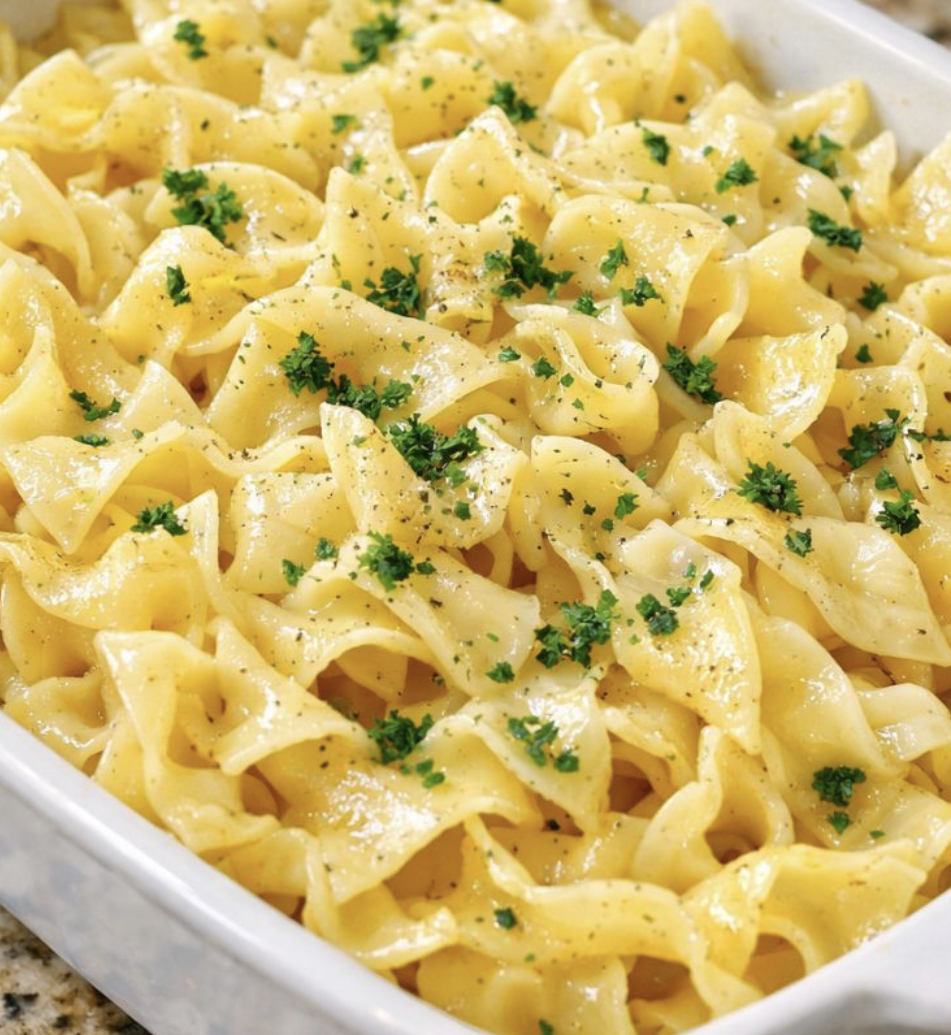
Some of the best recipes are the simplest. This Oven-Baked 3-Ingredient Amish Buttered Noodles is proof. Wide egg noodles, chicken broth, and butter — that’s all it takes to create a side dish that’s silky, comforting, and utterly irresistible.
This recipe is a staple in Amish country, where home cooks know that you don’t need a long list of ingredients to make something delicious. The wide egg noodles soak up the rich, savory broth and buttery goodness as they bake, emerging tender, glossy, and perfectly coated. No boiling water, no draining, no watching a pot on the stove.
The method is brilliant in its simplicity. You spread the uncooked noodles in a baking dish, pour melted butter and broth over the top, cover, and bake. The covered bake steams the noodles until tender, and the uncovered finish allows the liquid to reduce into a silky, buttery sauce that clings to every noodle.
Serve these alongside roast chicken, pork chops, meatloaf, or simply on their own with a sprinkle of fresh parsley and cracked black pepper. They’re the kind of side dish that makes any meal feel a little more special — with almost no effort at all.
Why You’ll Love This Recipe
-
Only three ingredients – Egg noodles, chicken broth, butter.
-
No boiling water – The noodles cook right in the baking dish.
-
No draining – Everything stays in one dish.
-
Silky, buttery, and satisfying – The perfect comfort food side dish.
-
Hands-off oven method – No standing over a hot stove.
-
Perfect for holidays or weeknights – Versatile and easy.
-
A taste of Amish country – Simple, honest cooking.
Ingredients
-
Wide egg noodles, uncooked – 12 ounces
-
Chicken broth, preferably low-sodium – 4 cups
-
Unsalted butter, melted – ½ cup (1 stick), plus more for greasing the dish
Ingredient Notes
What kind of egg noodles? Wide egg noodles are traditional and hold up well to baking. Extra-wide noodles work too. Avoid very thin noodles (like fine egg noodles) — they can become mushy. If you don’t have egg noodles, any short pasta (rotini, shells, elbows) works, but the texture will be different.
Why wide egg noodles? Their flat, wide shape absorbs the buttery broth beautifully and has a satisfying, tender-chewy texture that stands up to baking.
What kind of chicken broth? Low-sodium chicken broth is recommended because the broth reduces as it bakes, concentrating the salt. Regular broth can become too salty. You can also use vegetable broth for a vegetarian version.
Why unsalted butter? Unsalted butter lets you control the salt level. The broth provides plenty of savory flavor. If you only have salted butter, reduce or omit any additional salt.
Do I need to add salt? Taste the noodles before serving. The broth and butter may provide enough salt. If needed, add a pinch of kosher salt or a sprinkle of flaky sea salt at the table.
Do I need to grease the baking dish? Yes. Lightly greasing with butter prevents sticking and makes cleanup easier. It also adds a little extra buttery flavor to the edges.
Step-by-Step Instructions
Step 1: Preheat and Prepare
Preheat your oven to 375°F (190°C) .
Lightly grease a 9×13-inch baking dish with a little butter to help prevent sticking.
Step 2: Add the Noodles
Spread the 12 ounces of uncooked wide egg noodles evenly in the prepared baking dish, making sure they sit in a relatively even layer so they cook uniformly.
Step 3: Make the Buttery Broth
In a large measuring cup or bowl with a spout, combine:
-
4 cups low-sodium chicken broth
-
½ cup unsalted butter, melted
Stir briefly to blend.
Step 4: Pour Over the Noodles
Slowly pour the chicken broth and butter mixture evenly over the uncooked egg noodles, making sure all the noodles are moistened.
Gently press down any noodles that are sitting high so they’re mostly submerged in liquid.
Step 5: Cover and Bake
Cover the baking dish tightly with aluminum foil to trap steam, which helps the noodles soften and cook through without drying out.
Bake for 30 minutes.
Step 6: Uncover and Finish Baking
Carefully remove the foil (watch for steam). Give the noodles a gentle stir, checking for any dry spots. If some noodles look dry, press them back down into the liquid.
Return the dish to the oven, uncovered, and bake for an additional 10 to 15 minutes.
The noodles are ready when:
-
Most of the liquid is absorbed
-
The noodles are tender but not mushy
-
The sauce is silky and coats the noodles
If needed, you can add a splash more broth and bake a few minutes longer.
Step 7: Rest and Serve
Remove from the oven and let the noodles rest for 5 to 10 minutes. They will continue to absorb a bit of liquid and become extra silky.
Taste and season with salt if needed. Serve warm, spooned straight from the baking dish.
Variations & Tips
Add Fresh Herbs
Stir in 2 tablespoons of fresh parsley (chopped) or 1 tablespoon of fresh chivesafter baking. The herbs add color and freshness.
Add Garlic
Add 2–3 cloves of minced fresh garlic to the melted butter before pouring over the noodles. Garlic and butter are a classic pairing.
Add Parmesan
Sprinkle ½ cup of freshly grated Parmesan cheese over the noodles during the last 5 minutes of baking. The cheese will melt into a golden, savory topping.
Add Lemon
Add 1 teaspoon of lemon zest to the butter mixture, or squeeze fresh lemon juice over the finished noodles. Lemon brightens the richness.
Make It with Herbed Butter
Use herbed butter (butter mixed with dried parsley, thyme, and a pinch of garlic powder) for extra flavor.
Make It with Vegetable Broth
Substitute vegetable broth for the chicken broth for a vegetarian version. The flavor will be slightly different but still delicious.
Make It Gluten-Free
Use gluten-free wide egg noodles (several brands make them). Check the cooking time — gluten-free pasta may cook faster, so start checking at 25 minutes covered, then adjust.
Make It Richer
Add ¼ cup of heavy cream to the broth-butter mixture. This creates an even richer, creamier sauce.
Storage & Reheating
Refrigerator: Store leftovers in an airtight container for up to 4 days. The noodles will absorb more liquid as they sit — they become almost like a noodle casserole.
Reheating:
-
Microwave: 1–2 minutes per serving. Add a splash of broth or water if the noodles seem dry.
-
Skillet: Warm over medium-low heat, adding a splash of broth to loosen the sauce.
-
Oven: 350°F for 10–15 minutes, covered with foil.
Freezing: Not recommended. The texture of the noodles becomes mushy when frozen and thawed. These buttered noodles are best enjoyed fresh.
Frequently Asked Questions (FAQs)
Do I need to cook the noodles before adding them to the baking dish?
No. The dry noodles cook directly in the broth. This is the magic of the recipe — no boiling water, no draining, no extra pot to clean.
Why do I need to cover the dish with foil for the first 30 minutes?
The foil traps steam, which helps the noodles cook evenly and prevents them from drying out. Without the foil, the top layer of noodles would become hard and crunchy before the bottom layer is tender.
Why do I need to bake uncovered for the last 10–15 minutes?
Uncovering allows the excess liquid to evaporate and the sauce to thicken. The result is a silky, clingy coating rather than watery noodles.
Why are my noodles still hard after baking?
A few possibilities:
-
You didn’t add enough liquid (the noodles need to be mostly submerged)
-
You didn’t cover the dish tightly enough (steam escaped)
-
Your oven temperature is too low (use an oven thermometer to check)
-
You used a different type of pasta that needs more liquid or time
Why are my noodles mushy?
A few possibilities:
-
You overbaked them (check at the lower end of the time range)
-
You used thin noodles (wide egg noodles hold up best)
-
You added too much liquid
Can I use a different pasta shape?
Yes. Short pasta shapes like rotini, shells, or elbows work. The cooking time may vary slightly. Avoid long noodles like spaghetti — they won’t cook evenly in a shallow baking dish.
What should I serve with these noodles?
-
Roast chicken or turkey – The classic pairing
-
Pork chops – Buttered noodles are perfect with pork
-
Meatloaf – A comforting weeknight dinner
-
Roasted vegetables – Broccoli, asparagus, or green beans
-
Meatballs – Swedish or Italian meatballs work beautifully
What to Serve With It
As a side dish (classic pairings):
-
Roast chicken or turkey – The classic comfort pairing
-
Pork chops – Buttered noodles are perfect with pork
-
Meatloaf – A comforting weeknight dinner
-
Swedish or Italian meatballs – The noodles catch the sauce
-
Roasted vegetables – Broccoli, asparagus, or green beans
For a complete Amish-inspired meal:
-
These buttered noodles
-
Roast chicken
-
A simple green salad
-
Applesauce on the side
Simple toppings:
-
Fresh parsley or chives
-
Cracked black pepper
-
Grated Parmesan cheese
-
A sprinkle of flaky sea salt
Why This Recipe Works
This three-ingredient recipe is a perfect example of “less is more.” Here’s why it works so well:
Wide egg noodles have a flat, broad shape that absorbs the buttery broth beautifully. They hold up to baking without becoming mushy.
Chicken broth provides savory depth and the liquid the noodles need to cook. As it reduces, it concentrates in flavor, creating a silky sauce.
Butter adds richness, flavor, and that glossy sheen that makes these noodles irresistible.
The covered bake traps steam, cooking the noodles evenly without drying them out.
The uncovered finish allows the liquid to reduce, thickening the sauce into a clingy coating rather than watery noodles.
The result is a side dish that’s simple, elegant, and deeply satisfying — the kind of recipe that proves you don’t need a long ingredient list to create something wonderful.
The Amish Tradition
In Amish country — particularly in Lancaster County, Pennsylvania — buttered noodles are a staple side dish. They’re simple enough for everyday meals but special enough for holiday dinners and church suppers.
Amish home cooks are known for their practicality and resourcefulness. They use what they have, waste nothing, and let the natural flavors of simple ingredients shine. This oven-baked method is a modern twist on the traditional stovetop version, but the spirit remains the same: honest, comforting food made with care.
These buttered noodles are often served alongside roasted chicken, ham, or meatloaf, and they’re especially popular at gatherings where large crowds need to be fed without a lot of fuss. The oven method allows you to prepare a large batch with minimal hands-on time — perfect for feeding a hungry family or a crowd of guests.
Final Thoughts
This Oven-Baked 3-Ingredient Amish Buttered Noodles is proof that you don’t need a long list of ingredients or complicated techniques to create something delicious. Wide egg noodles, chicken broth, and butter — that’s all it takes to make a side dish that’s silky, comforting, and utterly irresistible.
No boiling water. No draining. No watching a pot on the stove. Just spread, pour, cover, bake, and serve.
Make them alongside roast chicken for a Sunday dinner. Serve them with meatballs on a busy weeknight. Or enjoy them on their own with a sprinkle of fresh parsley and a crack of black pepper. Your family will ask for them again and again.