
The Price of Love
There is a moment in every mother’s life when she must decide: continue giving until there is nothing left, or finally stop and remember that she, too, is a person. For Mrs. Hale, a 77-year-old widow, that moment came at 6:18 p.m. on a rainy evening – not with a dramatic confrontation, but with a text message that shattered years of quiet sacrifice.
She had spent the afternoon preparing. The navy dress was pressed. The pearl earrings from her fiftieth anniversary were laid out beside the silver frame holding Arthur’s photograph. She had even kept the townhouse brochure Wesley had mailed her in March – white trim, staged lamps, and promises printed on expensive paper.
“For you too, Mom,” he had said.
She believed him because mothers are trained to hear love even when it is only convenience wearing a son’s voice.
Then the text arrived.
“Mom, the plans changed.”
The second message came before she could even push herself up from the kitchen chair.
“You weren’t invited. My wife doesn’t want you there.”
The Silence That Followed
The rain tapped against the kitchen window. The tea kettle clicked once, empty and cooling. The room smelled like lemon polish, old wood, and tea that had gone bitter. Arthur’s photograph watched from the mantel – the silver frame cold beneath her fingers.
Serena had not shouted. Serena never shouted. Her cruelty arrived through polished doors, folded napkins, and sentences soft enough to deny later. “Your mother makes things awkward,” she had once said, smiling over a $14 coffee Mrs. Hale had paid for.
Mrs. Hale laughed then. A small, practiced laugh – the kind women use when they are trying not to become a problem.
But that night, something shifted.
She opened the old drawer in her mother’s desk. The folder labeled WESLEY was inside – years of quiet rescues. Tuition checks. Insurance drafts. Mortgage help. Country club fees. Emergency transfers that somehow happened every month. A $2,800 preschool payment. A $6,400 repair bill Serena had called “temporary.”
Paper has a smell when it has been kept too long. Dust. Ink. Old grief.
At 6:47 p.m., her granddaughter texted: “Grandma, are you coming?”
Mrs. Hale stared at the message until her eyes burned. Children rarely know which adults are building walls around them.
“Not tonight, sweetheart. I love you.”
The Call That Changed Everything
She picked up the landline. She did not call Wesley. She did not call Serena. She did not beg for a seat at a table she had been helping to pay for.
Her voice did not tremble when she called the bank.
“Which authorizations would you like to stop?” the representative asked.
“All of them connected to Wesley Hale.”
Keys began clicking on the other end – the sound of a mother remembering she was still a person.
At 7:03 p.m., she typed one sentence to her son: “Then you and your wife can start paying your own way.”
She sent it, turned off her phone, and removed the pearls.
The Reckoning
By 8:11 the next morning, she was sitting across from Lydia at First National – the family’s banker for twenty-two years. Eight pages printed. Mortgage drafts. Insurance. Utilities. Club dues. Tuition. Subscriptions. A business line Wesley had never mentioned.
One hundred seventy-four active payments.
Lydia turned the screen toward her, and the numbers glowed in neat little rows. Mrs. Hale felt heat rise in her neck – not from shame this time, but from clarity.
“It never happens all at once,” Lydia said quietly.
“No,” Mrs. Hale said. “It doesn’t.”
Her pen scratched across the final form – a small sound that closed a door that had been open for fifteen years.
The Arrival
When she returned home, she made tea in the good cup. Not the chipped one. Not the one she used when she felt she should save better things for guests.
At 11:26 a.m., the first declined charge hit. Then another.
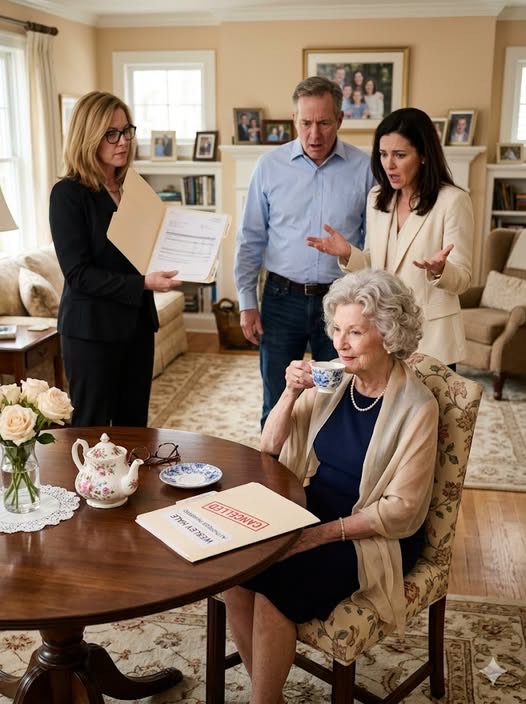
Then the driveway filled with the sound of tires on wet gravel. She looked through the curtain and saw Serena stepping out first, her cream coat spotless, her mouth tight. Wesley followed, phone in hand, face pale.
But the third person made her set her teacup down.
Lydia had come too.
Why This Story Resonates
This is not just a story about money. It’s about the quiet erasure of mothers who give everything and receive nothing but exclusion. It’s about the moment when love becomes a transaction, and the painful awakening when a parent realizes that their generosity has been mistaken for weakness.
Mrs. Hale’s story is a powerful reminder that boundaries are not cruelty – they are self-respect. And sometimes, the most loving thing a mother can do is stop paying for a seat at a table where she isn’t welcome.
Because a person who takes everything and offers nothing in return doesn’t deserve access to your life – or your bank account.