
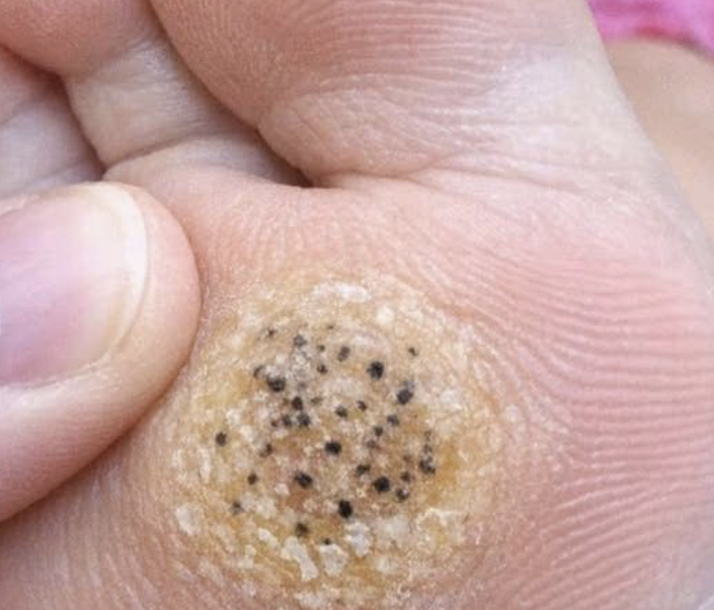
As a parent, seeing your child in pain is heartbreaking — especially when it happens right before an important event like a dance recital. If your daughter suddenly starts limping because of a painful hard spot with tiny black dots on the bottom of her foot, you’re probably searching for answers fast.
The good news is that this condition is very common in active kids and dancers, and there are several ways to ease the pain quickly so she can feel more comfortable tomorrow.
What Is That Hard Rough Spot With Black Dots?
A hard rough spot on the sole with tiny black dots is most commonly a plantar wart. Plantar warts are caused by the human papillomavirus (HPV) and usually appear on pressure points of the feet like the heel or ball of the foot.
The small black dots are actually tiny blood vessels trapped inside the wart. Because the wart grows inward from walking pressure, it can become extremely painful — especially for dancers, athletes, and active children.
How to Tell If It’s a Plantar Wart
Plantar warts often:
- Feel rough and grainy
- Have tiny black dots in the center
- Hurt when walking or standing
- Flatten inward instead of sticking out
- Develop on weight-bearing areas of the foot
Unlike blisters, they are not filled with fluid. Unlike splinters, there is usually no visible object stuck in the skin.
Signs You Should Call a Doctor Immediately
Most plantar warts are harmless, but seek medical care right away if:
- The foot becomes swollen or red
- Pus or drainage appears
- Your child cannot walk at all
- The pain becomes severe
- She develops fever or spreading redness
- The wart is bleeding heavily
These signs may indicate infection or another medical issue requiring professional treatment.
Fast Pain Relief You Can Try Tonight
If your daughter has a recital tomorrow, focus first on reducing pressure and irritation.
1. Soak the Foot
Soak her foot in warm water for 10–15 minutes to soften the thick skin and reduce discomfort.
2. Use a Cushion Pad
Place a donut-shaped wart cushion around the sore spot. This removes direct pressure from the wart while walking or dancing.
3. Try an Over-the-Counter Wart Treatment
Salicylic acid pads or gels can soften the wart and help reduce tenderness, although they usually take several weeks to fully remove it.
4. Give Child-Safe Pain Relief
If approved by her pediatrician, medications like ibuprofen or acetaminophen may help relieve pain and inflammation.
How to Help Her Dance More Comfortably Tomorrow
For a dancer, reducing friction is essential.
Use Padding and Tape
Secure a cushioned pad with athletic or medical tape so it stays in place during movement.
Add Extra Cushioning Inside Shoes
Gel inserts or soft insoles can absorb pressure while dancing.
Avoid Tight Shoes
Shoes that squeeze the foot can make the pain much worse. Slightly looser footwear may help.
Protect the Area From Rubbing
Moleskin or soft fabric barriers can prevent irritation during the performance.
What NOT to Do
Avoid trying dangerous DIY treatments at home.
Do NOT:
- Cut the wart
- Pick at it
- Burn it
- Use sharp tools
- Apply harsh chemicals not intended for skin
These methods can cause infection, bleeding, and much more pain.
Pharmacy Treatments: What Helps Fast?
Some pharmacy options can provide temporary relief:
- Plantar wart cushion pads
- Salicylic acid wart treatments
- Gel shoe inserts
- Medical tape
- Child-safe topical numbing creams (ask a pharmacist first)
Remember that wart removal usually takes time. The goal tonight is comfort and protection.
When to See a Podiatrist
A podiatrist or pediatrician can treat painful plantar warts with:
- Cryotherapy (freezing)
- Prescription-strength medication
- Laser therapy
- Minor surgical removal
These treatments may provide faster long-term relief if the wart becomes a recurring issue.
Helping Your Child Stay Calm Before the Recital
Pain and performance anxiety together can feel overwhelming for a child. Reassure your daughter that:
- She is safe
- You are helping her
- It’s okay to take breaks
- Her health matters more than perfection
Encourage rest tonight and help her stay hydrated and relaxed before the recital.
How to Prevent Future Plantar Warts
To lower the risk of future warts:
- Keep feet clean and dry
- Change socks daily
- Avoid walking barefoot in locker rooms or pools
- Wear sandals in public showers
- Cover cuts or scrapes on the feet
- Check feet regularly for new rough spots
Early treatment can prevent painful warts from getting worse.
Final Thoughts
A painful plantar wart can feel like a disaster right before a big event, but with proper cushioning, pain relief, and protection, many children can still walk and dance more comfortably.
If the pain becomes severe or signs of infection appear, contact a healthcare professional immediately. Otherwise, focus tonight on reducing pressure, protecting the area, and helping your daughter feel calm and supported before her big day.