
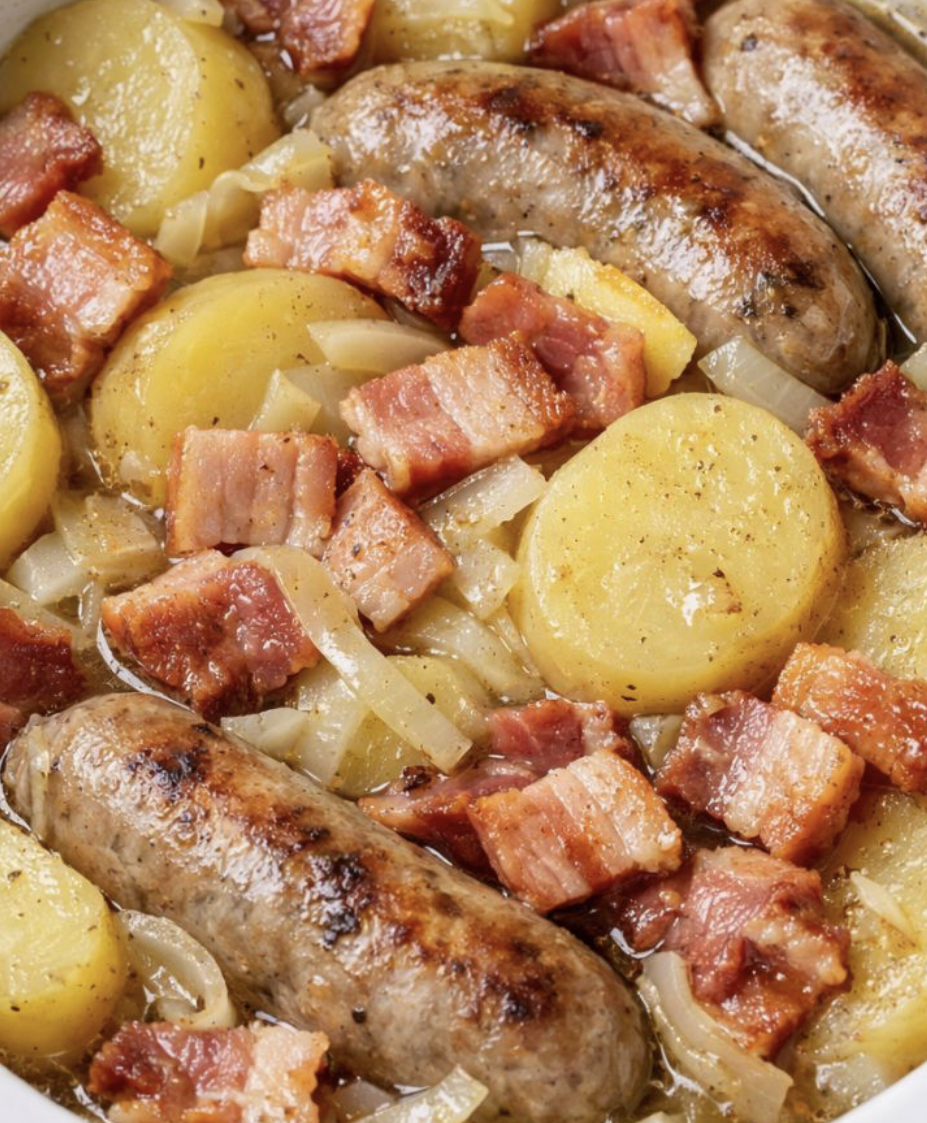
There are few dishes as deeply rooted in a city’s identity as Dublin Coddle is to Ireland’s capital. This humble, hearty stew of sausages, bacon, potatoes, and onions has been warming Dubliners for centuries. It is said to have been a favorite of the famous Irish writer Jonathan Swift, and it remains a beloved pub dish and home-cooked staple today. The name “coddle” comes from the gentle cooking method—slow, low heat that coaxes out flavors without boiling or scorching.
This slow cooker version honors that tradition while making it almost effortless. Layers of sliced potatoes and onions, chunks of thick-cut bacon, and whole pork sausages are stacked in the slow cooker with a little water and left to cook for hours. The result is a stew that is greater than the sum of its parts: tender potatoes, meltingly soft onions, savory sausages, and bacon that has infused everything with its smoky richness.
Dublin Coddle is not a fancy dish. It is honest, working-class food that uses inexpensive ingredients to create something deeply satisfying. It is perfect for St. Patrick’s Day, cold winter nights, or any time you need a warm, comforting meal.
Why You’ll Love This Recipe
-
Only 4 main ingredients (plus water and optional seasonings)
-
Set-it-and-forget-it slow cooker convenience
-
Traditional Irish comfort food made easy
-
Rich, savory, and deeply satisfying
-
A complete one-pot meal
-
Great for feeding a crowd or meal prep
Slow Cooker 4-Ingredient Dublin Coddle
Prep Time: 20 minutes | Cook Time: 6-8 hours on LOW or 3-4 hours on HIGH | Total Time: Approximately 6.5-8.5 hours
Yield: 4-6 servings
Ingredients
-
1½ to 2 pounds pork sausages (Irish-style or mild pork, about 8-10 sausages)
-
8 ounces thick-cut bacon, cut into 1-inch pieces
-
2 pounds potatoes, peeled and sliced into ½-inch rounds
-
2 large yellow onions, peeled, halved, and sliced into thick wedges
-
1 to 1½ cups hot water (enough to come about halfway up the layers)
-
Freshly ground black pepper, to taste (optional)
-
Chopped fresh parsley, for garnish (optional)
Instructions
1. Brown the Sausages:
In a large skillet over medium heat, quickly brown the sausages on all sides, about 5 minutes total. You do not need to cook them through; you just want some color and a bit of caramelization. This step adds flavor but can be skipped if you are short on time.
2. Render the Bacon:
In the same skillet, add the thick-cut bacon pieces and cook for 3 to 4 minutes, just until some of the fat starts to render and the edges begin to turn golden. You do not need them crispy—just lightly browned. Turn off the heat and set the skillet aside.
3. Layer the Potatoes and Onions (First Half):
Layer half of the sliced potatoes in the bottom of a 5- to 6-quart slow cooker, spreading them out evenly. Top with half of the sliced onions. Sprinkle with a little black pepper if using.
4. Add the Meats:
Scatter half of the partially cooked bacon pieces over the onions. Arrange all of the browned sausages on top in a single layer, nestling them in so they sit fairly snugly among the potatoes and onions.
5. Finish Layering:
Add the remaining onions over the sausages, then the rest of the bacon. Finish with the remaining sliced potatoes on top, spreading them out so they mostly cover the surface. This helps the top layer steam and become tender.
6. Add the Liquid:
Carefully pour 1 to 1½ cups of hot water down the side of the slow cooker so you do not disturb the layers too much. The liquid should come about halfway up the contents; the vegetables and meats will release more juices as they cook and create a light, savory broth.
7. Cook:
Cover and cook on LOW for 6 to 8 hours, or on HIGH for 3 to 4 hours, until the potatoes are very tender, the onions are soft and translucent, and the sausages are cooked through. The bacon will be soft and the whole mixture should be cozy and stew-like with a light broth.
8. Finish and Serve:
Taste the broth and add a little more black pepper if desired. Gently scoop down into the slow cooker so each serving gets a bit of sausage, bacon, potatoes, onions, and broth. Garnish with chopped fresh parsley if using, and serve hot straight from the slow cooker.
Recipe Notes & Pro Tips
What is Dublin Coddle? Coddle is a traditional Irish dish that originated in Dublin. It typically consists of layers of pork sausages, bacon, potatoes, and onions, cooked slowly in a covered pot with a small amount of liquid. The name comes from the gentle “coddling” cooking method. It was historically made on Thursday nights using leftovers from the weekly ham, and it remains a beloved comfort food.
Choosing the Right Sausages: Irish-style sausages are ideal, but they can be hard to find outside of Ireland. Look for good-quality pork sausages with a high meat content. English bangers, Cumberland sausages, or any mild, herby pork sausage work beautifully. Avoid breakfast links or sausages with strong flavors like Italian sausage (which contains fennel).
Potato Choices: Russet or Yukon Gold potatoes are excellent choices. Russets become fluffy and almost creamy. Yukon Golds hold their shape better. Slice them into ½-inch rounds so they cook through without falling apart.
Bacon Matters: Traditional coddle uses “rashers” (Irish bacon, which is leaner and more like Canadian bacon). Outside Ireland, thick-cut streaky bacon (American bacon) is the best substitute. Avoid thin-cut bacon, which may disintegrate during long cooking.
Do Not Overcook the Meats Beforehand: The browning step adds flavor but is optional. If you skip it, the coddle will still be delicious, though slightly less rich. Do not fully cook the sausages or bacon before adding them to the slow cooker; they will finish cooking in the stew.
The Liquid is Minimal: Unlike a traditional stew, coddle uses very little added liquid. The potatoes, onions, and meats release their own juices as they cook, creating a light, flavorful broth. Adding too much water will result in a watery, less flavorful dish.
Pepper, Not Salt: Traditional Dublin Coddle relies on the saltiness of the bacon and sausages for seasoning. Additional salt is rarely needed. Black pepper, however, is essential to the dish’s character. Be generous with it.
Variations
Leek and Parsnip Coddle: Add 2 sliced leeks (white and light green parts only) and 2 sliced parsnips along with the onions and potatoes. The leeks add sweetness, and the parsnips add earthy depth.
Carrot and Turnip Coddle: Add 2 sliced carrots and 2 sliced turnips to the layers. These root vegetables are traditional in some Irish stews and add sweetness and earthiness.
Garlic Coddle: Add 6 to 8 cloves of whole, peeled garlic to the layers. The garlic becomes soft and sweet, mellowing into the broth.
Herbed Coddle: Add 2 bay leaves, 1 teaspoon of dried thyme, and 1 teaspoon of dried parsley to the layers. Remove bay leaves before serving. Fresh herbs can also be added at the end.
Beef and Guinness Coddle: Substitute half of the sausages with 1 pound of beef stew meat. Add ½ cup of Guinness stout along with the water. The Guinness adds deep, malty richness.
Coddle with Dumplings: During the last 30 minutes of cooking, drop spoonfuls of biscuit dough or dumpling batter onto the top of the coddle. Cover and cook until the dumplings are puffed and cooked through.
Serving Suggestions
Dublin Coddle is a complete meal on its own, but it pairs beautifully with:
-
Crusty Irish soda bread or brown bread (for sopping up the broth)
-
A pint of stout (Guinness is traditional)
-
A sprinkle of fresh parsley for color
-
A dollop of horseradish cream or mustard on the side
For a traditional Irish meal, serve with:
-
Colcannon (mashed potatoes with cabbage or kale)
-
Braised cabbage
-
Roasted root vegetables
Storage & Reheating
Store leftovers in an airtight container in the refrigerator for up to 5 days. The flavors continue to meld, and the coddle becomes even better the next day.
To reheat, warm gently in a covered saucepan over medium-low heat, stirring occasionally. Add a splash of water if the broth has thickened too much. You can also reheat individual portions in the microwave.
This coddle freezes well for up to 3 months. Cool completely, then transfer to freezer-safe containers. Thaw overnight in the refrigerator before reheating.
The History of Dublin Coddle
Dublin Coddle has been a staple of the city’s working-class cuisine since at least the 18th century. It is famously associated with the writer Jonathan Swift (author of “Gulliver’s Travels”), who supposedly loved the dish and had it sent to him from Dublin when he was living elsewhere.
The dish was traditionally made on Thursday nights, using leftover bacon or ham from the weekly Sunday roast combined with sausages, potatoes, and onions. The word “coddle” means to cook gently in water below the boiling point, which perfectly describes the slow simmer that gives this dish its distinctive character.
Coddle fell out of favor in the late 20th century, often associated with poverty or seen as old-fashioned. But in recent years, it has experienced a revival, appearing on pub menus and at food festivals across Ireland. Modern versions honor the tradition while sometimes adding herbs, carrots, or other vegetables.
This slow cooker version keeps the spirit of the original while adapting it for modern kitchens. It is simple, honest, and deeply comforting—the kind of meal that has sustained families for generations. Serve it with good bread and good company, and you have a taste of Dublin in your own home.