
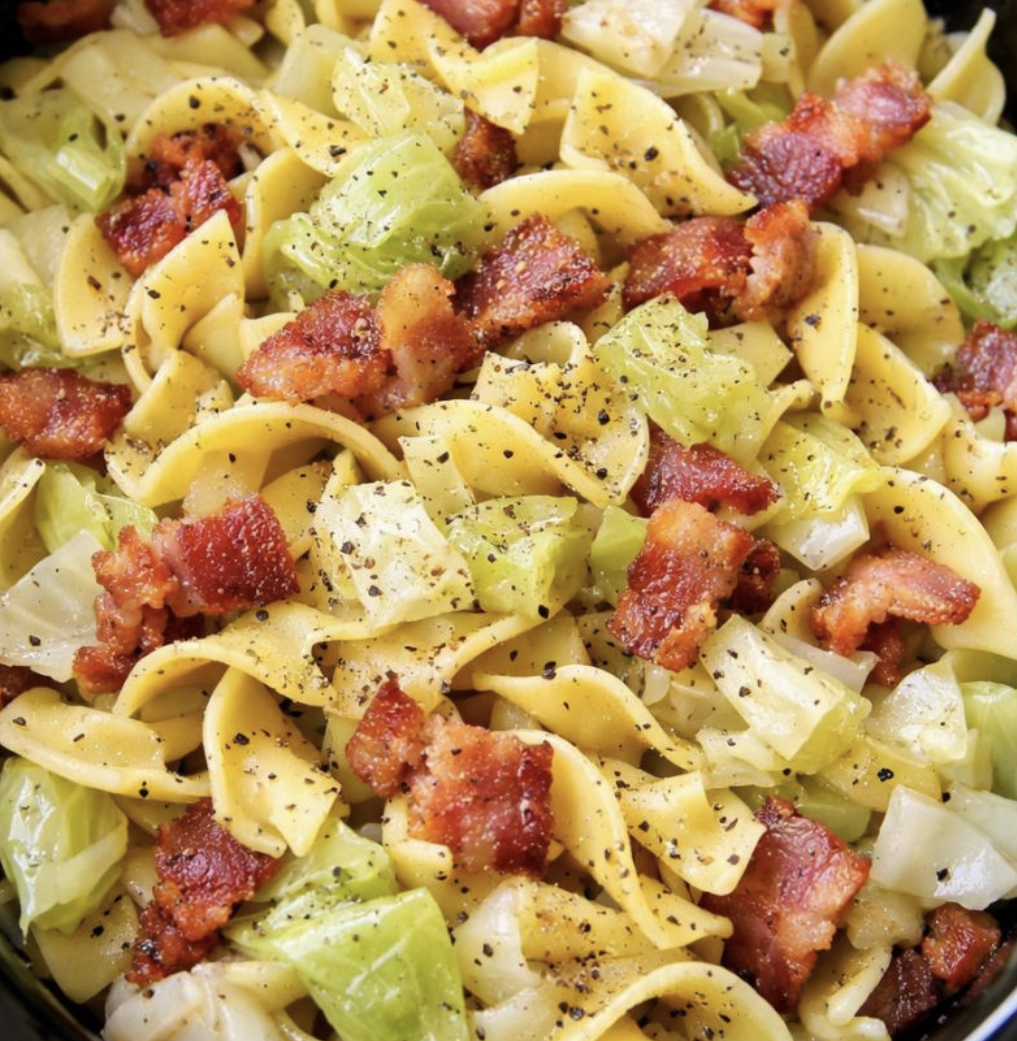
There are some dishes that feel like they’ve been around forever — simple, honest, and made to warm you from the inside out. This Slow Cooker Amish Cabbage and Noodles with Bacon is one of those dishes. It’s the kind of meal that would be right at home in a farmhouse kitchen in Lancaster County, where hearty, budget-friendly ingredients come together to feed a hungry family.
Tender cabbage, smoky bacon, and soft egg noodles — all slow-cooked in a savory broth until the flavors meld into something deeply satisfying. The cabbage becomes buttery and sweet, the bacon infuses every bite with smoky richness, and the noodles soak up all that delicious cooking liquid.
This is not fancy food. It’s better than fancy. It’s the kind of meal that makes you want to curl up on the couch with a bowl and a good book. Serve it as a main course with crusty bread, or as a side dish alongside roast chicken or pork chops.
Why You’ll Love This Recipe
-
Only six ingredients – Bacon, cabbage, noodles, broth, salt, pepper.
-
Hearty and satisfying – A complete meal in one bowl.
-
Smoky, savory, and sweet – The bacon and cabbage are a perfect pair.
-
Set-it-and-forget-it – The slow cooker does most of the work.
-
Budget-friendly – Cabbage and noodles are very affordable.
-
A taste of Amish country – Simple, honest comfort food.
-
Great for weeknights or Sunday suppers – Versatile and comforting.
Ingredients
-
Thick-cut bacon, cut into 2-inch pieces – 6 slices
-
Small head green cabbage (about 2 pounds), cored and roughly chopped – 1
-
Wide egg noodles, uncooked – 8 ounces
-
Low-sodium chicken broth – 2 cups
-
Kosher salt – 1 teaspoon (or to taste)
-
Freshly ground black pepper (optional, for serving) – ½ teaspoon
Ingredient Notes
What kind of bacon? Thick-cut bacon holds up better during long cooking and provides more substantial, meaty bits. Regular-cut bacon works too. Applewood-smoked or hickory-smoked bacon adds extra smoky depth.
What kind of cabbage? Green cabbage is traditional. It has sturdy leaves that hold up well during slow cooking. Savoy cabbage is more tender and would cook faster. Red cabbage will work but will turn the dish purple.
What kind of egg noodles? Wide egg noodles are traditional. They have a satisfying chew and soak up the savory broth beautifully. Extra-wide noodles also work. Avoid very thin noodles — they can become mushy.
What kind of broth? Low-sodium chicken broth is recommended because the bacon adds saltiness. If you only have regular broth, reduce or omit the added salt. Vegetable broth works for a lighter version.
Do I need to add any other seasonings? The bacon and broth provide plenty of flavor. A little black pepper at the end is nice. Some people like to add a pinch of caraway seeds or a splash of apple cider vinegar for extra depth.
Do I need to stir during cooking? Do not stir at the beginning — you want the bacon to stay on the bottom so it can render and season the broth. Stir after the cabbage is tender, before adding the noodles.
Step-by-Step Instructions
Step 1: Layer the Bacon
Lay the 6 slices of thick-cut bacon (cut into 2-inch pieces) in a single layer on the bottom of a 4- to 6-quart slow cooker. They don’t have to be perfect, just spread out so they can render and flavor the cabbage.
Step 2: Add the Cabbage
Dump the chopped cabbage directly over the bacon, spreading it out evenly. It will look like a lot, but it cooks down quite a bit.
Step 3: Season and Add Broth
Sprinkle 1 teaspoon of kosher salt over the cabbage, then pour 2 cups of low-sodium chicken broth over everything.
Do not stir — you want the bacon to stay on the bottom so it can cook and season the broth.
Step 4: Cook the Cabbage and Bacon
Cover the slow cooker and cook on LOW for 4 to 5 hours, or until the cabbage is very tender and the bacon is cooked through. The cabbage will release liquid and mingle with the broth to make a flavorful cooking liquid.
Step 5: Stir and Add the Noodles
Once the cabbage is tender, stir everything well, bringing some of the bacon up from the bottom so it’s mixed throughout the cabbage.
Add the 8 ounces of uncooked egg noodlesto the slow cooker, pushing them down into the hot cabbage and broth so they’re mostly submerged. If the noodles aren’t covered, add a splash more broth or water just until they are.
Step 6: Cook the Noodles
Cover again and cook on HIGH for 20 to 30 minutes, stirring once halfway through, until the noodles are tender but not mushy.
Step 7: Season and Serve
Taste and adjust the seasoning with more salt if needed. Spoon into bowls, add black pepper to taste, and serve hot right from the slow cooker.
Variations & Tips
Make It with Smoked Sausage
Substitute 12 ounces of smoked kielbasa or andouille sausage (sliced) for the bacon. Brown the sausage in a skillet first for extra flavor.
Make It with Ham
Substitute 1 cup of diced ham for the bacon. Ham is less fatty but still adds smoky, salty flavor.
Add Caraway Seeds
Add 1 teaspoon of caraway seeds along with the salt. Caraway is a classic pairing with cabbage.
Add Apple
Add 1 large apple, peeled and diced along with the cabbage. The apple adds sweetness and a touch of tartness.
Add Apple Cider Vinegar
Add 1 tablespoon of apple cider vinegar at the end. The vinegar brightens the flavors and cuts through the richness.
Make It with Caramelized Onions
Add 1 large onion, thinly sliced along with the cabbage. The onion will soften and add sweetness.
Make It with Fresh Herbs
Add 2 sprigs of fresh thyme or 1 tablespoon of fresh parsley (chopped) at the end. Herbs add freshness.
Make It Gluten-Free
Use gluten-free wide egg noodles (several brands make them). Use gluten-free chicken broth (most are). The bacon and cabbage are naturally gluten-free.
Make It Vegetarian
Omit the bacon. Add 2 tablespoons of olive oil or butter and 1 teaspoon of liquid smokefor smoky flavor. Use vegetable broth instead of chicken broth.
Storage & Reheating
Refrigerator: Store leftovers in an airtight container for up to 5 days. The noodles will absorb more liquid as they sit — it becomes almost like a casserole.
Reheating:
-
Microwave: 1–2 minutes per serving. Add a splash of broth or water if it seems dry.
-
Skillet: Warm over medium-low heat, adding a splash of broth to loosen.
-
Oven: 325°F for 10–15 minutes, covered with foil.
Freezing: Not recommended. The noodles become mushy when frozen and thawed. The cabbage also loses its texture. This dish is best enjoyed fresh.
Frequently Asked Questions (FAQs)
Do I need to cook the bacon before adding it to the slow cooker?
No. The bacon cooks in the slow cooker, rendering its fat and infusing the cabbage and broth with smoky flavor. If you prefer crispier bacon, you can cook it in a skillet first, then add it to the slow cooker.
Why do I need to add the noodles at the end?
If you add the noodles at the beginning, they will become mushy and disintegrate during the long cooking time. Adding them at the end ensures they are tender but still hold their shape.
Can I use a different type of noodle?
Yes. Wide egg noodles are traditional, but you can use:
-
Extra-wide egg noodles – Even more substantial
-
Pappardelle – Break into shorter pieces
-
Rotini or fusilli – For a different texture
-
Gluten-free noodles – Adjust cooking time as needed
Why is my cabbage bitter?
A few possibilities:
-
The cabbage was old (fresh cabbage is best)
-
You used Savoy or red cabbage (green cabbage is sweetest)
-
You didn’t cook it long enough (long cooking mellows cabbage)
Can I add potatoes to this dish?
Yes. Add 1 pound of baby potatoes or diced potatoes along with the cabbage. The potatoes will cook in the broth and become tender and flavorful.
What should I serve with this?
-
Crusty bread – For sopping up the broth
-
Roast chicken or pork chops – As a side dish
-
A simple green salad – With a tangy vinaigrette
-
Apple sauce – A classic Amish pairing
What to Serve With It
As a main course:
-
This cabbage and noodles with crusty bread and a side salad
As a side dish:
-
Alongside roast chicken, pork chops, or kielbasa
-
With meatloaf for a comforting meal
Classic pairings:
-
Crusty bread – Essential for sopping up the broth
-
Apple sauce – A classic Amish pairing
-
Simple green salad – With a tangy vinaigrette
For a complete Amish-inspired meal:
-
This cabbage and noodles
-
Roast chicken or pork chops
-
Apple sauce
-
Dinner rolls
The Amish Tradition of Cabbage and Noodles
In Amish country — particularly in Lancaster County, Pennsylvania — cabbage and noodles is a beloved comfort food. Cabbage was a staple vegetable because it could be stored for months in a root cellar. Noodles were made from flour and eggs — inexpensive ingredients that stretched a meal to feed a large family. Bacon or ham added smoky, salty flavor without needing much meat.
This dish is often called “cabbage and noodles” or “Amish cabbage noodles.” It’s served as a main course or a side dish, and it’s a common sight at church suppers, family gatherings, and weeknight dinners.
This slow cooker version honors that tradition while making it even easier for modern cooks. The cabbage becomes buttery and sweet, the bacon infuses the broth, and the noodles soak up all that savory goodness.
Final Thoughts
This Slow Cooker Amish Cabbage and Noodles with Bacon is proof that the best comfort food doesn’t need to be complicated. Bacon, cabbage, noodles, and broth — that’s all it takes to create a dish that’s smoky, savory, sweet, and deeply satisfying.
The slow cooker does most of the work. The cabbage becomes tender and sweet. The bacon infuses every bite. The noodles soak up the flavorful broth. And the whole thing comes together with almost no effort.
Make it on a cold winter night when you need something warm and comforting. Make it for a family dinner when you want everyone to leave the table happy. Or make it just because you’re craving a taste of Amish country. Your family will ask for it again and again.